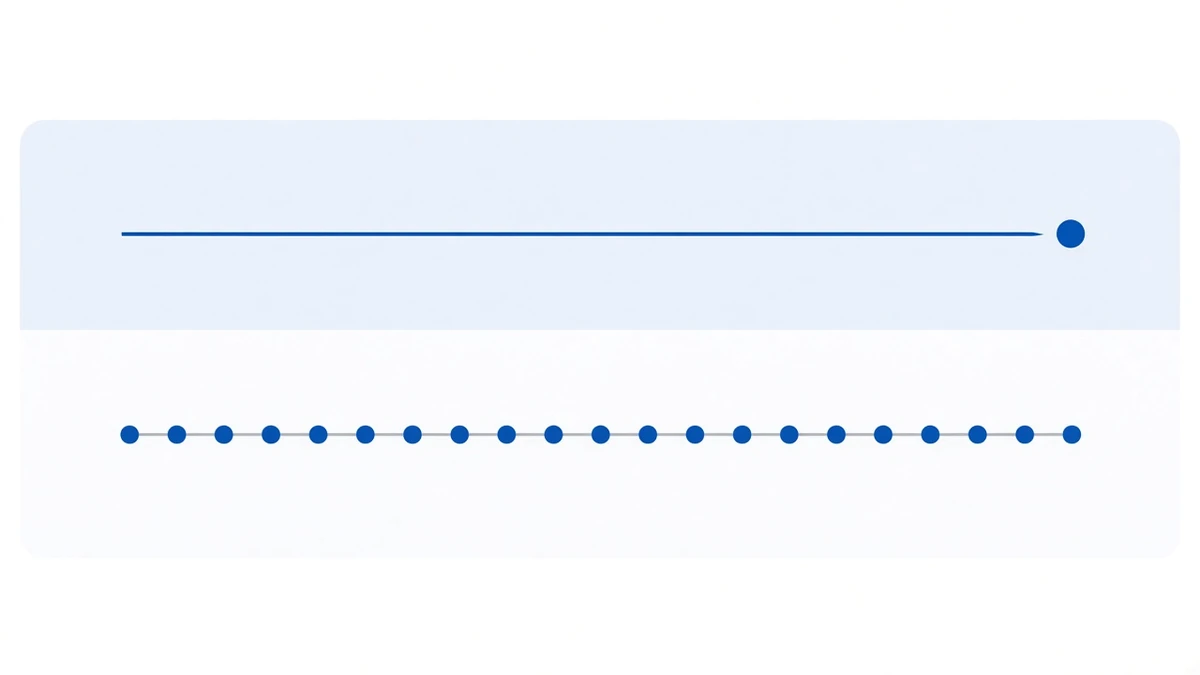
The short answer: both contracts solve the same problem — keeping a piece of paper priced close to spot. Delivery futures solve it with an expiry date. Perpetuals solve it with a funding rate. Every other difference you have read about branches off that one decision.
Which makes “which one is better” the wrong question. They are not two tiers of the same product. They are two convergence mechanisms, and one of them moves cash in or out of your account three times a day.
Delivery futures: the expiry date is a forced convergence point
A delivery contract has a settlement date. On that date it settles against the spot index, and longs and shorts square up once.
The elegance is that no extra machinery is needed: as long as everyone knows the contract will eventually settle at spot, its price today cannot wander far from spot. If it does, someone takes the other side and collects a gap that must close. That gap is the basis, and it walks itself to zero as expiry approaches.
The cost is that you have to manage expiry. Holding a position long term means rolling into the next contract before each settlement — two spreads, two sets of fees, and the next contract’s basis is only knowable at the moment you roll.
Perpetuals: expiry, chopped into three payments a day
Perpetuals delete the expiry date. No expiry means no forced convergence point, so in theory the price could drift above or below spot indefinitely.
So they need a substitute, and the substitute is the funding rate: when the contract trades above spot, longs pay shorts; when it trades below, shorts pay longs. Paying is a cost, the cost pressures whichever side is crowded, and the price gets pulled back toward spot.
Two things people routinely get wrong:
- The exchange does not take this money. It is a transfer between longs and shorts; the venue only calculates it and moves it at settlement. Trading fees are separate, and those do go to the exchange.
- Settlement is a snapshot, not an accrual. Binance USDT perpetuals settle at 00:00, 08:00 and 16:00 UTC. Hold through that instant and you participate; close a second earlier and you do not. For how the number itself is produced, see what a funding rate is.
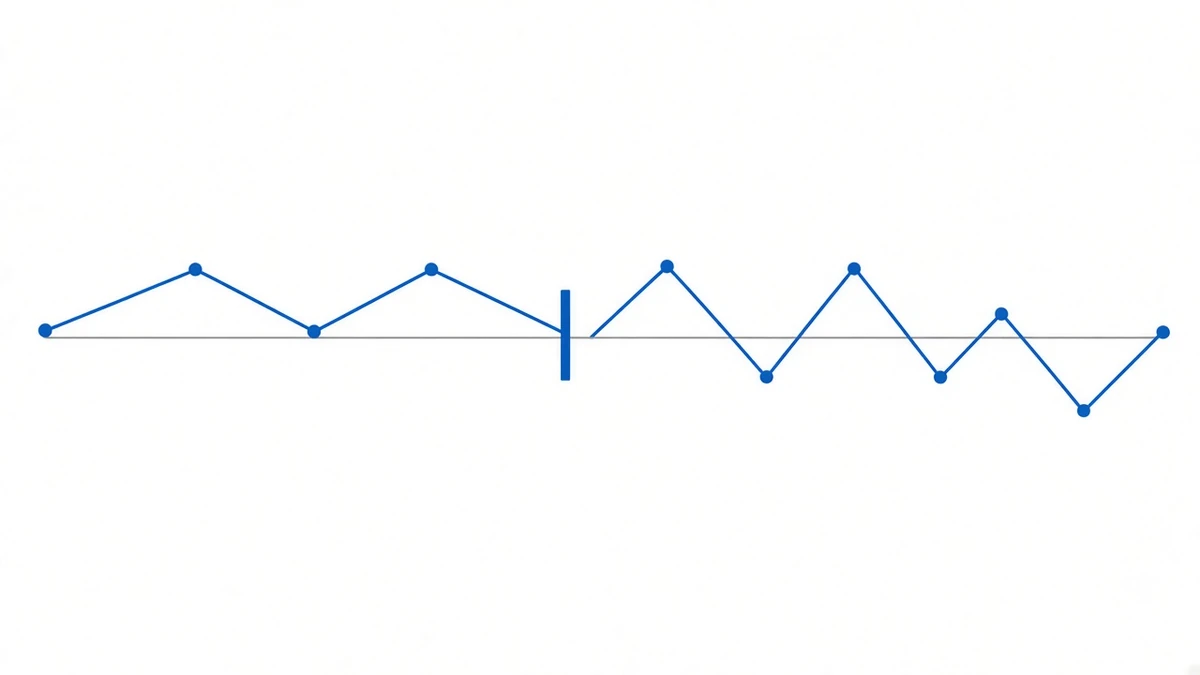
“Do perpetual futures have an expiry date?” — no, but something else expires
This one comes up constantly in search, and the literal answer is no. If what you actually mean is “can I buy it and leave it alone”, the answer needs more care.
No expiry means no rolling, which genuinely saves work. It also means you keep paying — or keep receiving — funding indefinitely, and the direction and size of that payment move with the market rather than being locked in when you open. A delivery contract’s basis is fixed the moment you enter. A perpetual’s funding has to be counted one period at a time.
There is one case where “perpetual” stops being true: the exchange delists the contract. Your position is then closed on the venue’s own terms, and those terms differ by venue — we covered that separately.
781 settlements: how big is this payment, really
Mechanism talk is cheap. Here is Binance USDT perpetual funding for 2026 so far, pulled from Binance’s public futures API (read at 2026-09-18 07:13 UTC, latest settlement 2026-09-18 00:00 UTC). All four symbols have 781 periods covering 260 days.
| Symbol | Year to date | Annualised | Positive | Negative | Exactly zero |
|---|---|---|---|---|---|
| BTCUSDT | 2.030026% | 2.85% | 572 | 209 | 0 |
| ETHUSDT | 1.208608% | 1.70% | 534 | 247 | 0 |
| BNBUSDT | 2.001652% | 2.81% | 351 | 7 | 423 |
| SOLUSDT | −1.030962% | −1.45% | 391 | 390 | 0 |
Three things deserve their own line:
SOLUSDT is negative this year. 390 of 781 periods, nearly half. Anyone holding SOL perpetual longs has been a net receiver of funding in 2026, not a payer. So “perpetual longs always pay” holds on average and stops holding as soon as you name a specific symbol and a specific year.
BNBUSDT has 423 periods that are exactly zero. That is not missing data. Binance’s public API reports an interest-rate component of 0.00000000 for BNBUSDT against 0.00010000 for BTCUSDT; with a zero interest component, any premium sitting inside the clamp band produces exactly zero. Different symbols on the same venue can have different baselines.
Annualised here means “sum the periods, then scale by days” — not compounding. We use the additive convention site-wide; the reasoning is in six years of funding. Compounding assumes each payment is immediately reinvested, which real position management does not do, so quoting the compounded figure inflates the result.
What changes if you are running both legs
If your goal is not directional — you hold spot long plus a short contract so price moves cancel and only funding remains — the two instruments hand you very different things:
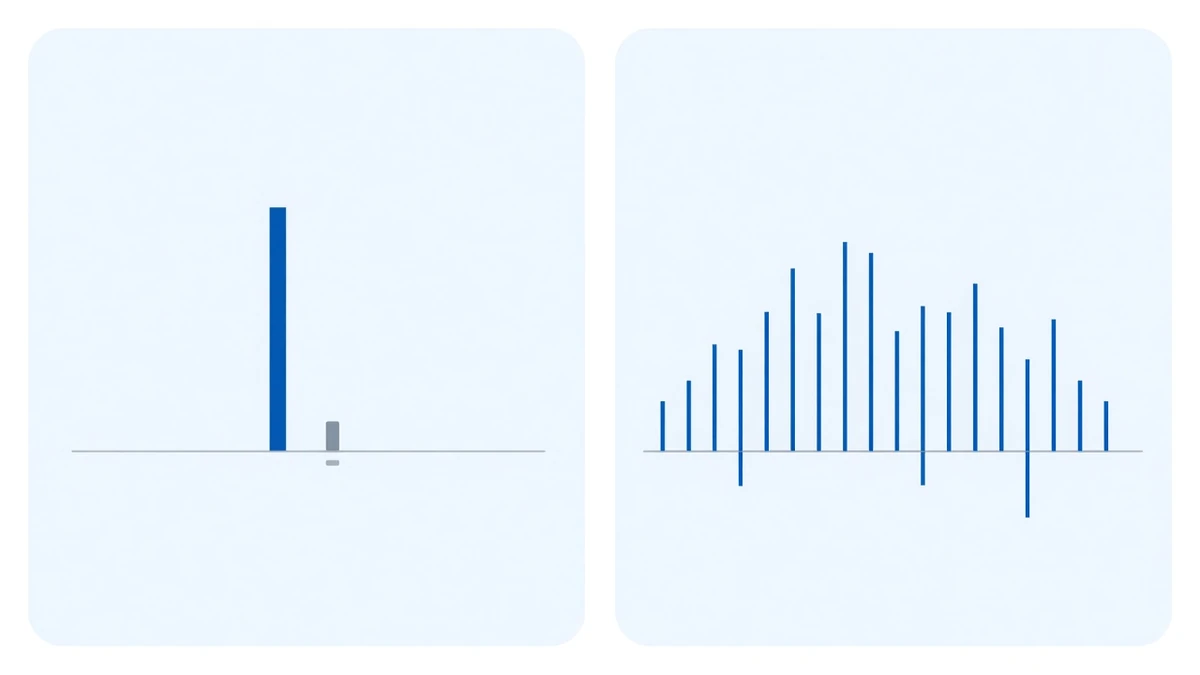
- A delivery contract gives you a one-off basis that is known at entry. Certain, but it ends at expiry, continuing means rolling, and the upside is capped at that basis.
- A perpetual gives you a per-period payment that is not known in advance. No rolling and you can hold indefinitely, but it shrinks and it can go negative — the SOL row above is what negative looks like.
We worked through that trade-off in cash and carry versus funding rate arbitrage. For why getting both legs down simultaneously is the genuinely hard part, see what makes delta-neutral hard to run.
How to choose
Pick by the problem you have, not by which sounds more advanced:
- A directional view with a defined horizon — delivery futures are cleaner, with no ongoing funding cash flow to manage.
- A hedged position you intend to hold — perpetuals remove rolling, but you accept that the return floats with the rate and may approach zero or turn negative.
- You care most about being able to verify — either way, first confirm you can pull your own settlement records line by line. Period-level rates, mark prices, positions and the return curve all sit on our funding rate data and track record pages, worst years included.
One last thing worth saying plainly: a perpetual is not a risk-free contract, it is just a contract without an expiry date. The short leg still posts margin and can still be liquidated. Balancing two legs cancels price direction; it does not cancel execution risk or margin risk. Those are split out in who carries which risk and on our security page, and both are worth reading before you act.
Sources: Binance public futures API (per-period funding history, premiumIndex interest component, mark prices; read at 2026-09-18 07:13 UTC, latest settlement 2026-09-18 00:00 UTC); yearly totals and snapshot convention on our track record page, on-site snapshot timestamp 2026-08-25 13:42 UTC.