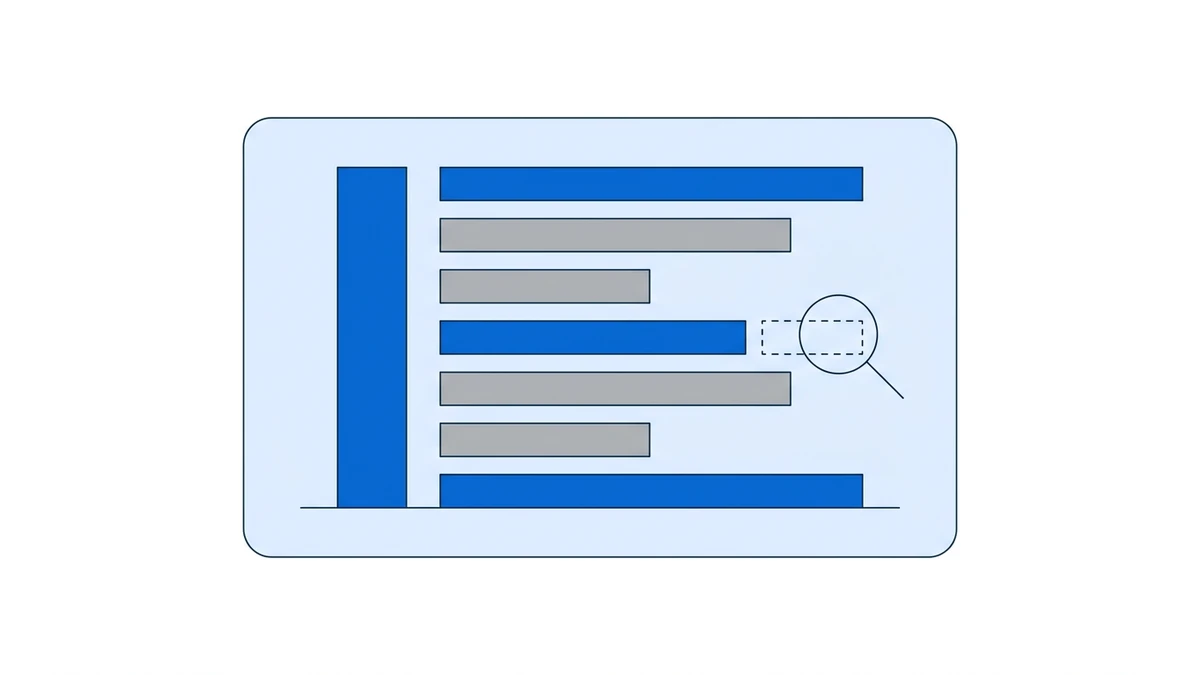
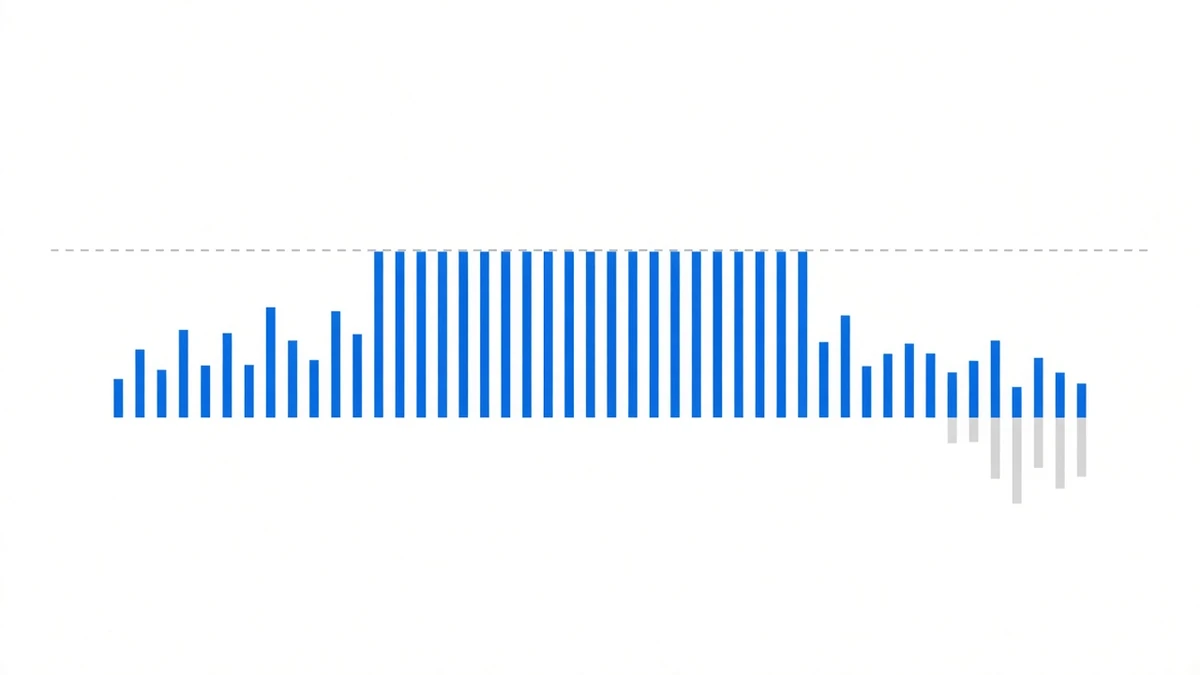
2026-10-17 Reconciling Funding Income: A Monthly Template for Basis, Interest and Fees A higher balance is not proof of funding income. Use one identity to split monthly equity change into seven categories, keep an unexplained line, and only then compute a return with its method stated.
2026-10-17 Comparing Funding Leaderboards: 165 to 392 Settlements in the Same 30 Days Cumulative funding mixes rate and settlement frequency. In the 30 days to October 8, settlement counts ranged from 165 to 392; split totals into settlements times average rate before ranking.
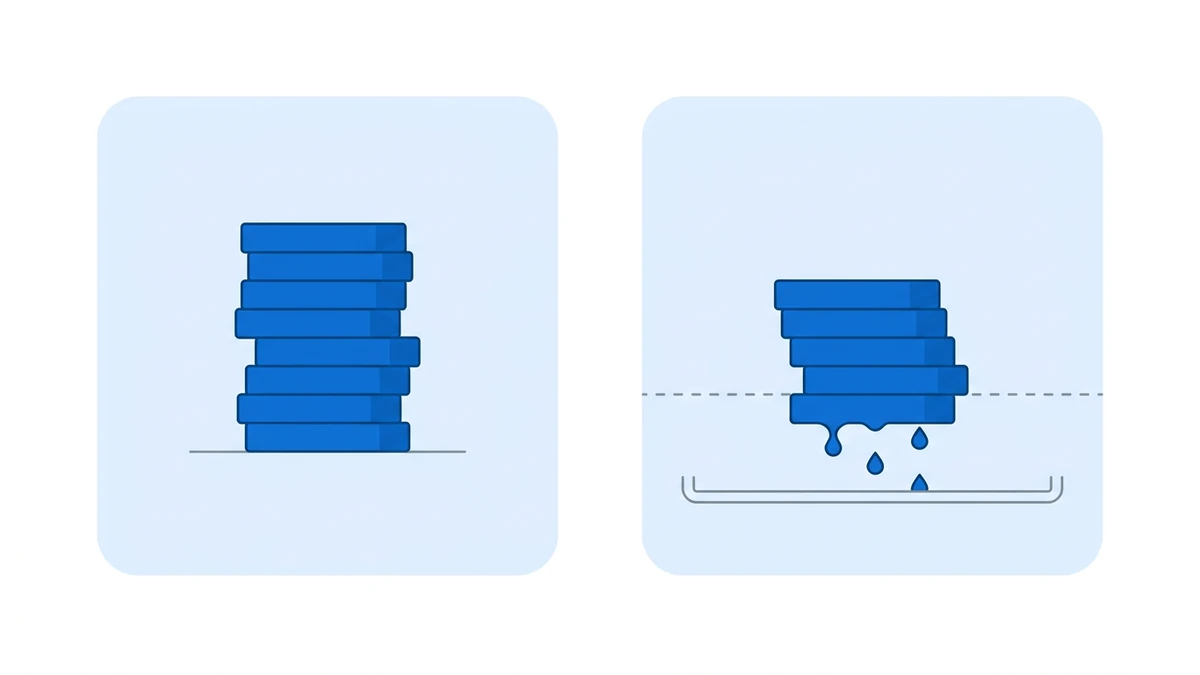
2026-10-17 Hedged Position Margin Review: Negative Funding Drains the Short Leg's Account Matched legs remove price direction, not margin erosion. When funding turns negative the short pays from the futures wallet; in September 2022 ETH funding cost 1.56% of notional, or 4.68% of margin at 3x.
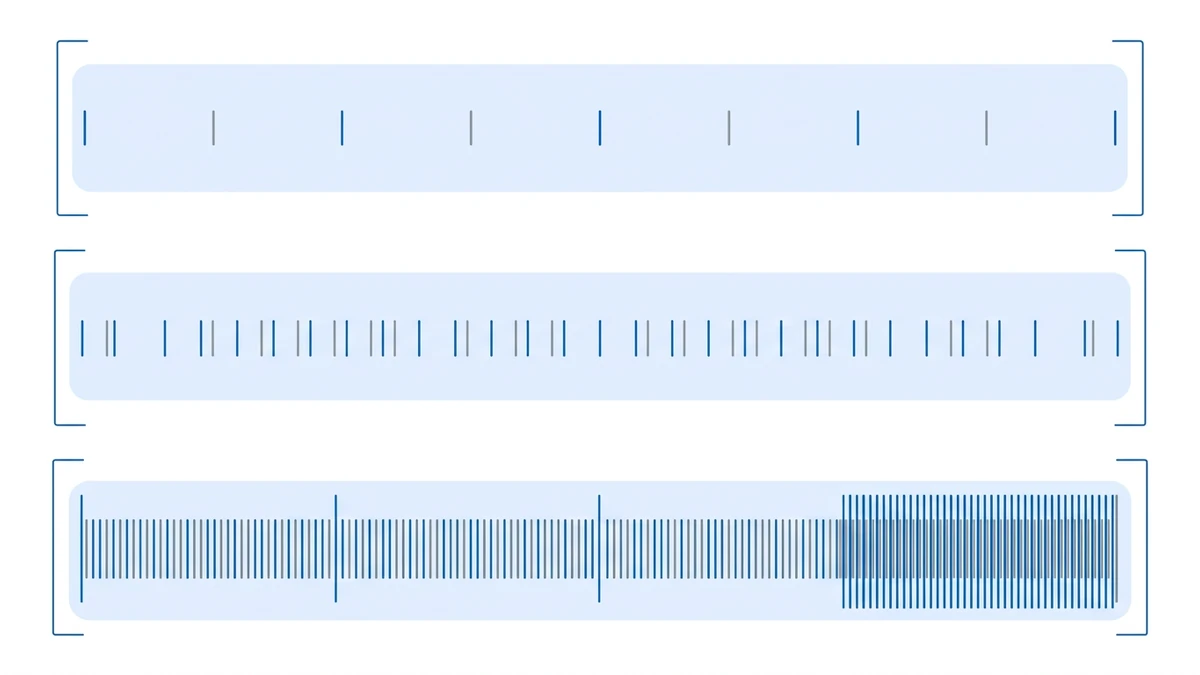
2026-10-17 Perpetual Delisting Exit Checklist: Two Deadlines and the Records to Export First A delisting notice turns a hedge into a deadline. Rebuild the timeline from the original notice, set a cutoff for each leg, plan for residual exposure and export funding and settlement records before the contract disappears.
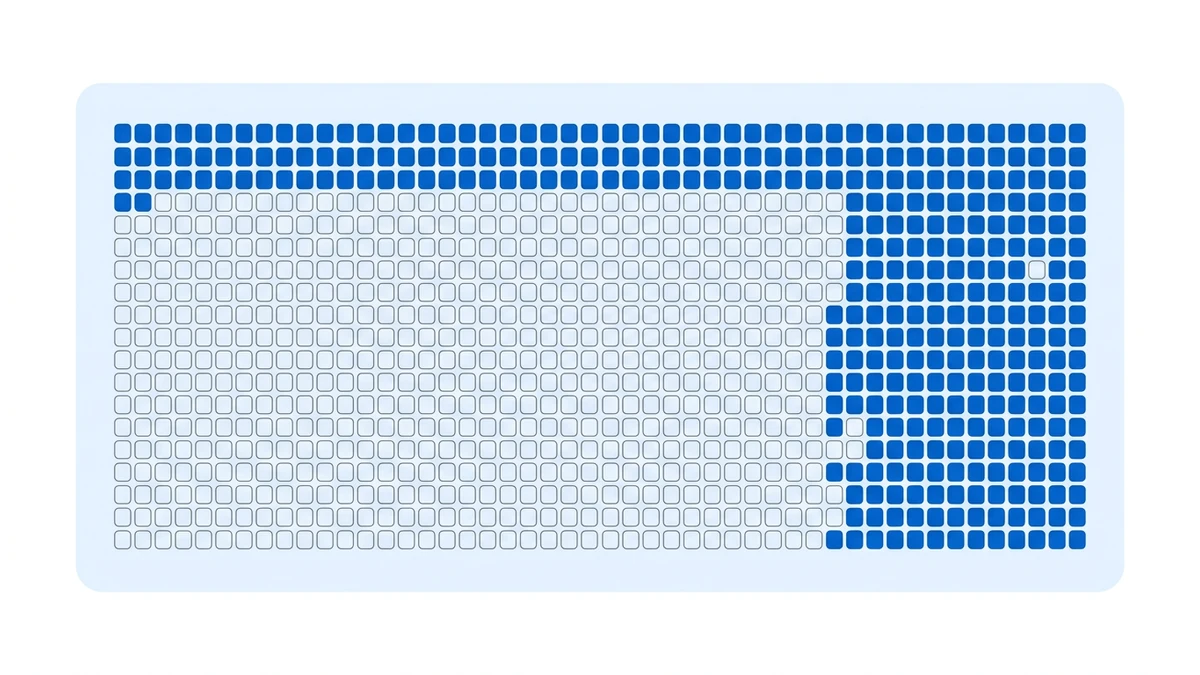
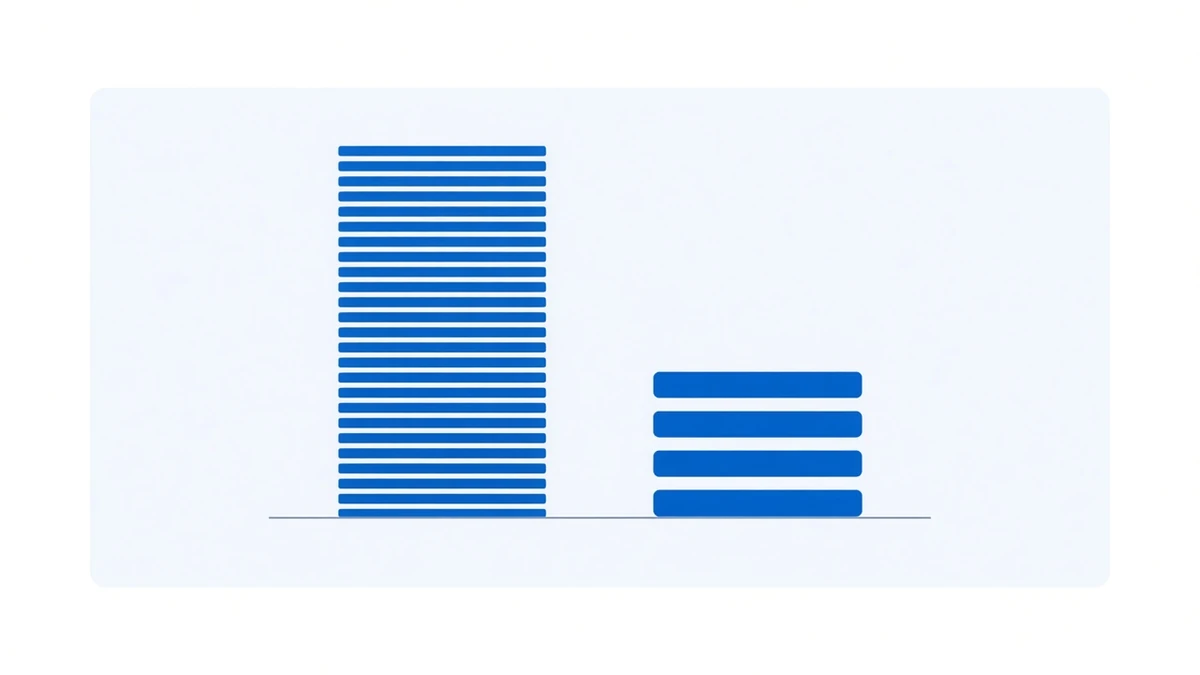
2026-10-08 How Much of This Month's Return Actually Came From Funding? Split It Into Five Lines Very little of a month's return comes purely from the funding rate. Entry and exit spread, rebalancing friction, fees and rebates, and the mark-price gap on a forced settlement all land in the same number — and only one of those five repeats.
2026-10-08 Should a Larger Book Be Split Across Accounts? Three Walls You Hit First Splitting accounts solves limits and isolation. It does not solve depth. The order book does not get thicker because you placed the order from a different account, and depth is usually the wall you reach first.
2026-10-08 How Much Time Does Funding-Rate Arbitrage Actually Take Per Day? It is not ten minutes a day. It is ten minutes at any moment. The routine work is small; what consumes the attention are the events that do not arrive on your schedule — delisting notices, tier revisions, interval changes — where the window is often hours.
2026-10-08 Which Margin Mode for a Delta-Neutral Book? Same Two Legs, Three Different Liquidation Prices Both legs are flat and you still get liquidated. That is almost never a directional mistake — it is the margin mode. Isolated sees only the margin you assigned, cross sees the whole futures wallet, and only portfolio margin counts the spot leg as collateral.
2026-10-08 Your Perpetual Gets Delisted — How Do You Close the Hedge Leg? A delisting is not a wind-down; it is a forced settlement at a fixed time. For a directional trader that is one involuntary close. For a two-legged hedge it means one leg is taken away and the remaining spot position is outright long from that second onwards.
2026-09-27 Does funding move around Fed decisions? 46 FOMC meetings since 2021, and the day-over-day change was smaller than usual Hike, cut or hold, BTC funding barely moves in the day around a Fed decision. Across 46 FOMC meetings since 2021, the change in the three-period average across the statement had a median of 0.0015 points, less than the 0.0021 at an arbitrary time. After 12 hikes, funding edged up.
2026-09-27 What is the funding rate cap? Binance's 791 contracts sit in 14 tiers, and BTC and ETH get only ±0.3% Every Binance USD-M contract has a funding cap and floor, but not the same one. On 27 September, 791 contracts fell into 14 combinations of cap and interval: 88% at ±2%, BTC and ETH at just ±0.3%. The cap is the best a period can pay you; the floor is the worst it can cost.
2026-09-27 Holding BTC through a perpetual instead of spot: the funding bill was 30.64% in 2021 and 2.16% so far in 2026 A long perpetual tracks spot exactly but settles funding every eight hours. Summing Binance BTCUSDT period by period, a 10,000 USDT long paid 3,064 USDT in 2021, 416 in 2022, 1,198 in 2024 and 216 so far in 2026; in only 6 of 81 months did longs get paid instead.
2026-09-27 The top 20 funding rates on Binance this year all belong to perpetuals with no Binance spot market None of Binance's top 20 funding perpetuals this year has a spot pair there. Split 450 contracts by whether spot exists: the 44 without it have a median full-year total of +11.98%, the 374 with it −1.26%. High funding here is not free money; it is the price of a missing hedge.
2026-09-27 USDC vs USDT perpetual funding rates: in 33 of 34 pairs this year, the USDC contract paid more USDC and USDT perpetuals on the same coin do not pay the same funding. Summing every 2026 settlement across Binance's 34 matched pairs, the USDC contract collected more in 33, by a median 0.90 points. BTC's gap is 0.12 points and ETH's 0.15, less than the cost of switching.
2026-09-27 What the funding leg of USDe's yield actually paid: 12.50% in 2024, 5.03% in 2025, 1.77% so far in 2026 USDe's yield has several sources; the funding leg can be rebuilt. Taking Binance BTC and ETH half each and summing every settlement, that leg paid 12.50% in 2024, 5.03% in 2025 and 1.77% in 2026 to 27 September, with February to April negative three months running, the longest such stretch since 2020.
2026-09-24 The week after a funding scanner crowns a leader: 2.93% becomes 1.31% The top of the board is not noise. It just delivers about 45% of itself. Ranking all 450 contracts by trailing seven-day funding on every day of 2026, the leader went on to collect 1.3122% over the following week against the 2.9327% that ranked it. On 20 of 254 days the leader cost money over the next week, worst case −21.8788%.
2026-09-24 Holding only across the settlement: 66 of 608,656 periods paid for the round trip One period of funding has to beat four fees. Across 608,656 settlements so far in 2026, only 66 printed a single-period rate of 0.30% or more — 0.0108%, concentrated in 15 contracts. On the four majors it is simpler still: in 799 periods each, not one exceeded 0.05%.
2026-09-24 Summing 2026 funding contract by contract: the median is −0.56% and 244 of 450 are negative Leaderboards only show you the top. Summing every settlement this year for all 450 Binance USD-M contracts gives 206 positive and 244 negative, a median of −0.5646% and a mean of −9.1568%. The tenth percentile is −33.7329%; the best contract is +56.3574%.
2026-09-24 Delta neutral, market neutral, beta neutral: the position has no direction, the income does Three names, three different claims. Funding rate arbitrage is delta neutral — the legs are matched in coin terms, so price moves do not touch the principal. It is not market neutral: across 38 months, BTC monthly returns and monthly funding correlate at 0.3658, averaging 0.7042% in up months against 0.4493% in down months.
2026-09-24 What counts as a high funding rate? Sort this year’s 600,000 settlements and 0.01% is already the 90th percentile Ask how many hours the interval is first. Among the 462,521 eight-hour settlements of 2026, the median and the 75th percentile are both 0.005%, 0.01% is the 90th percentile and the 99th is 0.045119%. The same 0.005% annualises to 5.475% on an eight-hour contract and 10.95% on a four-hour one.
2026-09-23 The same funding data sums to 79% and compounds to 120%. We report the smaller one The same BTC funding data sums to 79.1022% and compounds to 120.5202%. That is 7,372 settlements over six and a half years, and both figures are correct. Only one of them describes an account that actually existed.
2026-09-23 Holding BTC made 162% in three years. Collecting funding made 23%. The gap is not in the return column BTC rose 162.36% over three years; BTCUSDT funding summed to 23.1963%. But price drew down 53.77% along the way, while the deepest setback in the cumulative funding curve was 0.4125 percentage points. Not 41 — 0.41.
2026-09-23 Is there seasonality in funding rates? Across 81 months, the top month's standard deviation is bigger than its mean Group BTC funding by calendar month and February leads at 2.0511%. Across six and a half years its year-to-year standard deviation is 2.7710%. Drop 2021 and the ranking reshuffles: April falls from sixth to last, July climbs from tenth to fifth.
2026-09-23 How long can funding stay negative? Eight days for BTC, seven weeks for some altcoins BTC's longest unbroken run of negative funding was 24 periods, or eight days. That was March 2020, out of 7,372 settlements in six years. In the same database BARDUSDT ran negative for 944 periods and −108.96%. For majors the runs are counted in periods; for small caps, in months.
2026-09-23 Funding on newly listed perpetuals: for 78 contracts, more than half of first months were negative Of 78 perpetuals listed since September 2025, 43 had a negative first month. All of them survived at least 120 days. Mean cumulative funding over the first thirty days was −4.5396%, median −0.5452% — and it improves as the contract ages.
2026-09-22 Binance funding rate history: six years, 898k settlements, and three conventions that will throw your numbers off Binance USD-M funding data goes back to 1 January 2020. Getting it is not the hard part; doing the arithmetic afterwards is. Split the same per-settlement series by UTC years instead of Beijing years and BTC's 2023 figure moves by 0.0236 points; summing versus compounding moves it further; and for 2020 the old dashboard's total sits 1.56 points above what our per-period rows add up to.
2026-09-22 Binance funding settlement times: three intervals at once, and the one-hour batch averaged −19.86% this year Eight-hour funding settles at 00:00, 08:00 and 16:00 UTC. But that answer now covers only 128 of 450 USD-M contracts; 321 of them settle every four hours. Another 95 were switched to hourly funding at some point this year, and during those stretches 89.25% of periods came in negative, averaging −19.86% per contract.
2026-09-22 The top of the funding leaderboard made 56% this year and BTC made 2.13%. The gap is not where you think The ranking is correct. The cumulative column just answers a different question. The 56.08% at the top came from 1,584 settlements; BTC's 2.13% came from 793. Per period the gap shrinks from 26x to 13x — and once you notice the −2% floor was hit 145 times this year while the +2% cap was never touched, the order changes again.
2026-09-22 What a position-weighted average funding rate actually means: spreading across four coins cut volatility by 2.5% It is notional times rate, summed, divided by total notional. Not the average of a handful of rates. Measured over 793 periods in 2026: an equal-weight basket of the four majors has a per-period standard deviation of 0.00470% against 0.00482% for BTC alone — a 2.5% reduction, while the share of negative periods rose from 26.36% to 33.54%.
2026-09-22 To collect the next funding period you first have to know its sign: the scorecard from 11,472 predictions Direction was right on 83.98% of 11,472 resolved predictions. That sounds fine until you notice that always guessing "not negative" would have scored 86.79% over the same set — better than the model. Accuracy is the wrong metric here. Split by confidence band and the picture changes: the 10,353 periods the model called unlikely came in negative 5.3% of the time; the 1,119 it flagged came in negative 86.6%.
2026-09-21 Price ran 31.6%: rebalancing is not about delta Price moves do not break a coin-count hedge; they drain the margin behind it. BTC ran 31.6% in thirty days this year, leaving a position margined at a third of notional just 1.2 points from liquidation, with the five-times tier already through it.
2026-09-21 Waiting for a higher funding rate: 790 settlements, none above 0.01% We counted every 2026 Binance settlement: 790 periods, none above 0.01%. The ceiling is not the market but the clamp inside the formula, and timing entries by sign lifted gross return 0.38 points while costing 56 times that in round trips.
2026-09-21 Eight hours to four: does the annualised rate double? Two opposite answers Same action, opposite results: OKX divides by 8/N, Binance does not. Moving funding settlement from every eight hours to every four leaves the annualised rate untouched at one venue and doubles it at the other, and both notices say only that the frequency changed.
2026-09-21 When a stablecoin depegs, is the book still neutral? 264 days of data In 264 trading days, USDC and FDUSD never closed 0.5% away from USDT. The hourly candles printed 1.1932 and 1.0219, and a liquidation engine reads exactly that tick. For a balanced book the problem is not direction, it is whether three units of account agree.
2026-09-21 How to verify the returns a platform reports: six checks, and the one you cannot make The annualised figure on a dashboard is computed by the platform itself. Six items can be pulled from the investor side and the funding rate can be recomputed from public exchange APIs, while the solvency ratio cannot be queried at all, and we say so plainly.
2026-09-20 Both legs live on an exchange: the counterparty this strategy cannot avoid A strategy can hold no price exposure. It cannot hold no exchange exposure. The coins on the spot leg, the margin on the futures leg and the funding you have not withdrawn all sit on someone else's balance sheet. Counterparty risk comes in four concrete forms, and spreading out only swaps one of them.
2026-09-20 How an annualised figure gets inflated: the same funding series, 28 points apart Adding assumes the principal never moves. Compounding assumes every payment goes straight back to work. Run the same BTCUSDT settlement series both ways and seven years come out at 80.109771% added against 108.44294% compounded. Those 28 points are not an error, they are two different assumptions.
2026-09-20 Both legs are balanced. So why did the position get liquidated? Balancing removes directional price risk, not liquidation risk. Exchanges compute margin per account, and the futures account sees a lone short — it does not know you hold matching spot next door. The distance to liquidation is one line of arithmetic: 1/multiple − maintenance margin rate.
2026-09-20 Net of the risk-free rate, how much funding is left this year BTCUSDT funding annualises to 2.910% year to date. That is below the lower bound of the federal funds target range — not a miscalculation, just one real year for this strategy. What it earns is rent from leveraged longs, and rent tracks the cycle: 2021 paid 30.635167%.
2026-09-20 Is funding rate arbitrage a scam? Put the real one next to the fake one The strategy itself is not a scam. You can name who pays, check it period by period, and watch it go negative. That negative sign is the strongest evidence there is — SOLUSDT paid money out on 390 of this year's 788 periods. What needs sorting is the people selling it.
2026-09-18 Cash and carry vs funding rate arbitrage: same position, two cash flows The positions look identical: buy spot, short the contract. The difference is where the money comes from. Cash and carry collects a basis that must converge, known at entry. Funding arbitrage collects a payment every eight hours whose size you cannot know in advance.
2026-09-18 Cross-exchange funding: the smallest number annualises highest Same instant, same BTC perpetual, four venues, readings three times apart. The smallest of them — Hyperliquid at 0.00125% — annualises to 10.95%, the highest of the four, because it settles hourly.
2026-09-18 DeFi delta-neutral farming and funding rate arbitrage are not the same money Both hedge the price exposure away. One is paid in emissions the protocol prints, the other in what perpetual longs hand over every eight hours. Different sources mean different ways of breaking.
2026-09-18 Dual investment and funding rate arbitrage: one of them sold an option Dual investment pays you a premium for selling an option. Which currency you get back at expiry is decided by the price. Funding rate arbitrage sells no optionality; it collects what perpetual longs hand over on a schedule.
2026-09-18 How much money fits in funding rate arbitrage? Four ceilings, in order More capital does not mean proportionally more yield. What you hit first is order book depth, tiered margin, the number of tradeable symbols, and eventually your own effect on the rate.
2026-09-18 How bad does funding rate arbitrage get? The losing stretches, on their own The worst year and the worst symbol, laid out separately. ETHUSDT returned 0.787% across all of 2022. SOLUSDT is negative this year: 390 of 781 periods paying money out, −1.030962% cumulative.
2026-09-18 Grid trading and funding rate arbitrage: same pitch, opposite exposure A grid buys on the way down and ends up holding coins. Funding rate arbitrage balances two legs and holds no direction at all. Both get sold as the calm way to trade a range, but the money comes from different places.
2026-09-18 Perpetual vs delivery futures: the difference is the funding rate Delivery futures use an expiry date to drag price back to spot. Perpetuals have no expiry, so they settle a payment every eight hours instead. Binance BTCUSDT settled 781 of those this year, 209 of them negative.
2026-09-18 USDT-margined or coin-margined: change the collateral and neutral stops meaning neutral Same BTC, two contracts, two different answers. USDT-margined posts USDT and settles in USDT; coin-margined posts the coin and settles in the coin. We pulled 15 periods of both.
2026-09-18 Why is funding usually positive? What 781 settlements say Binance BTCUSDT has settled 781 periods this year: 572 positive, 209 negative. Positive is not a market law, it is the price of leveraged long demand. Over the same stretch SOLUSDT ran 390 negative periods and −1.030962% cumulative.
2026-09-17 How long should you run funding rate arbitrage? One year and five are not the same thing One year and five years of the same strategy are not the same thing. Raw annual funding ran from 30.635% in 2021 to 1.590% for this half-year, an order of magnitude apart. The shorter the holding period, the more you are simply betting on which year you drew.
2026-09-17 How much capital does funding rate arbitrage need? Four separate bills The threshold is not one number, it is four bills stacked. The spot leg must be bought outright, the contract leg ties up margin, a buffer sits on top, and only then come the four costs. Below a certain size what eats the funding is not the market, it is fixed overhead.
2026-09-17 Same idea, different money: funding rate arbitrage versus staking and lending Before judging any crypto yield product, ask who pays. Staking is paid by protocol issuance, lending by the borrower's interest, funding rate arbitrage by the longs on a perpetual. Three sources, three completely different failure modes, three completely different ways to verify them.
2026-09-17 Which coins suit funding rate arbitrage? Four majors, period by period The highest funding rate is not the best coin to run the trade on. Put BTC, ETH, SOL and BNB in one table and the year-to-date totals differ by a sign: SOL is negative, even though its latest print matches BTC exactly.
2026-09-17 Getting the money back out: crediting, early exit and withdrawal What stops most people is not the yield, it is how the money gets out. Funding settles every 8 hours and is credited period by period; balance, transaction detail, holdings, the return curve, subscription records and withdrawal progress are all visible in real time on the investor side. One item is not, and this piece says which.
2026-09-15 Funding rate arbitrage on Binance: accounts, API permissions, both legs What stops people is rarely the strategy, it is the account setup. How the master and sub-accounts split, which three API permissions to enable, the one never to enable, how both legs land together, and the settlement interval you have to confirm before the first order.
2026-09-15 Choosing a funding rate arbitrage platform: four questions to settle first Picking a platform is not about whose APR reads highest. It is about who lets you verify it. Whose account holds the money, where the fee comes out of, what the worst year looked like, and which figures you can pull yourself.
2026-09-15 Delta neutral explained: the options version is not the arbitrage version Delta neutral means a book that barely moves with price. It does not mean risk-free. In options the neutrality has to be maintained by constant re-hedging and the income comes from volatility; with a perpetual against spot the neutrality is structural and the income is funding, settled every eight hours.
2026-09-15 Sizing a delta-neutral position: one formula, and why it is not fifty-fifty Balanced means equal delta, not equal dollars. One formula, a worked 10,000 USDT example that lands on 8,333 / 1,667 rather than 5,000 / 5,000, and three positions that look neutral and are not: splitting by dollar value, sizing off last price, and mistaking beta neutral for delta neutral.
2026-09-15 What a funding rate arbitrage calculator leaves out: five steps to take-home A calculator gives you the gross return, not what you take home. Five steps sit in between: notional basis, four cost lines, the 2% management fee, the plan split, and no compounding. Run one principal through the worst year and the five-year average and the three plans come out twenty times apart.
2026-09-15 The risks in funding rate arbitrage, and who carries each one "Risk-free" means no directional price risk, not no risk at all. Of four risks only one is cancelled by the structure; the other three stay, and custody adds a fifth. Each one lands on somebody, and that can be written down line by line.
2026-09-14 Six hidden costs in funding rate arbitrage the table never shows Six costs, none of them visible on a funding rate table. A flipped sign, spread left out of the cost, borrow interest charged on the full notional, a contract heading for delisting, a zero collateral rate, and empty borrow inventory — each one measured on our own account.
2026-08-31 How is the funding rate calculated? The formula, and three ways people get it wrong Funding = premium index + clamp(interest − premium), then divided by 8/N. That has been Binance's formula since September 2025; the three things people get wrong are the settlement interval, the multiplier base, and the annualisation factor.
2026-08-30 What is a funding rate, and where does the money come from? Perpetual futures never expire, so exchanges use a funding rate instead. That payment moves between traders at every settlement — eight-hourly on most pairs, four or one on some — and it is the entire source of the yield in a delta-neutral basis trade.
2026-08-30 What negative funding means, and whether you can run the trade in reverse Negative funding means the contract is cheaper than spot and shorts pay longs. Running the basis trade in reverse is directionally sound and usually fails in practice — the short-spot leg is the constraint, and three conditions decide it.
2026-08-29 When the price crashes, does funding disappear with it? No — funding is set by basis, not by direction. Using the 29 August 2026 selloff as a worked sample, this is the mechanical difference, and the three market conditions that genuinely do thin funding out.
2026-08-11 Six years of funding: the worst year is the one worth reading Laid out year by year, the interesting number is not the triple-digit bull run. It is how far returns collapse in a bear market, and what that says about where this yield actually comes from.
2026-07-28 Delta-neutral is one sentence to describe and four problems to run The idea takes one sentence. Running it takes lot-size alignment, single-leg rollback, margin that survives a rally, and a rebalancing threshold. Miss any one and the hedge quietly stops being a hedge.