
The same BTC has two perpetual contracts on Binance: BTCUSDT (USDT-margined) and BTCUSD_PERP (coin-margined). They track the same price. As arbitrage vehicles they are two different instruments.
The difference is not the price, it is the collateral. USDT-margined posts USDT and settles profit and loss in USDT. Coin-margined posts BTC, and both the profit and loss and the funding you collect arrive as BTC. Change the collateral and the sentence “balance the notionals and you are neutral” stops being true.
This piece separates the difference into three layers: the shape of the payoff, the sizing maths, and what the yield is denominated in. Then we put 15 periods of both contracts side by side.
One: linear and inverse have different payoff shapes
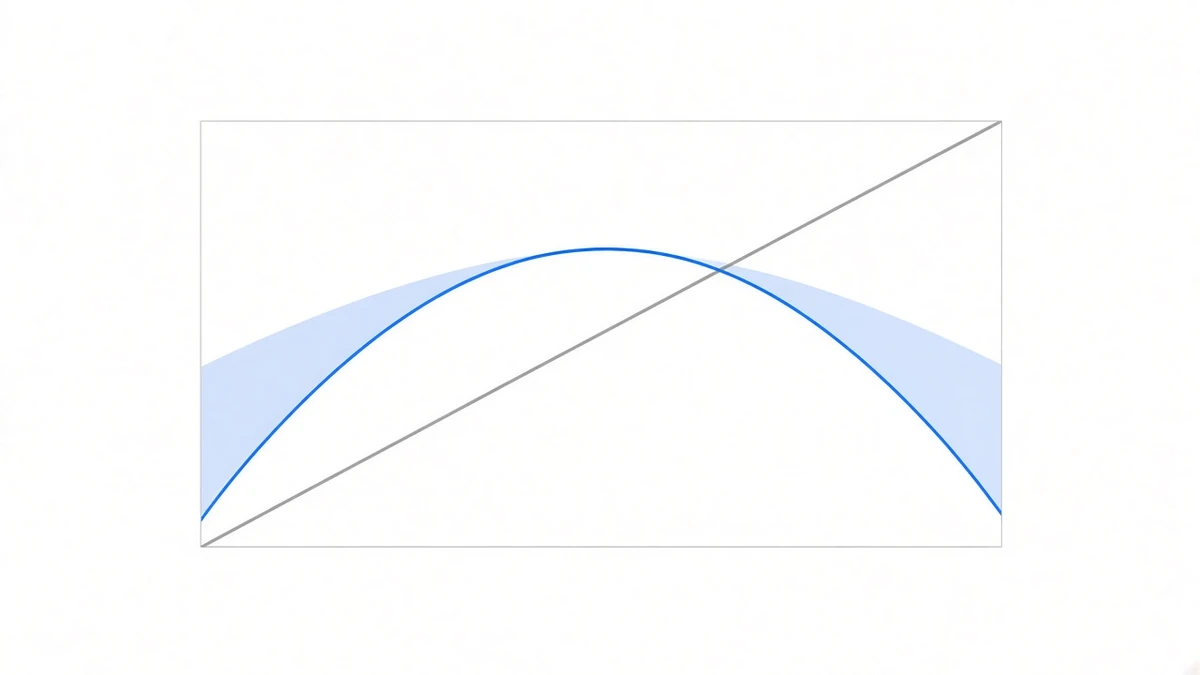
USDT-margined is a linear contract: value is quantity times price, denominated in USDT. Every dollar the price moves changes your P&L by a fixed amount of USDT. Drawn out, it is a straight line.
Coin-margined is an inverse contract: each contract locks a fixed dollar face value, while your margin and P&L are counted in BTC. You are holding a fixed dollar amount, and how many BTC that equals depends on the price at the time. A fixed amount divided by a moving price does not give a straight line. It gives a curve.
That curve has a very concrete consequence: the delta of an inverse short is not constant. The higher the price, the fewer coins one short contract corresponds to; the lower the price, the more. You balance today, price travels, and you are no longer balanced — and this is not execution error, it is built into the contract.
Two: the sizing maths changes
Sizing a delta-neutral position gives the USDT-margined version: match the spot notional to the contract notional and you are done. Coin-margined differs in two places.
First, the collateral itself carries price risk. You post BTC. When the price falls, your collateral shrinks in dollar terms. The good news is that your short is making money at that moment. The bad news is that the two are not equal, and the gap moves with price.
Second, the spot leg and the collateral are the same coins. This is the one genuine convenience of coin-margined: you already hold BTC spot, and those coins serve as the perpetual leg’s margin. You do not need to set aside a separate pile of USDT, so capital use drops.
The price of that convenience is that the two are welded together. On the way down your collateral (BTC) is shrinking at the same time as the margin you need is changing. Under USDT margin, the collateral is USDT, and it does not get smaller because BTC fell.
Three: what you collect is coins, not USDT
In practice this is the most overlooked and the most consequential difference.
Coin-margined funding settles in BTC. Collect for a year and what you have more of is the number of BTC, not a defined amount of dollars. In a year when the coin falls thirty percent, growth in the count very likely does not cover it.
This is the same dividing line drawn in same idea, different money: staking earns coin count, USDT-margined arbitrage earns the quote currency. Switching from USDT-margined to coin-margined moves you from the second category back into the first.
For someone who is long-term bullish and has no intention of selling, that may be exactly what they want — more coins. For someone who deposited USDT and measures results in USDT, it quietly puts a price exposure back in through the side door.
Four: 15 periods of both contracts, same BTC
That was structure. Here are numbers.
We pulled the period-by-period settlements for both contracts over the same window from Binance’s public futures endpoints: 2026-09-14 00:00 to 09-18 16:00 UTC, 15 periods (read at 2026-09-18 20:54 UTC). This stretch is not in our site snapshot; it was fetched live.
| Settlement (UTC) | BTCUSDT (USDT-M) | BTCUSD_PERP (COIN-M) |
|---|---|---|
| 09-14 16:00 | 0.004220% | 0.009769% |
| 09-15 08:00 | 0.006188% | 0.002982% |
| 09-16 08:00 | 0.002788% | 0.010000% |
| 09-17 08:00 | 0.003310% | 0.010000% |
| 09-18 08:00 | 0.007903% | 0.010000% |
| 09-18 16:00 | 0.006853% | 0.007739% |
All 15 periods added up:
- BTCUSDT: 0.094665%, averaging 0.006311% per period, about 6.91% annualised at 8 hours per period and 1,095 periods a year.
- BTCUSD_PERP: 0.121354%, averaging 0.008090% per period, about 8.86% on the same basis.
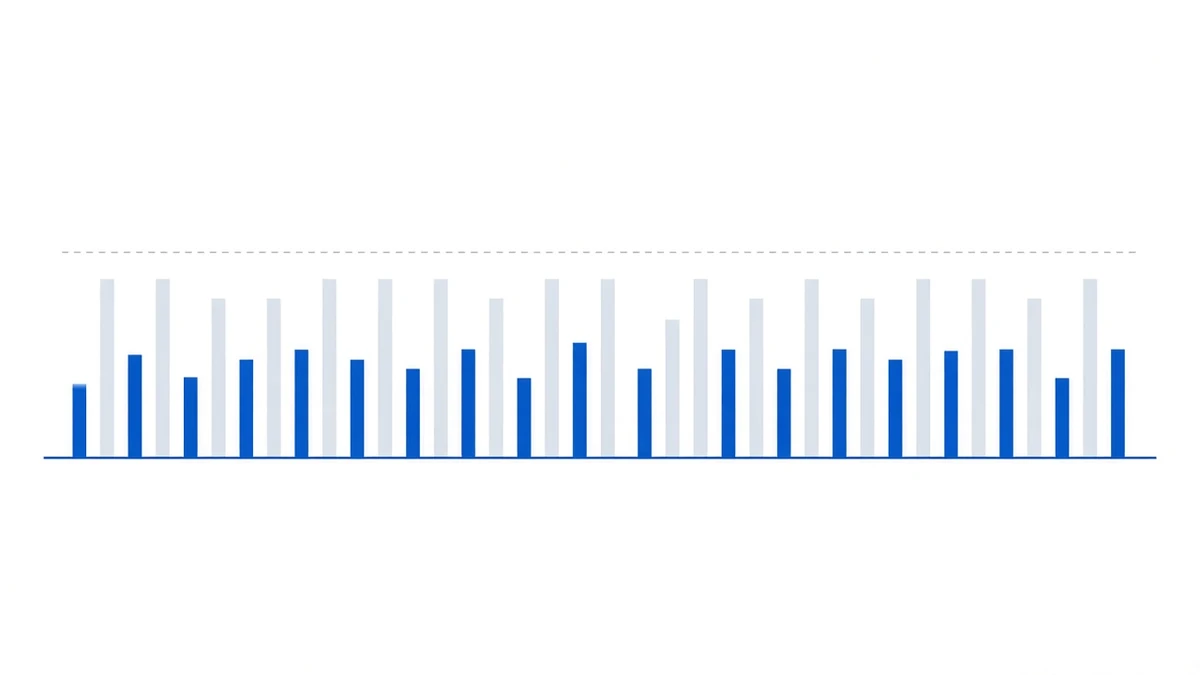
Same exchange, same underlying, same five days, and the coin-margined contract collected roughly thirty percent more. It also printed 0.01% in 6 of the 15 periods; the USDT-margined contract never reached it once.
The moment of reading is more interesting still
At the same instant (2026-09-18 20:54 UTC, next settlement 09-19 00:00), the running rates on the two contracts were:
- BTCUSDT: +0.006321%
- BTCUSD_PERP: −0.003306%
The signs are opposite. Same exchange, same BTC, same second: in one contract longs are paying, in the other shorts are.
Both contracts’ mark prices also sat slightly under their respective index prices (81,111.17 against 81,135.64 for USDT-margined, 81,069.40 against 81,103.58 for coin-margined) — same direction, different magnitude. And funding grows out of exactly that gap.
None of this is exotic: the two contracts have separate order books and different participants, so the premium differs. But it settles one point: “the funding rate” is not a property of an asset, it is a property of a contract. When you read a leaderboard, check which contract you are reading. The cross-exchange version of the same idea is in the smallest number annualises highest.
Five: when coin-margined makes sense
It is not that coin-margined is unusable. It suits a different person. Three conditions have to hold at once:
- You already hold the coin and do not plan to convert it to USDT. Otherwise you have to buy it first, which is deliberately opening a price exposure.
- You measure results in coin count, not dollars. The two measures give opposite verdicts in a volatile year.
- You accept that the hedge ratio has to track the price. An inverse position is not something you size once.
Miss any one of those and the extra funding is not worth it.
Six: we use USDT-margined
For one reason, the second one above: what comes in is USDT, so what gets measured has to be USDT. A return counted in coins cannot be subtracted from the principal on a statement, and it reintroduces a price risk that was supposed to have been hedged away.
So the year-by-year figures on our track record page all come from 8-hour USDT-margined perpetuals, with no coin-margined readings mixed in. Averaging the two sets would look slightly better — the five days above are the example — but it would be one curve built from two different bases, and nobody can take it apart afterwards.
To be fair about it: over those five days, coin-margined did collect more. Five days is not a sample you can conclude anything from, and the next five could go the other way — at the moment of reading it was already negative.
Funding goes to zero and turns negative on either basis, and balancing two legs removes directional price risk, not margin risk. Who carries which risk goes through them one at a time.
Sources: period-by-period funding and mark/index prices come from Binance’s public USDT-margined (fapi) and coin-margined (dapi) futures endpoints, window 2026-09-14 00:00 to 09-18 16:00 UTC, 15 periods, read at 2026-09-18 20:54 UTC; yearly totals are on the track record page, site snapshot as of 2026-08-25 13:42 UTC. Past performance does not indicate future results. This is not investment advice.