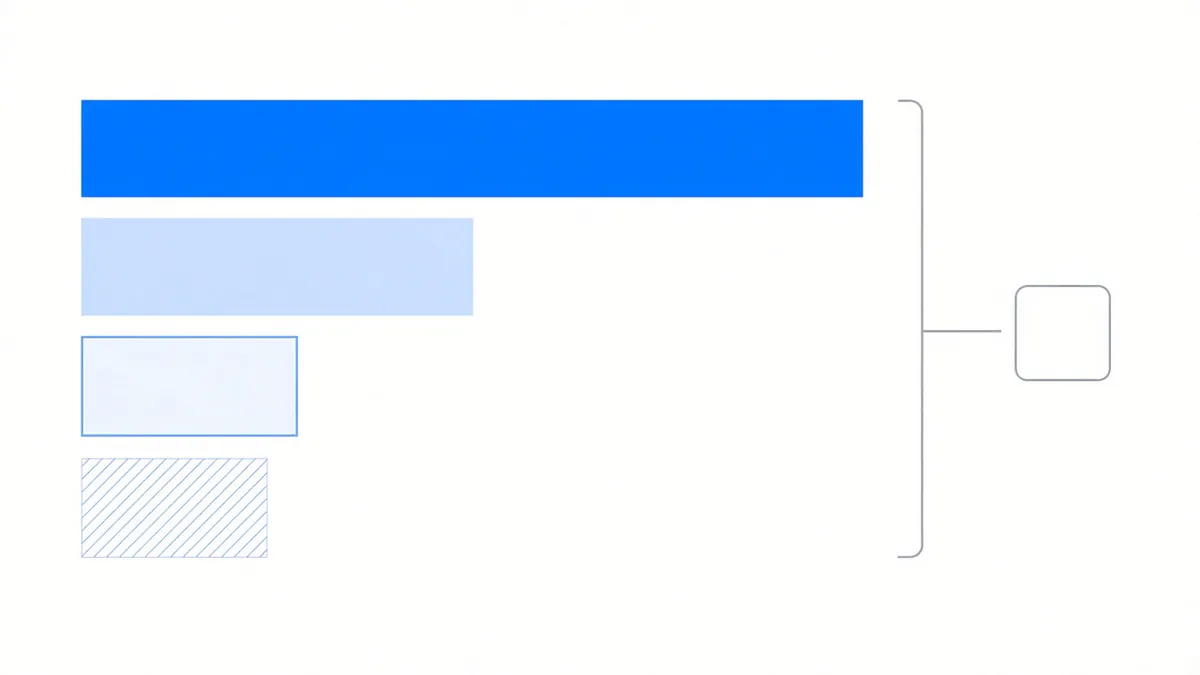
The answer first: if you run it yourself there is no fixed minimum, there is a size at which the four costs stop eating a meaningful share of your return. Below that, the strategy still works exactly as designed; the funding it earns simply gets flattened by fixed overhead.
Here are the four bills. The first three decide how much cash you need to put up. The fourth decides whether putting it up is worth doing.
Bill one: the spot leg must be bought outright
This is the one people underestimate. The contract leg opens on margin. Spot does not — whatever notional you want to hold in spot, you pay for in full.
So the two legs never split the capital evenly. Sized for equal delta, a 10,000 USDT position comes out as 8,333 and 1,667, not 5,000 and 5,000 — sizing a delta-neutral position has the full worked example and the one line of arithmetic behind it. Splitting by dollar amount is the most common form of fake neutrality: the book looks balanced while a slice of directional exposure sits inside it.
One thing to remember: the bulk of the money is on the spot leg.
Bill two: margin on the contract leg
The contract leg needs margin, sized by the exchange’s tier table. It looks small next to the spot leg, but it has a property the spot leg does not: it can be liquidated.
Once the two legs are notionally balanced the combination is insensitive to price, but the two legs settle their P&L separately. When the coin rallies, the spot leg shows an unrealised gain while the short contract shows an unrealised loss — and that loss is deducted from margin in real time. Your total book has not lost a cent, yet the contract side can still reach its maintenance margin line first.
Which is why bill two cannot be budgeted at “exactly enough to open”.
Bill three: the buffer

The buffer is a direct consequence of bill two, and most people do not budget it as a separate item.
It exists for one very specific situation: the market runs one way for a while, the contract leg’s unrealised loss eats a chunk of margin, and you would rather not touch the spot leg to fix it. The moment you sell part of the spot to top up margin, the two legs are no longer balanced and “insensitive to price” stops being true on the spot.
Our onboarding guidance is to hold back an extra 20% as buffer. That figure is not decorative: it corresponds to the room needed to avoid touching the spot leg under ordinary conditions. Under extreme conditions it is not enough, and there is no reason to pretend otherwise.
Bill four: the four costs, and this is the real threshold
The first three decide whether you can open. The fourth decides whether opening pays.
Our accounting for net return deducts all four: contract-leg commission, spot-leg commission, scaling-capital interest, and slippage. A lot of published “returns” deduct only the first. Leaving one out never raises an error; it just makes the net number look unusually good.
Here is the part that matters: not all of it shrinks with your capital. Commission scales with executed notional, so that piece is proportional. But slippage is harder to control on small orders, and minimum lot precision makes exact balancing difficult — the smaller the principal, the larger the rounding residue as a share of the position, and that residue is directional exposure you failed to cancel.
Six hidden costs puts a measured figure from our own account against each item, so it is not repeated here. Only the conclusion: funding accrues one small period at a time, while costs are paid in two lumps at entry and exit. The ratio between those two is the threshold.
Stacking the four bills
Our own period-by-period data gives a reference frame (as of 2026-08-25 13:42 UTC, periods summed): BTCUSDT has accumulated 1.589788% year to date across 711 periods, and 0.554163% over the last 30 days.
Hold that number next to the four costs and the threshold stops being abstract: a month of funding sits in the region of half a percent, and one full round of four commissions plus two rounds of slippage is not much smaller. The smaller the principal and the shorter the holding period, the closer those two numbers get.
To walk gross return down to take-home step by step, what a funding rate arbitrage calculator leaves out breaks out the five stages.
The threshold under custody is a different question
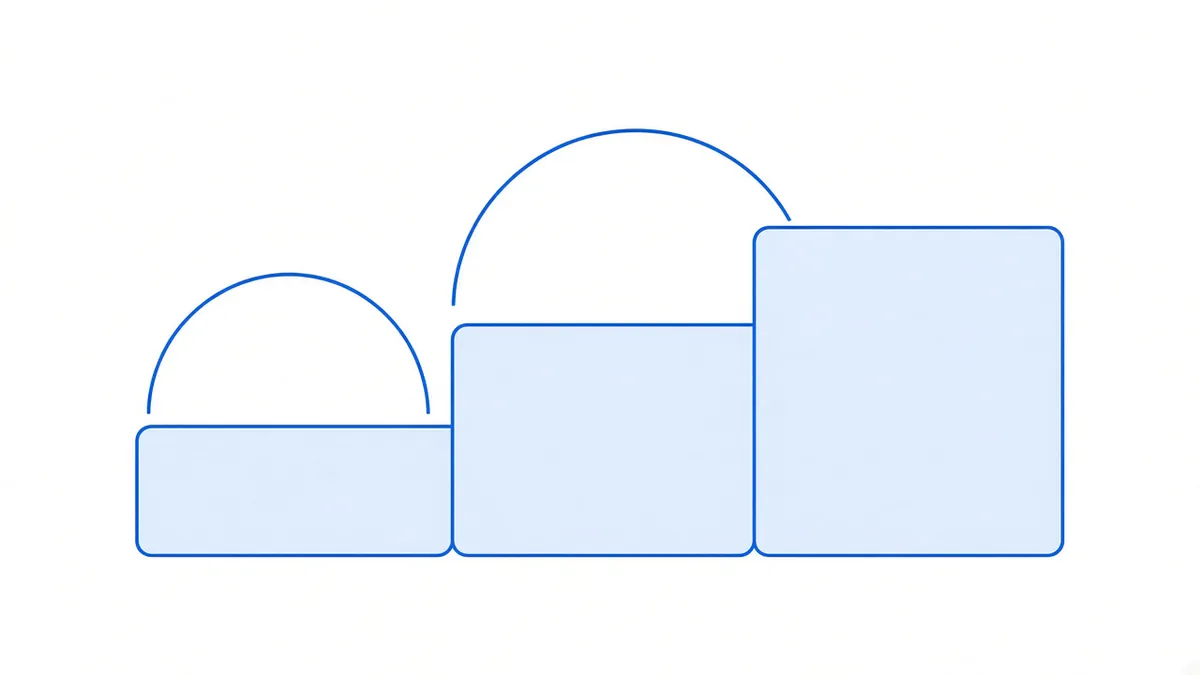
The four bills above describe building both legs yourself. Under custody the bills do not disappear, they change hands — and at larger position size the four costs take a smaller share of the return, which is a property of scale rather than of the strategy.
Our terms start at 5,000 USDT, with investment periods rising by tier from 1 to 5 years and amount tiers of 5,000–20,000, 20,000–100,000 and 100,000 and above. All three carry the same 2% annual management fee, taken out of the return rather than billed to the investor separately; in a year where the return is not enough to cover it, the platform collects less and does not bill the shortfall back.
Amount tiers set the entry size, the term and the service level. They do not set the split. The split follows the plan:
| Plan | Principal guarantee | Floor APR | Excess split (platform : you) |
|---|---|---|---|
| Capital and yield protected | 100% | 7% (take-home) | 100 : 0 |
| Capital protected, 7:3 | 100% | none | 70 : 30 |
| Unprotected, 3:7 | none | none | 30 : 70 |
These three are a protection ladder, not three yield levels: the more of the excess you give up, the more protection you get. On the first plan 7% is both the floor and the ceiling — everything above it goes to the platform, and that is the price of the principal guarantee plus the floor. Full terms per tier are on the pricing page.
Two things have to be stated plainly. The floor and the principal guarantee are honoured by the platform itself, so platform credit risk exists. The third plan carries no principal guarantee; both principal and return move with strategy performance and can lose money. The strategy removes directional price risk, not all risk — who carries which risk goes through them one by one.
So how much does it actually take
The two routes side by side:
- Doing it yourself. No official minimum, but you need the full spot notional, the contract margin and a buffer layer all at once, and you have to accept that the four costs take a larger share at small size. Below a certain size what eats the return is not the market, it is rounding residue and one-off overhead.
- Custody. From 5,000 USDT, with the four bills handled on this side; the price is the 2% annual management fee plus the plan’s excess split, and one additional category of risk in the form of platform credit.
Neither is the cheaper side. They put the same set of costs and risks on different people. For how the two legs, the four costs and the denominator of the return are pinned down, how it works lays it out.
Sources: funding figures come from the backend period-by-period snapshot, as of 2026-08-25 13:42 UTC. Entry size, term, management fee and split ratios come from current product terms. Past data does not indicate future returns; nothing here is investment advice.