
Two answers up front, for the two things people searching this phrase actually want to know.
Negative funding means the contract trades below spot — a discount — and for that period shorts pay longs. Positive funding runs longs-to-shorts; negative simply reverses the direction. That is the entire definition.
Can you run the trade in reverse? Directionally yes, operationally usually no. The obstacle is not the strategy. It is the spot leg: you cannot sell a coin you do not have, and there are exactly two places to get one. Both cost something.
It does not mean “more people are short”
This is the most common misreading, and it is worth killing early.
Funding tracks the gap between the contract price and the spot price. It does not track the number of traders on each side, and it cannot track open interest by side — long and short open interest are equal at every instant, because every contract has both. That is what a contract is.
So why does the confusion persist? Because the two really are correlated: traders in a hurry to get short hit the bid on the contract, push the contract below spot, and the basis inverts. But correlated is not identical. If sentiment turns bearish and spot gets sold just as hard, the basis holds and funding does not move.
The precise reading is: negative funding says the futures market is more pessimistic than the spot market. It does not say more people are bearish than bullish. What a funding rate is covers the mechanism; the one thing to carry forward is that the sign of funding follows the sign of the basis.
When it goes negative
Three patterns show up in live data.
Sustained discount in a deep bear market. Long interest is absent for a long stretch, and the contract sits below spot for weeks at a time. This kind of negative is chronic.
The few hours of a stampede. In panic selling the contract falls faster than spot and funding spikes deeply negative. This kind is sharp but short — often it is back within a few periods.
Small caps under concentrated shorting. Thin float, thin contract depth, and a single large order moves the contract price. In practice almost every deeply negative row is this type. Remember that, because it matters below.
Worth separating: price falling is not the same as funding turning negative. When the price crashes, does funding disappear works through the 29 August 2026 selloff — price down nearly 6%, and 21 consecutive positive settlements.
How common is it, in numbers
Over the most recent 30-day window across 450 Binance perpetuals, 376 symbols accumulated positive funding and 74 accumulated negative — so roughly one symbol in six was on the negative side, and it was not a rare event.
The depth is what the averages hide. In that same window:
| Symbol | 30-day cumulative | Settlements |
|---|---|---|
| ONGUSDT | −80.4961% | 578 |
| ACEUSDT | −44.6184% | 181 |
| COTIUSDT | −31.2796% | 490 |
| SKRUSDT | −30.194% | 322 |
| HOMEUSDT | −21.525% | 181 |
Those five are the argument for reading this article before acting on a negative rate, and against it at the same time. A −80% cumulative looks like an enormous opportunity for whoever can stand on the other side. The rest of this piece is about why standing there is harder than it looks — and note the settlement counts in the third column, because ONGUSDT settles 578 times in 30 days rather than 90, which means its funding interval is far shorter than eight hours and any per-period figure has to be scaled accordingly.
Running it in reverse: the short-spot leg is a hard constraint
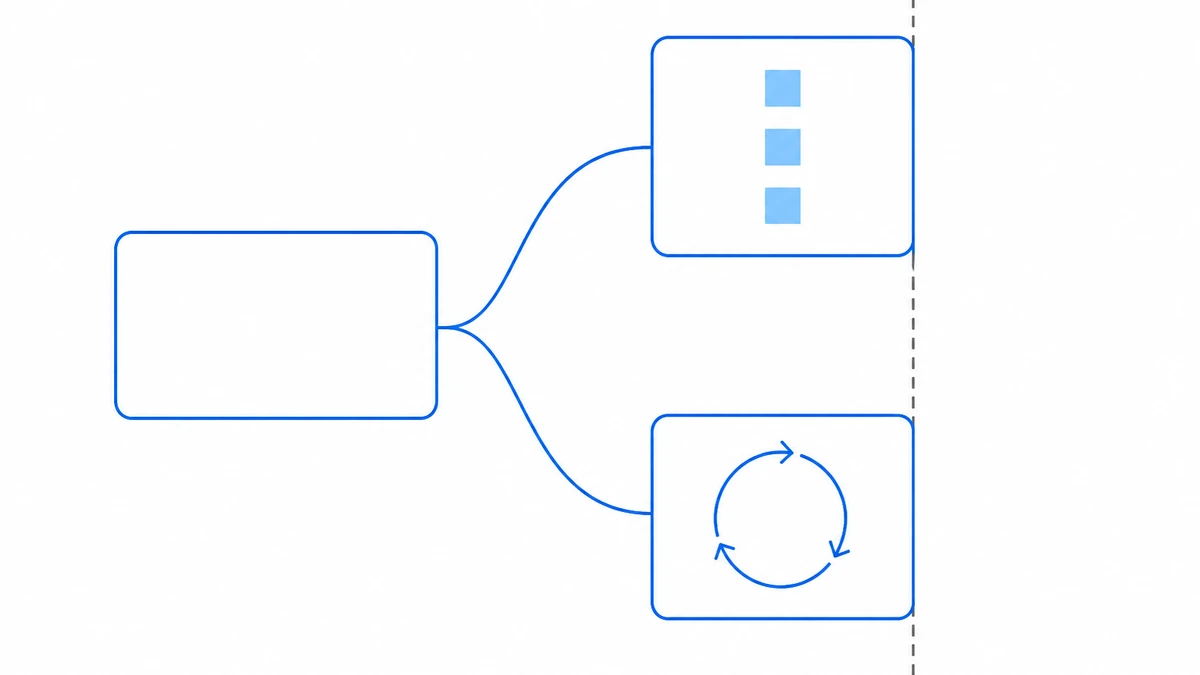
In positive funding you buy spot and short the perp, collecting what longs pay. When funding inverts, the textbook answer is to flip both legs — and in theory that is all there is to it.
In practice it stops at the words “short spot”. You cannot sell what you do not hold, and there are only two sources. There is no third.
Path one: sell coins you already own
Sell an asset you were holding long-term anyway, and open a matching long in the perpetual. The USDT from the sale stays in the account as collateral; the perp long carries the exposure the spot used to carry. You have swapped the vehicle while keeping the same exposure — and picked up negative funding along the way.
The advantage is direct: no borrowing, therefore no interest. Two costs come with it. First, it only applies when you actually hold the asset, and the deepest negative rates are almost always on coins you do not. Second, it manufactures a liquidation point out of nothing. Spot is never liquidated; a perp long is. Before the swap you were holding an asset and sitting still. After it, you hold a position an exchange can close for you.
Path two: borrow the coin and sell it
Borrow the base asset, sell it, and open a matching perp long. This path is not limited by what you hold — and it carries a liquidation point plus a real liability, with interest accruing on the full notional.
Side by side:
| Sell what you hold | Borrow and sell | |
|---|---|---|
| Spot leg | Your own coins | Borrowed coins |
| Collected per period | |funding| | |funding| |
| Paid per period | 0 — nothing borrowed, no interest | Base-asset rate × full notional |
| Size ceiling | However much you hold | However much is available to borrow |
| Extra risk | One liquidation point | One liquidation point plus a real debt |
Three conditions that block it
Being directionally right is not the same as making money. Each of these has shown up in live testing, and any one of them is enough to turn the trade net negative.
One: interest eats the funding. On the borrow path this is the normal case, not the exception. Run the numbers: a row paying −0.01% per 4 hours is roughly 0.06% per day. Interest accrues on the full notional, so the moment the base asset’s daily borrow rate exceeds 0.06%, that row is net negative. Lowering your entry threshold does not fix this; it just opens more losing positions.
Two: you cannot borrow it. As noted, the deepest negative rates sit on small caps — and small caps are exactly what is hardest to borrow. In one scan of live quotes, of 15 symbols that returned a borrow quote at all, 13 had zero available inventory. The more attractive the rate, the more likely there is not a single coin to be had.
Three: the extra liquidation point. In the forward trade, the spot leg cannot be liquidated. The reverse trade replaces it with a perp long, which can. You have added a hard boundary on the downside — the same logic that appears on risk and boundaries.
Routes that look workable and are not
Anyone trying to dodge the short-spot problem arrives at one of these three. None of them work, and the reasons are specific rather than theoretical.
| Idea | Why it fails |
|---|---|
| Long perp + short dated futures | Genuinely neutral and no interest — but those coins have no dated futures. Across 698 Binance perpetuals, only BTC and ETH have quarterly and bi-quarterly contracts, and not one of the negative-funding symbols is among them |
| Hedge across two exchanges | Now you are running deposits, margin and liquidation on both venues separately. That is a different business, not a toggle on this one |
| Synthesise a short via options | Exchange options cover only a handful of majors, again excluding these symbols — and once expiry and greeks enter, the return is no longer coming from funding |
So this is a constraint, not a trade-off to be optimised: on the negative-funding side, the spot leg can only come from coins already held, or coins borrowed.
Two costs nobody escapes
A full round trip is four taker fees. Open two legs, close two legs. Measured on ATOMUSDT at roughly 100 dollars of single-side notional, the four came to 0.1997%, plus about 0.13 dollars of spread across the two legs. The position has to survive enough settlement periods to earn that back before it earns anything.
You have to be alive across a settlement point. Funding is charged against the position snapshot at the instant of settlement — holding time does not enter the calculation. Open and close quickly and you receive zero, not a pro-rated slice. A test position held for six minutes received exactly nothing. Spotting a deeply negative row, jumping in, and leaving before settlement means paying four fees for no funding at all.
So what should you do when funding inverts
Two cases.
You are holding a forward position (long spot, short perp): exit. Do not wait it out. The source of return is gone and the sign has flipped, so every period now moves money out of the account. This is not a rough patch to be endured — the premise the trade was built on is no longer true.
You want to run the reverse trade: work through the three conditions first. Do you hold the coin (if not, borrowing is your only path)? Can you borrow it (13 of 15 rows had zero inventory)? Is the interest below the funding (0.06% daily is a rough dividing line)? Only when all three answers are yes does position sizing become the question.
This is why, in our own system, holdings-swap and borrow-and-sell are two separate switches, both off by default. Not because they cannot be built — because the window in which they hold up is far narrower than the forward side. Why the forward trade runs year-round is covered in how it works; how thin it can get in a bad year is in the performance table.