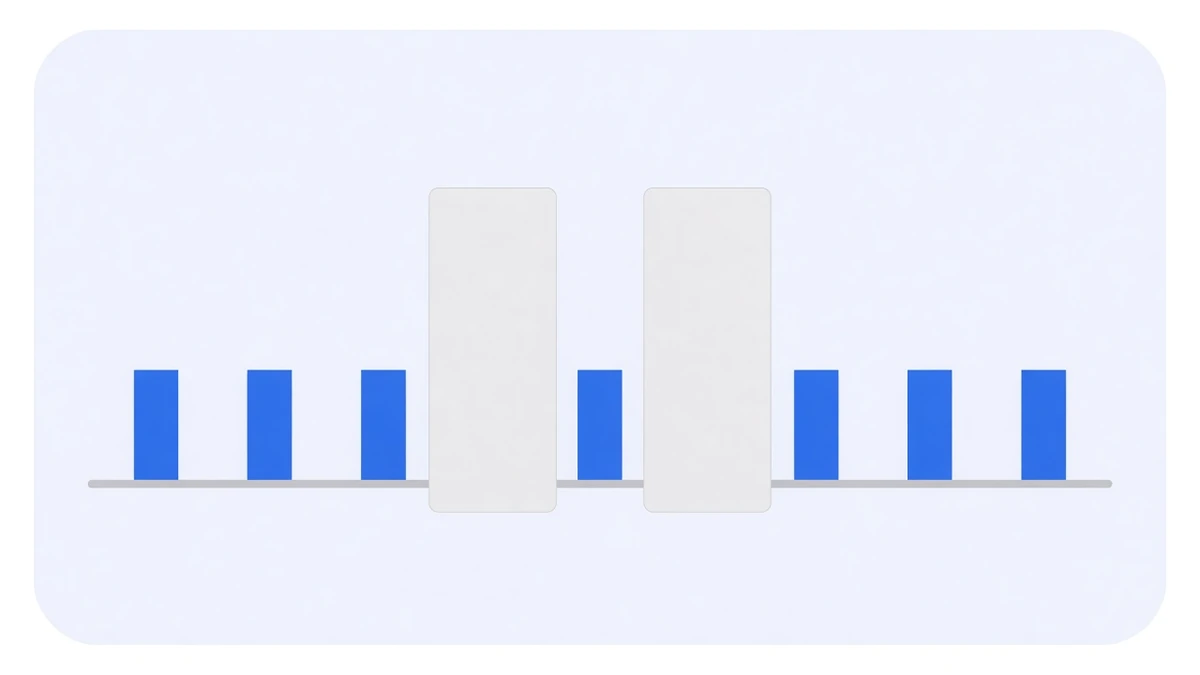
Almost everyone has the same thought once: funding is charged on whatever you hold at the settlement timestamp, so why not sit flat most of the time, put both legs on a few minutes before the snapshot, collect the period, and unwind immediately? Free funding, none of the eight hours of exposure in between.
The mechanism is real — the exchange only looks at the snapshot. The magnitude is not. We counted every settlement across 450 Binance USD-M contracts between 1 January and 24 September 2026, 03:00 UTC: 608,656 periods. The number of them where a single period of funding covered one round trip in fees: 66.
The cost side: four fills, not two
Collecting one period means four executions, not two:
| Action | Leg | Listed taker fee |
|---|---|---|
| Open | Buy spot | 0.1000% |
| Open | Short perp | 0.0500% |
| Close | Cover perp | 0.0500% |
| Close | Sell spot | 0.1000% |
| Total | 0.3000% |
That is Binance VIP0 taker pricing without the BNB discount. Pay fees in BNB, or get both legs filled as maker, and you can push it into the 0.19%–0.24% range; higher VIP tiers go lower. So the table below does not assume one threshold — it walks from 0.30% down to 0.02% so you can find your own fee tier:
| Single-period threshold | Periods in 2026 | Share of all 608,656 | How often on an 8-hour contract |
|---|---|---|---|
| 0.30% or more | 66 | 0.0108% | about 9 years |
| 0.15% or more | 364 | 0.0598% | about 18 months |
| 0.10% or more | 1,095 | 0.1799% | about 191 days |
| 0.05% or more | 5,424 | 0.8912% | about 37 days |
| 0.02% or more | 18,788 | 3.0868% | about 11 days |
The last column is computed on the eight-hour bucket alone: 462,521 periods this year, of which 47 reached 0.30% and 805 reached 0.10%. Spread over a contract that settles three times a day, those are the intervals above.
Put differently: even at a 0.10% all-in cost — already optimistic for a retail account — watching a single eight-hour contract means waiting roughly half a year for one settlement worth acting on.
The majors can be crossed off outright
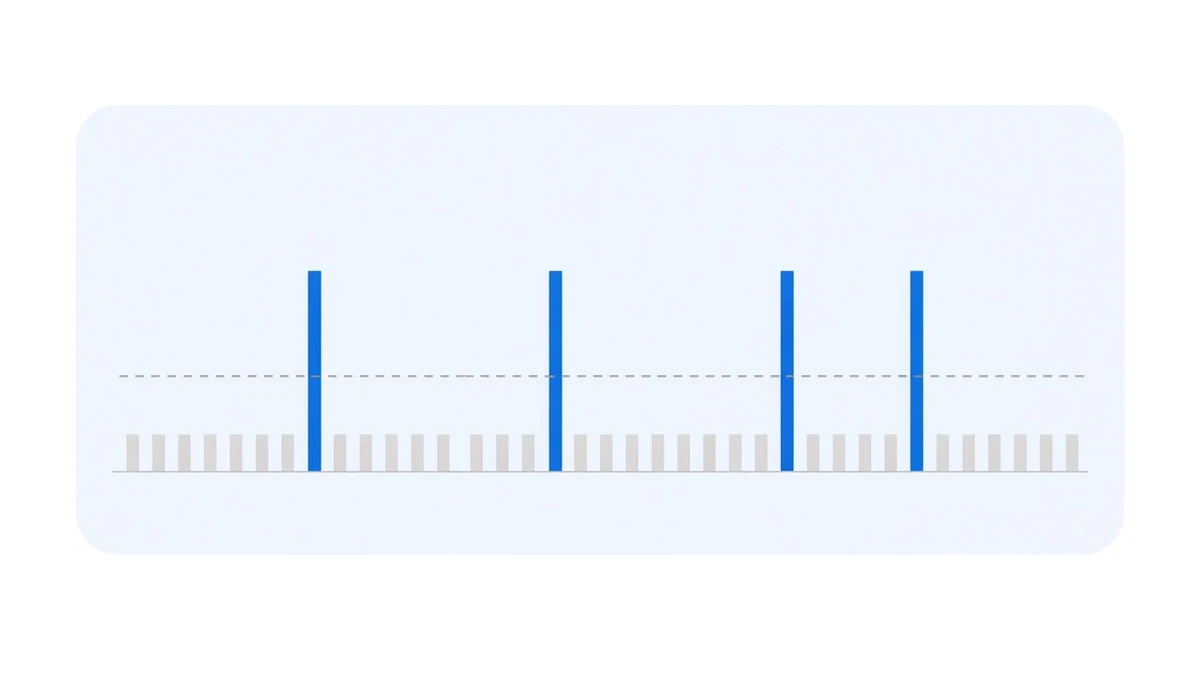
If the contracts you had in mind are BTC, ETH, SOL and BNB — the deepest books, the easiest fills — the table collapses to one row:
| Contract | Periods in 2026 | Mean per period | Highest period | Periods at 0.05% or more |
|---|---|---|---|---|
| BTCUSDT | 799 | 0.002681% | 0.0100% | 0 |
| BNBUSDT | 799 | 0.002653% | 0.0324% | 0 |
| ETHUSDT | 799 | 0.001677% | 0.0100% | 0 |
| SOLUSDT | 799 | −0.001120% | 0.0100% | 0 |
Four contracts, 3,196 settlements this year, not one above 0.05%. BTC’s highest single period was exactly 0.0100% — not a number the market produced, but the ceiling the clamp formula imposes, which is unpacked in waiting for a higher funding rate.
So the best case for sniping BTC is this: you pick the single highest period of the year, collect 0.0100%, pay 0.30%, and are down 0.29%. At this year’s mean of 0.002681% per period, one round trip costs 112 periods of funding income — 37 days at three a day.
Where those 66 periods actually live
They are spread across 15 contracts, and the largest single period was 0.9352%. None of them are majors.
Which is the real problem with sniping. A contract capable of printing 0.3% in one period is one where positioning is extremely one-sided and the book is thin. You would need to push a spot buy and a perp short into that book simultaneously minutes before the snapshot, then pull both out minutes after — four taker fills, with slippage and the bid-ask spread still not counted in the table above. On contracts like these, those two usually cost more than the fees.
Worse is the sequencing: the settled rate is fixed at the settlement instant, and what you see when you open is a prediction. The number ticking on the exchange page keeps moving until the last second before the snapshot. Our own model has 11,472 resolved predictions on record and gets direction right 83.98% of the time (the scorecard is in to collect the next funding period you first have to know its sign). Paying a certain 0.3% to chase a predicted 0.3% and settling at 0.05% is not a mistake you get to average out.
Read the arithmetic backwards and it is about holding period
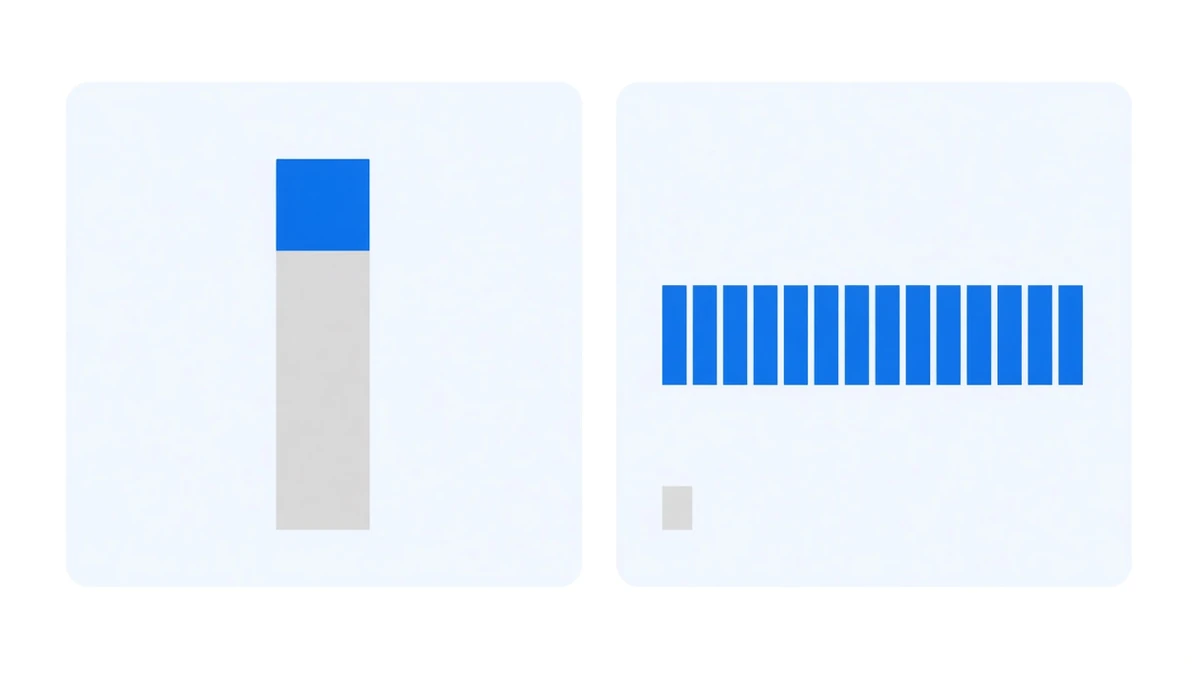
Turn the same calculation around and it says something else: cost is one-off, income is per period.
One round trip of 0.30% spread over 1 period is 0.30%. Over 112 periods it is 0.00268%. Over 800 periods it is 0.000375%. The denominator is the only term you can change for free.
This is also why timing rules almost always lose here. We re-ran 2026 under the rule enter only once funding turns positive: gross return did improve, by 0.38 percentage points, but the cost of the 72 entries and exits came to 56 times that improvement. Sniping is the same rule taken to its limit — the number of round trips goes from 72 to one per period, the cost scales with it, and the income per period does not move at all.
The difference between running this for one year and five is not the slope of the curve; it is how many fixed costs you amortised, which is the subject of how long should you run funding rate arbitrage.
Three ways to shave the cost, answered
- Close only the perp leg and keep the spot? Then you are not neutral — what you kept is a plain long. The thing that removes directional risk is both legs being on at once, which is the flip side of delta-neutral in practice.
- Get maker fills and push the cost to 0.19%? That moves you down one row. On an eight-hour contract, about 9 years becomes about 18 months. The order of magnitude is unchanged. And maker orders do not guarantee fills — an unfilled order five minutes before settlement means you collected nothing and are sitting on a single-leg exposure.
- Switch to four-hour or hourly contracts, since more periods means more chances? The four-hour bucket had 19 of 141,354 periods at 0.30% or more this year — much the same proportion as the eight-hour bucket. And the hourly cohort’s median period this year is −0.047244%, so sniping there mostly means sniping yourself. That cohort gets its own section in Binance funding settlement times.
Conclusion
Settlement sniping works mechanically and fails arithmetically. For it to work, one period of funding has to clear four fees plus slippage, and in 2026 so far that has happened 66 times in 608,656 settlements — all of them on the contracts that are hardest to get in and out of, and zero times on a major.
The return in this strategy comes from the number of periods you are present for, not from any period being unusually fat. How we keep both legs on for the long run is in how it works; the year-by-year record, worst year included, is on performance.
Data: per-settlement funding rates from our own collection database (sourced from Binance’s public USD-M endpoints), window 2026-01-01 00:00 UTC to 2026-09-24 03:00 UTC, 608,656 periods across 450 symbols, of which 462,521 settled on an eight-hour cadence, 141,354 on four hours and 4,774 on one hour. Cumulative and mean figures are sums of individual periods, not compounded. Fees use Binance’s published listed rates (spot taker 0.1000%, USD-M taker 0.0500%, VIP0, no BNB discount) and exclude spread and slippage, so real costs are higher, never lower. Contract tickers are shown to document the data, not as recommendations. Past data does not indicate future returns.