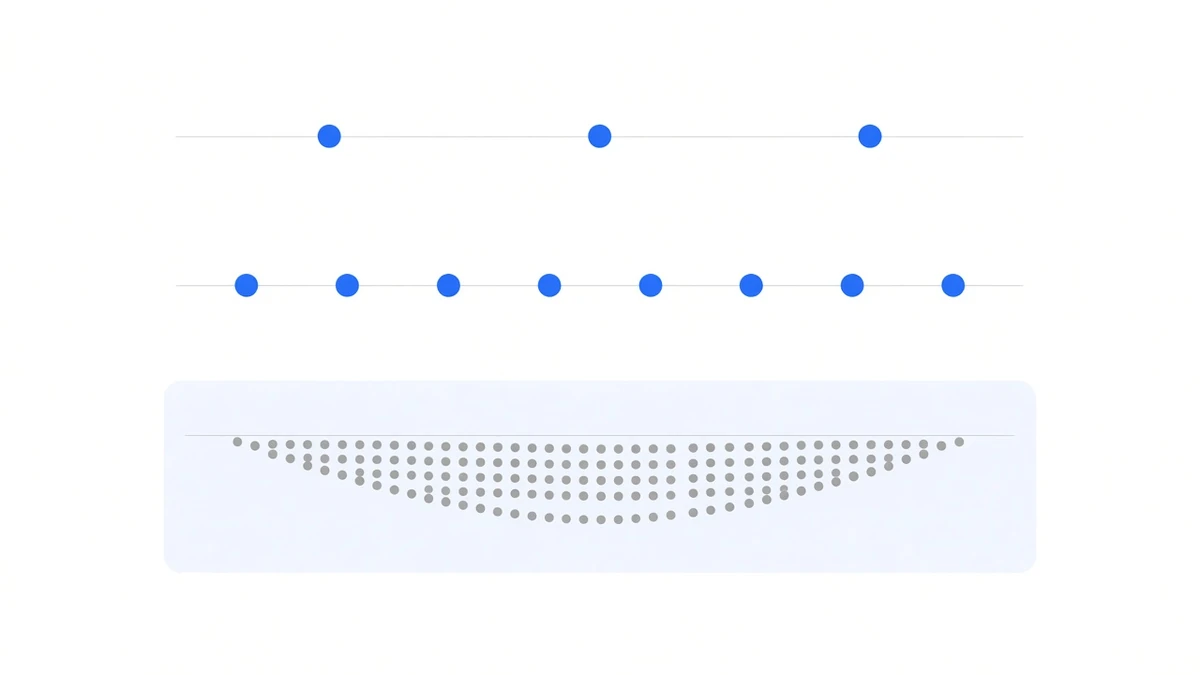
Ask when Binance settles funding and almost every answer stops at the same sentence: every 8 hours, at 00:00, 08:00 and 16:00 UTC.
That is not wrong. It just no longer covers more than 128 of the 450 USD-M contracts.
We counted the gap between consecutive settlements for all 604k periods in our database between 1 January and 22 September 2026, 03:00 UTC. Binance is currently running three cadences side by side:
| Cadence | Contracts | Settlement times (UTC) | Per day |
|---|---|---|---|
| 8 hours | 128 | 00:00 / 08:00 / 16:00 | 3 |
| 4 hours | 321 | 00 / 04 / 08 / 12 / 16 / 20 | 6 |
| 1 hour | 1 | every hour | 24 |
The majors are the minority here. BTCUSDT, ETHUSDT, SOLUSDT and BNBUSDT are all still on a clean 8-hour schedule, 793 periods each so far this year, not one missing. But most of the high-funding altcoins you see on a leaderboard have already moved to four hours.
There is a fourth case: temporarily switched to hourly
The table above counts each contract’s dominant cadence — the interval that shows up most often across the year. The number of contracts that actually entered hourly funding at some point in 2026 is not 1. It is 95.
Between them they produced 16,443 hourly settlements, averaging 173 periods per contract, roughly a week. Here is what those stretches looked like:
| Hourly cadence | Same contracts, 4-hour | Same contracts, 8-hour | |
|---|---|---|---|
| Periods | 16,443 | 133,613 | 5,680 |
| Mean per period | −0.11473% | −0.01145% | −0.01822% |
| Share negative | 89.25% | 25.94% | 26.50% |
Same contracts. On the hourly schedule their mean period is ten times larger — and pointed the wrong way. The share of negative periods goes from a quarter to nine in ten.
If you are short the perpetual against spot, negative funding is money going out. Summing each contract’s funding across its hourly stretch:
| Contract | Hourly periods | Window | Cumulative funding |
|---|---|---|---|
| LABUSDT | 518 | 06-01 → 07-09 | −165.677% |
| SENTUSDT | 638 | 01-29 → 02-25 | −107.540% |
| HOMEUSDT | 460 | 06-04 → 06-24 | −103.848% |
| BARDUSDT | 868 | 03-05 → 04-10 | −97.993% |
| DEXEUSDT | 406 | 07-21 → 08-07 | −97.798% |
| ONGUSDT | 554 | 08-21 → 09-14 | −73.660% |
| ESPORTSUSDT | 507 | 06-13 → 07-29 | +6.132% |
91 of the 95 finished their hourly stretch in the red, averaging −19.858%. ESPORTSUSDT is the only one near the top that came out positive.
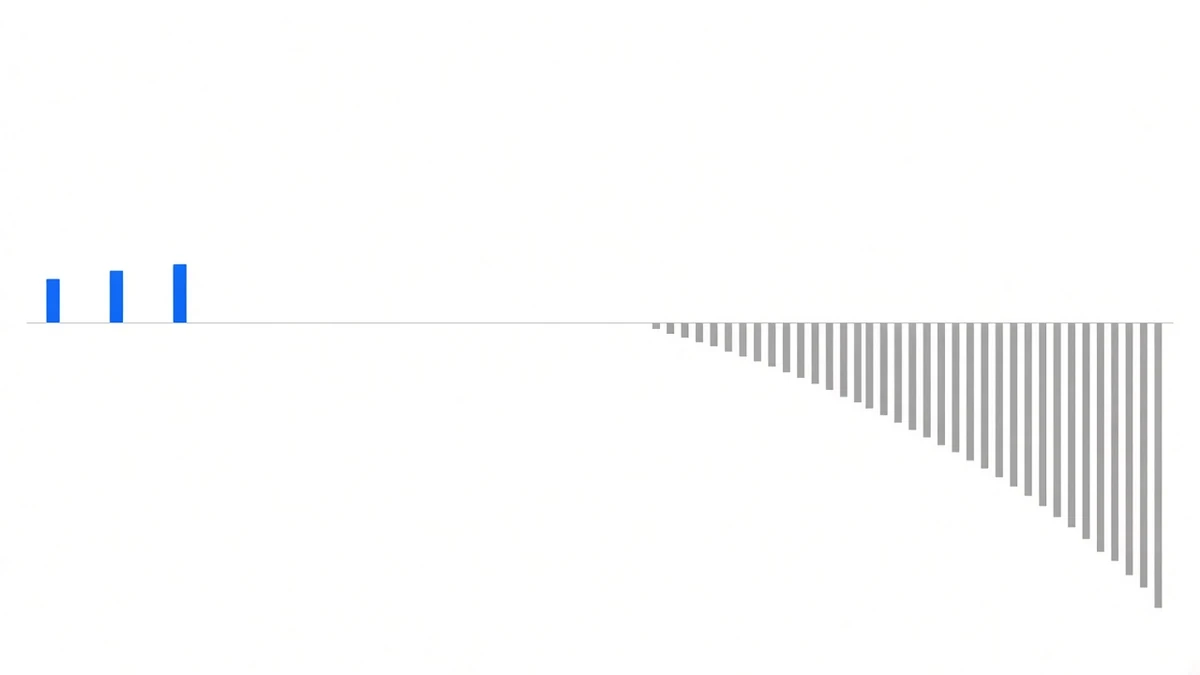
Why does an exchange shorten the interval? To pull the perpetual back toward spot faster. The situations that call for faster convergence are almost always deep discounts — crowded shorts, deeply negative funding. So a switch to hourly is not a neutral parameter change. It is itself a signal: the exchange thinks that contract needs intervention, and from now on it settles every hour.
How different are the three 8-hour slots?
Back to the 128 contracts still on eight hours. Three settlements a day — are they interchangeable?
Grouping every period since 1 January 2025 for the four majors by settlement hour (BTC and ETH have 1,888 periods each; SOL and BNB have been collected since August 2025, roughly 1,199 each):
| Symbol | 00:00 UTC negative | 08:00 UTC negative | 16:00 UTC negative |
|---|---|---|---|
| BTCUSDT | 21.90% | 16.06% | 17.65% |
| ETHUSDT | 23.49% | 21.30% | 22.58% |
| SOLUSDT | 40.75% | 45.36% | 48.00% |
| BNBUSDT | 3.76% | 3.26% | 3.76% |
The BTC row looks like it has a story: the 00:00 settlement goes negative 1.36 times as often as the 16:00 one.
Do not trade it. Two reasons.
First, the sample is thin. Each cell holds 630 periods, and the gap between 21.90% and 16.06% is about 2.6 standard errors — over the line, but not the kind of certainty you bet on. ETH and BNB are nearly flat across all three slots, and SOL runs the other way entirely (16:00 is its worst). There is no consistent direction across the four.
Second, it washes out at market scale. Across every settlement on the three main slots in 2026: 24.32% negative at 00:00, 24.11% at 08:00, 25.28% at 16:00. More than 110,000 periods each, and under a percentage point between them.
Meanwhile a full round trip costs 0.30%. At BTC’s median funding this year that is ninety-odd periods of income — the entry-timing piece works that arithmetic out in full, and the conclusion holds here too: trading in and out to dodge one settlement slot costs an order of magnitude more than it saves.
How to tell what your contract is actually on
Here is a trap we fell into ourselves.
Every row in our collection database carries a settlement-interval field, and early on we took it at face value. Reconciliation later showed that 59.16% of the 2026 rows disagree with the gap to their own previous timestamp. BARDUSDT is typical: it settles every four hours without fail (00, 04, 08, 12, 16, 20, none missing), yet that field flips between 8 and 4 between adjacent rows.
What makes it dangerous is that the error is silent. Annualise with it and you get a number that is off by a factor of two, with nothing anywhere looking wrong. So every cadence figure in this article is derived from the gap between consecutive timestamps, and no declarative field is trusted.
Do the same when you check your own: ignore the static line on the contract detail page, pull the last dozen settlement times and subtract. Four hours apart means four hours. One hour apart — go look at the signs on those dozen periods right now.
What this changes
Three things, in order of importance.
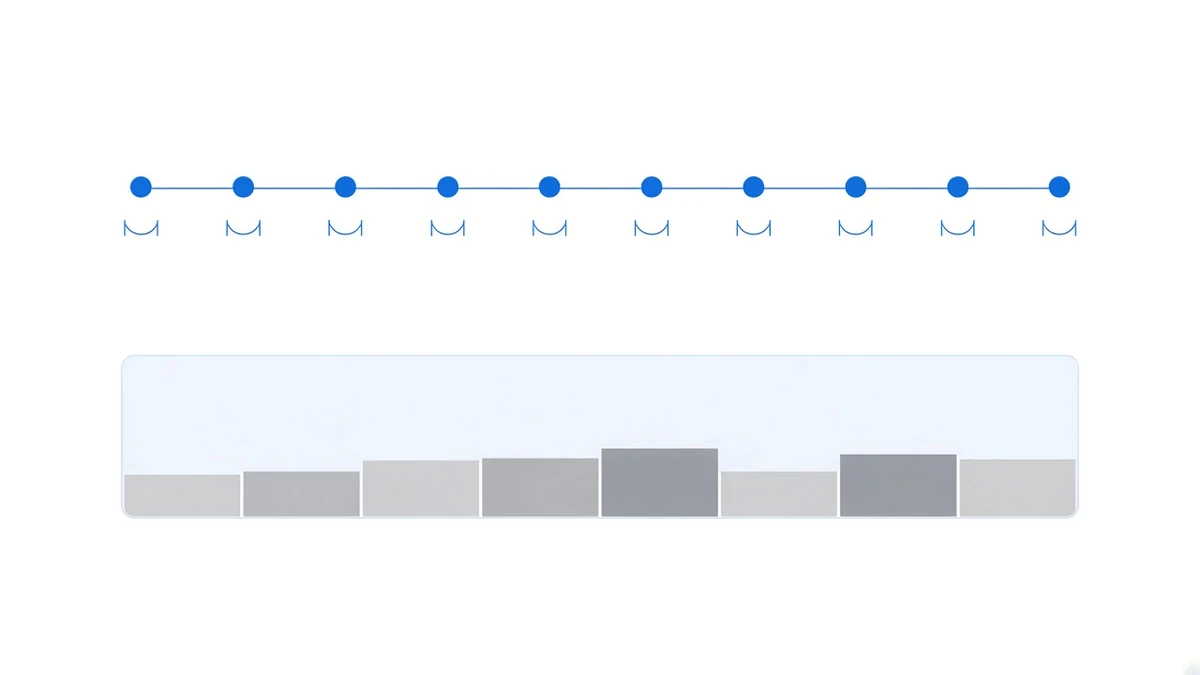
The denominator moved. Annualising a per-period rate with the habitual ×3-per-day undercounts by half on 321 four-hour contracts. Read it the other way too: when an altcoin shows a spectacular annualised figure, ask how many times a day it charges before you ask how high the rate is. Whether the annualised number should double when the interval halves is a question two exchanges answer differently — unpacked in eight hours to four.
Funding is charged on a snapshot, not on time held. Only positions open at the settlement instant count. Close a minute early and those eight hours earn nothing. This is also why rebalancing should stay clear of the minutes around a settlement.
A sudden switch to a shorter interval is worth a look. Not because it guarantees a loss, but because 91 of those 95 contracts finished the stretch negative. That ratio moves it from “technical parameter change” to “go check what is happening to that contract.” What to do when funding actually turns negative is in negative funding; who carries which risk is in the risks.
The short answer
Asking when Binance settles funding requires asking which contract first.
Majors are still 00:00, 08:00 and 16:00 UTC. Most altcoins settle every four hours, six times a day. And any contract can be switched to hourly for a stretch — during which, nine times in ten, it is paying out rather than collecting.
Year-by-year results for this strategy on real funding series are in performance, worst years included; how the two legs are actually run is in how it works.
Data: per-settlement funding rates from our own collection database (sourced from Binance’s public USD-M endpoints), covering 2020-01-01 to 2026-09-22 03:00 UTC, 450 symbols and 897,919 periods in total. Cadence statistics use the 603,966 periods between 2026-01-01 and 2026-09-22 03:00 UTC, with cadence determined by the mode of gaps between consecutive timestamps, not the interval field in the database (59.16% of its rows disagree with the actual gap). The settlement-slot comparison starts 2025-01-01: 1,888 periods each for BTCUSDT and ETHUSDT, roughly 1,199 each for SOLUSDT and BNBUSDT, collected since August 2025. The 0.30% round-trip cost is broken down in six hidden costs. Yearly cumulative figures are in performance, site snapshot 2026-08-25 13:42 UTC. Past performance does not indicate future results.