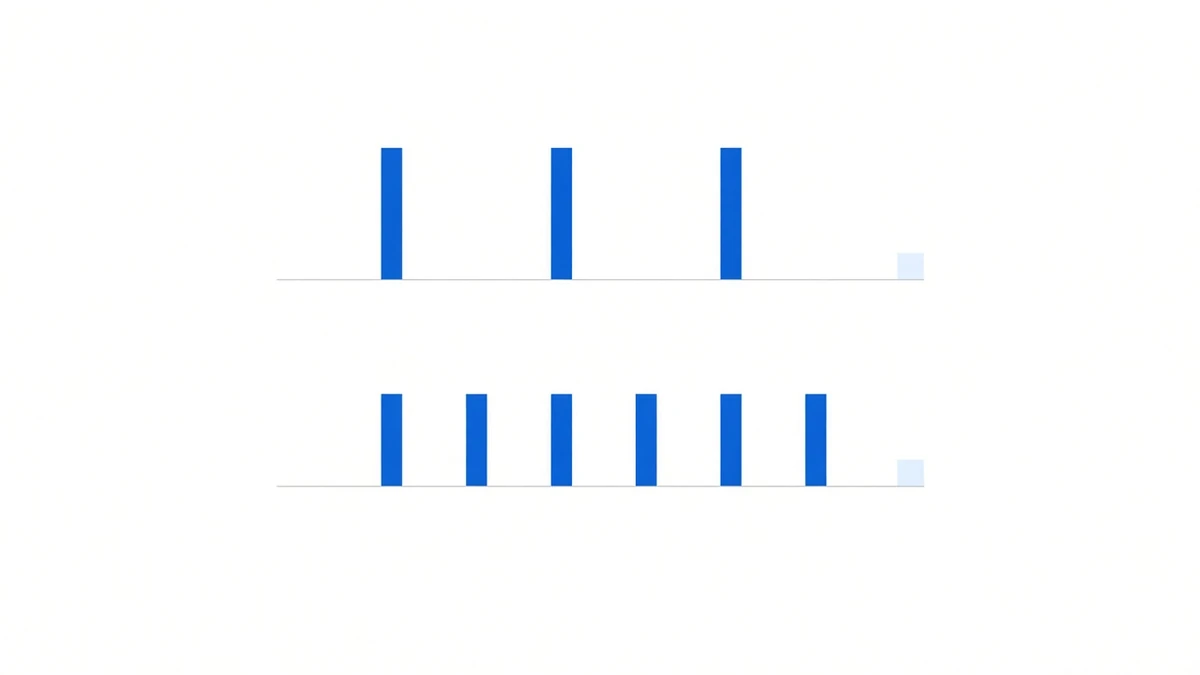
An exchange posts a notice: “From date X, funding settlement for this batch of perpetual contracts changes from every 8 hours to every 4 hours.”
What does that sentence mean for an arbitrage book? It depends entirely on which exchange sent it. The same action is handled in opposite ways by two major venues: at one the annualised rate doubles, at the other it does not move at all.
And the two notices are worded almost identically.
Get the arithmetic straight first
A funding rate is a per-period percentage. Annualising it means multiplying by the number of periods in a year:
annualised = per-period rate × (24 ÷ interval hours) × 365So the same 0.01% becomes:
| Interval | Periods per day | Annualised at 0.01% |
|---|---|---|
| 8 hours | 3 | 10.95% |
| 4 hours | 6 | 21.90% |
| 2 hours | 12 | 43.80% |
| 1 hour | 24 | 87.60% |
Which puts the whole question in one place: after the interval changes, does the per-period rate shrink to match? The two venues answer differently.
OKX: divide by 8/N, annualised unchanged
Effective 1 June 2026 OKX added an interval factor to its formula, migrating every perpetual by 4 June:
funding rate = clamp[ (average premium + clamp(interest − average premium, −0.05%, 0.05%)) / (8 / N), floor, cap ]

N = settlement interval in hours, N ∈ {1, 2, 4, 8}
That /(8/N) term is the whole story:
| N | Divisor | Per-period rate | Annualised |
|---|---|---|---|
| 8 hours | ÷ 1 | unchanged | unchanged |
| 4 hours | ÷ 2 | halved | unchanged |
| 2 hours | ÷ 4 | a quarter | unchanged |
| 1 hour | ÷ 8 | an eighth | unchanged |
Twice the periods, half the rate, and the product cancels exactly. For OKX, changing settlement frequency is a decision about how often you settle, not about how much you collect.
It also explains why Hyperliquid’s readings look so small. It settles hourly by design, and the BTC reading we pulled was 0.0000125 — precisely 0.0001 ÷ 8. Divided the same way.
Binance: no divisor, annualised doubles
Binance changed eighteen TradFi perpetuals (synthetic equity contracts) in two batches this September:
| Date | Batch | Change |
|---|---|---|
| 09-04 08:15 UTC | 9 contracts (KODEX200, NAVER, Samsung names) | 8h → 4h, cap/floor ±2% → ±1% |
| 09-10 08:15 UTC | 9 contracts (Meituan, Kuaishou, Tencent and others) | 8h → 4h, cap/floor ±2% → ±1% |
Note that what changed is the cap and floor, not a divisor on the per-period rate. Caps only engage in extreme conditions, so the everyday reading that never touches the cap passes through unchanged. Under the same premium conditions, three periods a day becomes six, and the annualised figure doubles.
Binance is explicit about the surrounding machinery: it wrote these two batches an exemption. Under the normal rules a contract that repeatedly pins its cap or floor is automatically escalated from 4 hours to 1 hour, and these eighteen are excluded from that path. In other words, automatic escalation is a real mechanism at Binance — this batch was simply carved out of it.
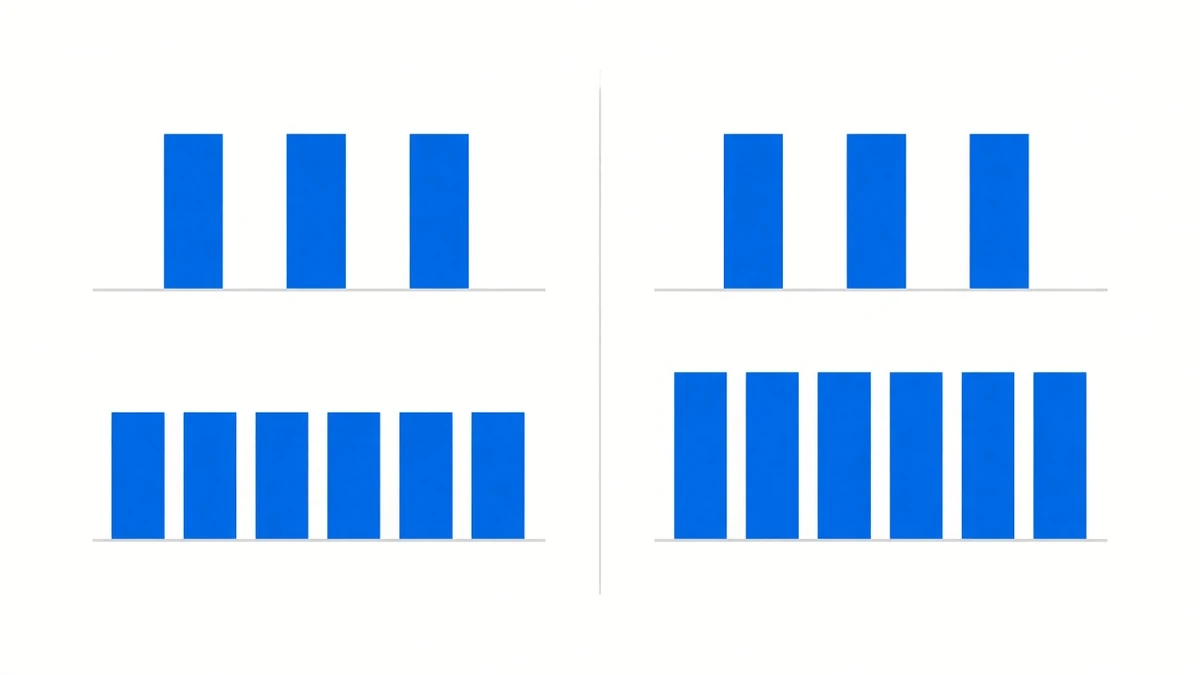
OKX also has a rule that changes gear on its own
Since 14 April 2026, OKX escalates one step at a time (the older mechanism jumped straight to hourly):
- Rate touches the cap or floor at settlement → move up one level (8h → 4h → 2h → 1h).
- The condition for stepping back down: measured at the default settlement times, every period within a continuous 12 hours stays inside ±0.20%, and the default frequency resumes without a separate announcement.
- TradFi perpetuals (equities, ETFs, commodities) are excluded from automatic adjustment and stay at their default frequency permanently.
For anyone holding a position, this means the “settles every 8 hours” you looked up when you opened is not a fixed property of the contract. In a violent week it may already have become hourly while your cost model is still assuming three periods a day. OKX exposes the current interval on the contract information page and through GET /api/v5/public/funding-rate, and that field has to be read live, not cached.
Three venues at the same instant
Read at 2026-09-21 07:31 UTC, in a single pull:
| Instrument | Binance (8h) | Annualised | Bybit (8h) | Annualised | Hyperliquid (1h) | Annualised |
|---|---|---|---|---|---|---|
| BTC | 0.009648% | 10.56% | 0.009013% | 9.87% | 0.001250% | 10.95% |
| ETH | 0.008196% | 8.97% | 0.007575% | 8.29% | 0.001769% | 15.50% |
| SOL | 0.010000% | 10.95% | 0.010000% | 10.95% | 0.001250% | 10.95% |
| BNB | 0.010345% | 11.33% | 0.010000% | 10.95% | 0.002853% | 24.99% |
Look at the BNB row. Hyperliquid reads 0.002853%, less than a quarter of Binance’s 0.010345%, and annualises to more than double it. ETH behaves the same way.
All three venues show SOL at exactly 10.95%, because all three had that period sitting inside their respective dead zones — that is a baseline value, not a market value. We wrote that up separately in 790 periods this year, not one above 0.01%.
The pitfalls of cross-venue comparison have their own piece: the smallest reading annualises highest. What this article adds is the other half — what happens when a single exchange changes its own interval.
Three practical consequences
1. “Periods to break even” is meaningless across venues; convert to days
The genuinely actionable number on a scanner is periods to break even:
periods to break even = ⌈ all-in round-trip cost ÷ per-period return ⌉At 0.30% all-in (four taker fills, itemised in the six hidden costs):
| Case | Per-period rate | Periods | Days |
|---|---|---|---|
| 8-hour | 0.01% | 30 | 10 |
| 4-hour, Binance convention (rate unchanged) | 0.01% | 30 | 5 |
| 4-hour, OKX convention (rate halved) | 0.005% | 60 | 10 |
The middle row has exactly the same period count as the first and half the days; the third row has double the period count and exactly the same days. Sort a cross-venue scanner by period count and you get it wrong both times.
2. Changed caps mean changed extremes
Binance took those two batches from ±2% to ±1% while doubling the period count — so the most that can move within any eight hours is roughly unchanged (two periods of ±1% against one of ±2%). That is a smoothing action, not a reduction in the risk ceiling; do not read it as the latter.
One number that tends to get missed: caps differ widely between contracts on the same exchange. In our pull, OKX’s BTC-USDT-SWAP was ±0.375% while ETH, SOL and BNB were all ±0.75% — a full factor of two.
3. Your holding-cost model cannot hard-code the interval
This is the one that bites in code. Hard-coding “3 periods a day” understates holding cost by three quarters after an OKX escalation, and understates revenue by half after a Binance switch to 4 hours.
Neither mistake raises an error. They quietly misorder the scanner, and then you pick instruments in the wrong order. The fix is to read the contract’s current interval at pricing time rather than recording it once at entry.
The one-line version
When you see a funding number, ask the interval before the magnitude; and when an interval changes, ask one more question: does that venue divide by 8/N.
Skip the second question and the same announcement means your yield doubled at one venue and nothing happened at the other — with the two notices worded almost the same.
A boundary worth stating: the eighteen contracts Binance changed this September are synthetic equity perpetuals, not instruments we trade. They are here because this is the cleanest controlled comparison of the year — same month, same action, two opposite treatments. The mechanism applies equally to crypto perpetuals.
For how the clamp term decomposes, see how funding is calculated; for why four venues can read three times apart at the same instant, cross-exchange funding; for the real year-by-year results once all these conventions are pinned down, the six-year review and our track record.
Sources: OKX’s 8/N formula and migration schedule from the OKX notice on revising the perpetual funding rate formula (published 2026-05-29, live 1 June, migration complete by 4 June); automatic escalation and the step-down condition from OKX’s upgrade to automatic funding settlement period adjustment (effective 2026-04-14); dates, contract lists and the ±1% caps for Binance’s two TradFi batches from Binance announcements as reported by Coinlive (09-04 batch) and Dave Finances (09-10 batch); the three-venue simultaneous readings from Binance fapi/v1/premiumIndex and Hyperliquid info/predictedFundings (a single response carrying Binance, Bybit and Hyperliquid quotes with their respective intervals), read at 2026-09-21 07:31 UTC; OKX caps from api/v5/public/funding-rate, read at 2026-09-21 07:32 UTC. Annualised figures throughout assume the current reading holds unchanged and are comparison values, not expected returns.