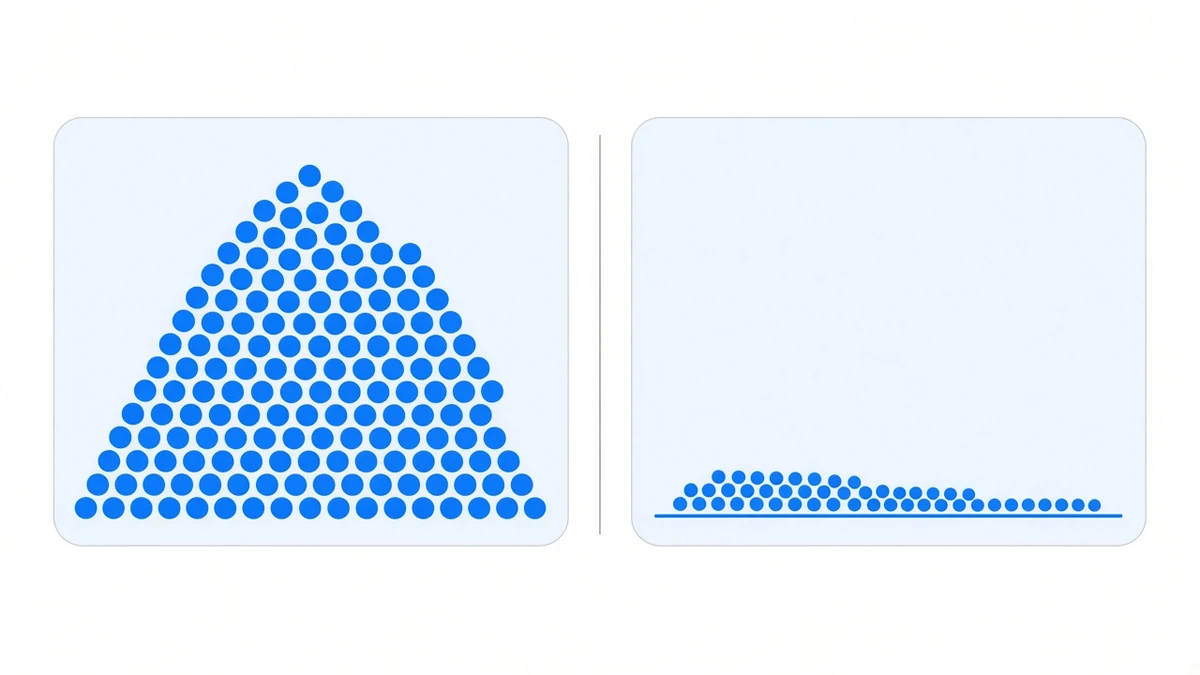
What gets balanced is exposure, not margin. On the exchange’s side those two things are not even on the same ledger.
The spot leg lives in the spot (or margin) account, the futures leg in the futures account. What the futures account sees is one lone short — it does not know you are holding an equal amount of the coin next door, and it has no intention of finding out. Price goes up, the short bleeds, the margin ratio falls, and the moment it touches the maintenance margin requirement the system closes it like any other position.
Your spot leg is making exactly that much money at the same moment, but that money is not in the futures account.
This piece lays out the routes liquidation actually arrives by, and gives you one line of arithmetic you can run yourself.
The distance to liquidation is one formula
When the two legs are balanced by notional, there are startlingly few parameters. Let C be the total capital, L the multiple on the futures leg, m the maintenance margin rate, and N the notional carried by each leg.
Balanced notional means the spot leg spends N and the futures leg locks up N/L in margin, so total capital is C = N + N/L.
When price rises by x, the unrealised loss on the futures leg is N·x. The moment margin minus that loss meets the maintenance requirement is the liquidation point:
N/L − N·x = N·mN cancels from both sides:
x = 1/L − mThe distance to liquidation has nothing to do with how much money you put in. It is set by the multiple and the maintenance margin rate, and by nothing else. Most people do not believe that the first time they read it, but it falls straight out of the two lines above: when the money grows, notional and margin grow in the same proportion, and the ratio between them does not move.
With real prices in it
Take a BTCUSDT mark price of 80,593.70 (Binance’s public USDT-margined futures endpoint, read at 2026-09-20 14:11 UTC) and a maintenance margin rate of 0.4% — a common value for the lowest BTCUSDT tier. When you write this into a strategy, read the rate from the exchange API rather than copying the number here. Total capital 20,000 USDT:
| Multiple on futures leg | Notional per leg | Futures margin | Rise that liquidates | BTC price |
|---|---|---|---|---|
| 2× | 13,333 USDT | 6,667 USDT | +49.60% | 120,568 |
| 3× | 15,000 USDT | 5,000 USDT | +32.93% | 107,136 |
| 5× | 16,667 USDT | 3,333 USDT | +19.60% | 96,390 |
| 10× | 18,182 USDT | 1,818 USDT | +9.60% | 88,331 |
| 20× | 19,048 USDT | 952 USDT | +4.60% | 84,301 |
Read two of those columns together. As the multiple climbs, notional barely moves — 13,333 to 19,048, about forty percent more. Meanwhile the distance to liquidation collapses from 49.60% to 4.60%, a factor of ten. What the multiple buys you scales linearly. What it costs you does not.
Sizing a delta-neutral position covers how much to put on each leg. This piece covers how far you are from the line once you have. Both need doing; people who only do the first one get taken out by the second.
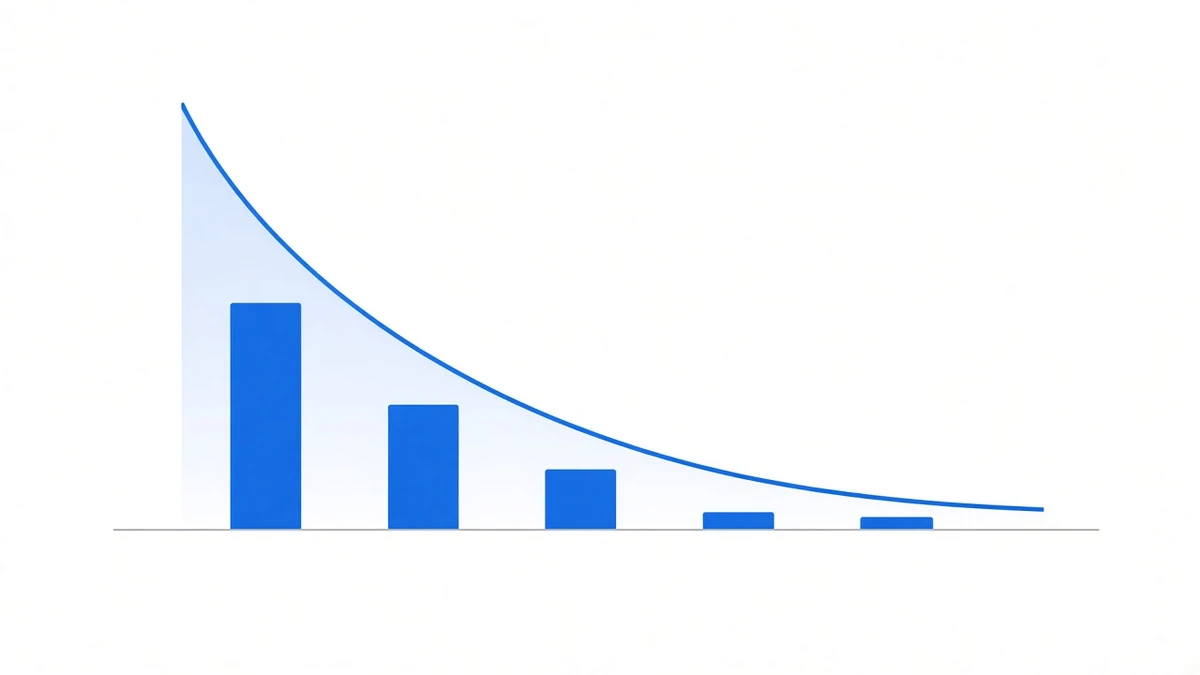
Three routes it actually arrives by
The formula describes the cleanest possible case. What takes people out in practice is usually one of the three below, and none of them is in the formula.
Route one: the spot leg’s money cannot reach the futures leg
The most common one, and the least technical.
Price rises, the futures leg needs margin, and all your money is sitting in coins on the spot leg. Either you transfer funds or you sell some spot — and both have to actually complete in that moment. When the market is moving fast, transfers queue, spot orders do not fill, APIs rate-limit. Any one of those sticking makes the x in the formula meaningless.
So the real distance to liquidation is the distance the formula gives you, minus however far price can travel in the time it takes you to top up margin. There is no formula for that second term. You have to time it on your own account.
Route two: tiered margin moves you up a bracket and m grows on its own
The m in the formula is not a constant. Maintenance margin on perpetuals is tiered by notional: cross into the next bracket and m rises while the maximum available multiple is cut.
Which produces an odd situation. You do nothing at all; the market simply rallies, your notional rises with it, you cross into the next bracket, and the distance to liquidation shortens by itself. At size this is nastier than route one, because it does not require you to make a mistake. It is the second of the four capacity walls, worked through in how much money fits in funding rate arbitrage.
Route three: auto-deleveraging — not liquidated, but no longer balanced
The least discussed of the three.
In violent conditions the side being liquidated may not find a fill in the market, and the insurance fund may not be able to absorb it either. The exchange then triggers auto-deleveraging: it ranks the profitable positions on the opposite side by profit and leverage and closes part of them outright.
A balanced two-leg position is exactly the sort of candidate that ranks high — when price is crashing, your futures short is deep in profit. You have done nothing wrong, your margin is ample, and a slice of your position is gone anyway.
The consequence is not a loss. It is that from that second onward you are no longer neutral: the spot leg is still full, the futures leg is short by a piece, and the difference is a naked long. Nobody will notify you to rebuild it. You have to be watching.
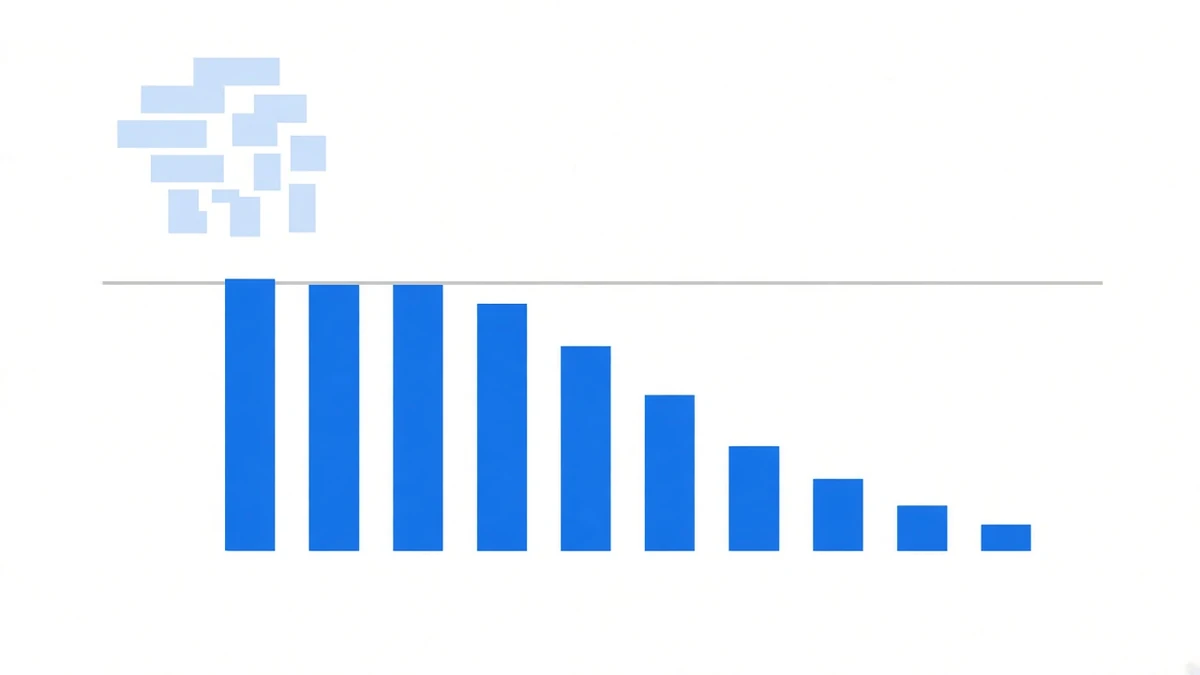
Bankruptcy is a separate thing
Liquidation is “margin ran out, the system closed you.” Bankruptcy is “price had already jumped past the level by the time it closed, and the account is left owing money.”
Normally the exchange’s insurance fund absorbs that gap. In extreme conditions the fund cannot, and that is what triggers the auto-deleveraging above. So bankruptcy, the insurance fund and ADL are three links in one chain, not three independent risks.
For a two-leg position there is one sentence to take from this end: your futures leg can be profitable throughout and still be cut back because somebody else went bankrupt.
How much portfolio margin solves
Portfolio margin (a unified account) computes spot and futures against one margin pool, and at that point the value of the spot leg genuinely does support the futures leg. Route one is substantially eased.
What it does not solve is worth stating plainly:
- Route two is unchanged. Brackets are keyed to notional, regardless of how margin is computed.
- Route three is unchanged. ADL is an exchange-level mechanism; a unified account does not exempt you.
- And it introduces something new. Inside one pool, the haircut applied to the spot leg is set by the exchange, and the exchange can change it. The moment a haircut is cut, your available margin shrinks out of thin air. One of the six hidden costs is exactly the case where the collateral ratio is zero.
Three numbers you can work out yourself
- What is
1/L − m? That is your nominal distance to liquidation. Below ten percent and a single daily candle can reach it. - How long does topping up margin take, from decision to funds landed? Time a real transfer. Do not use “should be quick.”
- Which bracket does your notional per symbol sit in? The moment you cross, the answer to item 1 shrinks on its own.
The first two you can change. The third you can only watch.
What the platform side does about it
In a managed arrangement this work sits with the platform: watching margin ratios, holding buffers, moving funds between accounts, adjusting ahead of delistings and bracket changes. What that can do is push routes one and two further out. What it cannot do is make liquidation stop existing — ADL and exchange parameter changes are outside anyone’s control.
Across all three plans, funds are held in a dedicated platform account, with a flat 2% annual management fee deducted from returns. Balance, per-trade records, positions, the return curve and withdrawal progress are visible on the investor side. Plans one and two include a 100% principal guarantee; plan three does not. The guarantee is performed by the platform itself, so it carries platform credit risk. The plans page governs the terms.
Put differently: choosing a managed arrangement does not delete the risks in this piece, it swaps them for a different one. You no longer have to watch a margin ratio at 4am; the price is that you have to trust a counterparty. Which trade is better for you is what the four questions in choosing a funding rate arbitrage platform are for.
And to finish the thought properly: balancing the two legs removes directional price risk, not all risk. Funding goes to zero and turns negative too — the 0.787256% ETHUSDT line for 2022 on the track record page is how that happened, and SOLUSDT is still negative year to date (site snapshot −1.125987% as of 2026-08-25; pulled live from the Binance API through the 09-20 08:00 settlement, 788 periods, it is −0.960962%).
Sources: BTCUSDT mark price and period-by-period funding from Binance’s public USDT-margined futures endpoints (read 2026-09-20 14:11 UTC, latest settlement 09-20 08:00 UTC); the 0.4% maintenance margin rate is a common value for the lowest bracket — actual bracket tables vary by symbol and venue and can be changed at any time, so read them from the API; plan terms per the plans page; yearly totals on the track record page, site snapshot as of 2026-08-25 13:42 UTC. Past performance does not indicate future results, and this is not investment advice.