The theory half is everywhere: buy spot, short the same size on the perpetual, collect funding. What actually stops people is the other half — how the accounts are wired, which API permissions to enable, and how both legs land at the same time. Get those three wrong and no amount of strategy clarity produces a first order.
Which route this article covers. Everything below is the do-it-yourself route: your own Binance account, your own keys, your own screen to watch. That is not how our side works — funds are held in the platform’s dedicated account under separate books, and we take no exchange API keys from you at all; balance, per-trade history, positions, the return curve, subscription records and withdrawal status are all available to the investor in real time. What each route costs is in the closing section.
The path below runs in the order you actually hit it.
Before the first order: confirm this contract’s settlement interval
“Every 8 hours, at UTC 00:00 / 08:00 / 16:00” is the most repeated sentence about funding and it is only true for some contracts — Binance runs a batch on 4 hours and a few on 1 hour.
There is a trap in the endpoint: fapi/v1/fundingInfo only lists pairs that have been adjusted, and the rest do not appear at all. So “this pair is not in the response” means it is the standard 8 hours, not “unknown”.
Get the interval wrong and everything downstream is wrong with it: the per-settlement amount, the annualisation, and the hour count used for carrying cost — all three fail silently. Annualise by the hour: per-settlement rate × 8760 ÷ interval hours, which is ×1095 at 8 hours and ×2190 at 4; the formula itself and two more common mistakes are in how funding rates are calculated.
One more: you only pay or receive if you hold at the settlement stamp. Close a minute before and that settlement costs and pays nothing; funding is not prorated by holding time, it is a transfer on an instantaneous snapshot.
Account layout: the master holds funds, sub-accounts execute
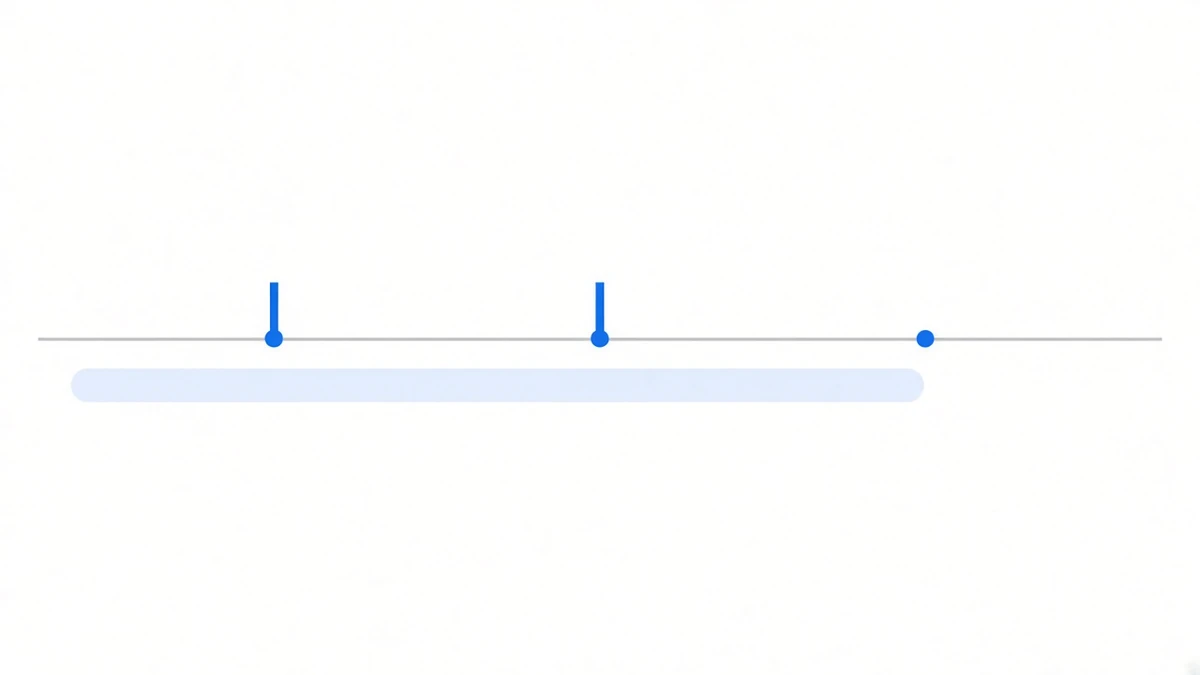
A new user can create 5 sub-accounts by default. More requires VIP1, which raises the cap to 20 (either condition qualifies: 30-day volume ≥ 1,000 BTC, or holdings ≥ 25 BNB).
Why split at all: positions in different sub-accounts are isolated, so one leg going wrong does not drag other positions with it, and the strategy can keep one book per instrument. Most arbitrage setups are fine on the default 5 — there is no need to chase VIP1 to look professional.
Get the funds in the right place too: USDT sits in the spot account, and keep about 20% more than you plan to deploy as buffer. That is not for extra return, it is margin headroom for extreme moves.
API permissions: enable three, never the fourth
The master key needs spot and margin trading and futures trading. Keys created for each sub-account also need universal transfer.
Never enable withdrawals. That is not advice, it is the boundary of this setup: a trading permission can only buy and sell, and moving money out of the account is a different thing entirely. Any system asking for withdrawal permission carries a categorically different risk.
Add an IP allowlist on top, so a leaked key is still only usable from the designated servers.
Once configured, walk this checklist: master API created, sub-accounts created, each sub-account API configured, IP allowlist added, connectivity tested, funds allocated. Miss one of the six and it will only surface later, in a form that is hard to trace.
Landing both legs together
Only now does the strategy itself come up, and all of its difficulty is in execution:
- Precision alignment. Spot and perpetual have their own lot and tick sizes, so a quantity from dividing notional by price gets truncated in different directions on each side — you think you hedged 100% and the real figure is 99.7%.
- Single-leg rollback. Spot fills, the perpetual does not, and at that moment you are simply long. The correct move is to close the filled leg immediately and skip the opportunity rather than carry exposure overnight.
- Margin coupling. In a rally the perpetual short runs an unrealised loss, and liquidation only looks at the futures account’s own margin ratio — the spot gain cannot rescue it.
- Rebalance threshold. Too frequent and fees eat the return; too rare and exposure accumulates. This threshold needs tuning; there is no universal answer.
The engineering detail behind all four is in what makes delta neutral hard in practice.
Is this row workable: divide cost by the rate
Collecting one settlement costs four taker fills across the two legs:
round-trip cost = 2 × (perp taker fee + spot taker fee) + 2 × (perp half-spread + spot half-spread)
settlements to break even = ⌈round-trip cost ÷ per-settlement rate⌉
The spread term is the one people drop entirely, and it is the same order of magnitude as the fees. Measured on our own accounts: INJUSDT ran 0.30% round-trip fees and 0.048% round-trip spread; CHRUSDT prices carry only five significant digits, so one tick is 0.074% and the round-trip spread costs as much as the fees; the ugliest was HOLOUSDT, netting +0.002% per settlement on fees alone and −0.09% with spread included.
Which is why the top rows of the funding leaderboard are exactly the rows that most need a break-even count first: delisting candidates hide among them, and the settlements needed to break even never arrive. The full five steps from gross return to take-home are in what a calculator leaves out.
Three assumptions that bite if left unwritten
Funding goes negative. In the same snapshot (as of 2026-08-25) SOLUSDT was at −1.126% across 711 settlements year to date; holding that leg for the year meant paying out.
Rules change. From 18 September 2025 Binance added the 8 / N normalisation factor to the formula and changed the settlement interval on a batch of contracts. Run a 4-hour contract through the old formula and the number comes out exactly double.
Nobody backstops exchange risk. Downtime, wicks and delistings sit outside what a strategy can cancel. Thresholds, auto-deleveraging and alerts are doable; standing behind the exchange is not. These, plus the one custody adds, and who carries each of them, are set out in the risks in funding rate arbitrage.
Run it yourself, or hand it over
Once the setup above works, what remains is 7×24 monitoring, exception handling and per-settlement reconciliation — and that cost is not in the fees, it is in people.
Handing it over is a different structure, not “give someone your keys”. On our side the money goes into the platform’s dedicated account under separate books and the platform runs the strategy — which is precisely what makes a floor, a principal guarantee and unified risk control performable at all; with the money elsewhere, all three are words. What you get on your side is not a promise but something checkable: balance, per-trade history, positions, the return curve, subscription records and withdrawal status, live to the investor.
The price has to be stated with the same weight: custody is not principal protection. The money sits in someone else’s account and performance rests on their ability to pay. The cost of each route is compared line by line in running it yourself versus handing it over.