Once a perpetual enters a delisting process, a hedge you could adjust at leisure becomes an execution task with deadlines. Three things need to be finished beforehand: rebuild the timeline from the original notice; set a latest execution time for the spot leg and for the perpetual leg, and work to the earlier of the two; and export the contract’s funding, fill and settlement records before it disappears from the API and account views. The first two decide whether you exit cleanly. The third decides whether your books still reconcile afterwards.
The settlement mechanics on delisting day are covered in how to close the hedge leg when a perpetual is delisted. This piece is the execution checklist.
1. Rebuild the timeline from the original notice
Recording the automatic-settlement time is not enough. A notice usually contains several milestones, and each one shortens the window in which you can act. Use a fixed template:
| Milestone | Time in the notice | Converted to one time zone | Source link | Status |
|---|---|---|---|---|
| No new positions / reduce-only | Confirmed / unconfirmed | |||
| Open orders cancelled | ||||
| Last trading time | ||||
| Automatic settlement time and price rule | ||||
| Spot-side restrictions (margin pair removal, borrowing paused) |
If the notice does not state an item, mark it unconfirmed rather than filling it in from the last delisting. Exchanges do issue follow-up notices, and the timeline has to follow them. The final hour often runs on different rules, for example the insurance fund no longer backstopping, as in Binance’s final-hour delisting rules.
2. Set a separate cutoff for each leg
A perpetual that still trades does not mean the spot side can be sold smoothly, and a spot page that loads does not mean borrowing, repayment and transfers all work. The spot side has its own restrictions; when margin pairs are removed, for instance, the spot leg can be frozen for hours, as in Binance removing five margin pairs.
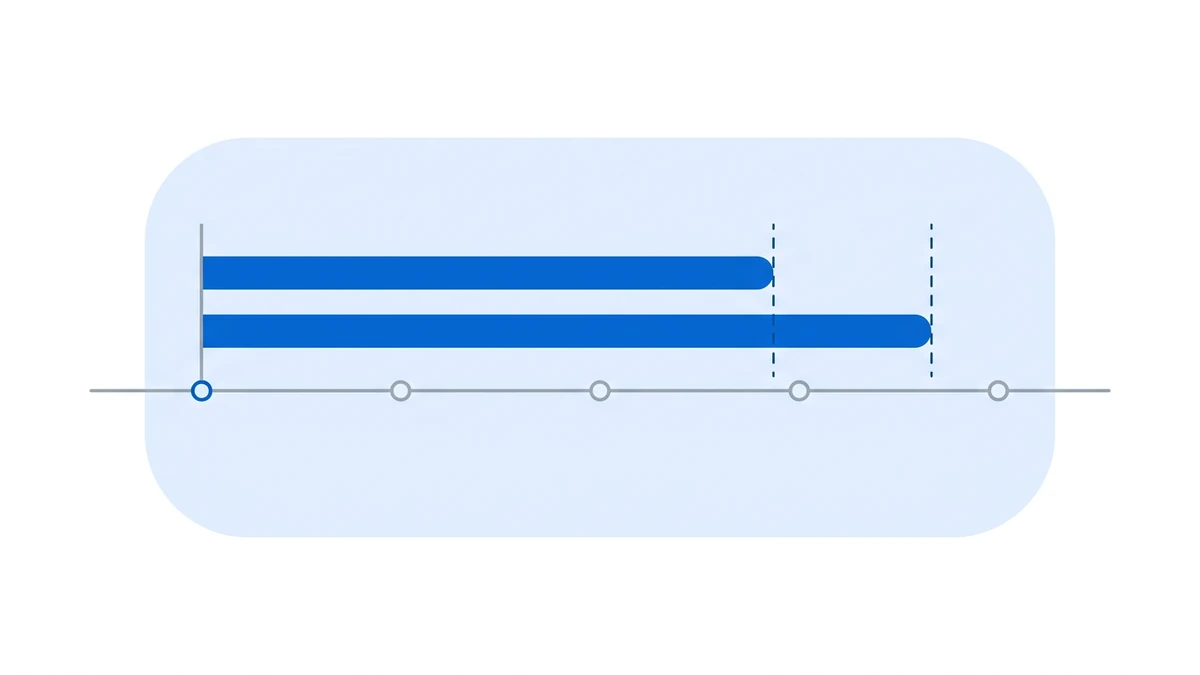
Put the latest executable time for each leg side by side, take the earlier one as the cutoff for the whole position, and leave room for retries before it. How much room depends on order-book depth and your size; there is no universal number of hours.
3. Price the cost of waiting with this contract’s own funding
A common mistake is to imagine the cost of delay using BTC funding. Contracts close to delisting are usually small caps, where rates can be on a different scale entirely. In our data for the 30 days to 2026-10-08, the six contracts with the lowest cumulative funding ranged from −23.23% to −67.34%. That does not mean they are all being delisted. It shows that small-cap funding can, within weeks, exceed a full year of major-pair funding (BTCUSDT’s best year, 2021, summed to 30.64%).
Estimate the cost of waiting from the contract’s own recent rates and settlement frequency, not from a market average.
4. Plan for residual exposure
- Closing the perpetual first leaves a long spot position; selling spot first leaves a short perpetual. Neither is neutral.
- On a partial fill, resize the other leg to the actual filled quantity, not the original order size.
- Name who handles a failed second leg and when it escalates to manual intervention.
5. Export records before the contract disappears
This step is the easiest to skip, and we have learned it the hard way. After several contracts were delisted, our funding collector’s symbol list was not updated, and the same three errors repeated for three weeks. They were never going to resolve, because the contracts no longer existed. Nothing was broken except that the list lagged reality.
For an individual account the problem shows up from the other side. After delisting, market and funding views filtered by symbol may stop listing the contract, and statement APIs typically keep only a limited window. Export before the delisting:
- All funding transfers for the contract;
- Fills and trading fees;
- Settlement records, including settlement price and time;
- Spot-side fills, borrowing interest and transfers;
- A final snapshot of positions and balances before exit.
When the exit is actually complete
Only after balances, positions, open orders and settlement statements have all been checked. A screenshot or a successful API response proves that an action was attempted, not that both accounts are flat.
Why events like this dominate operating time is covered in how much time DIY funding arbitrage really takes, and platform-level risk boundaries are on our security page. This checklist does not promise that any exit will fill, and it does not treat any past delisting schedule as a general rule.