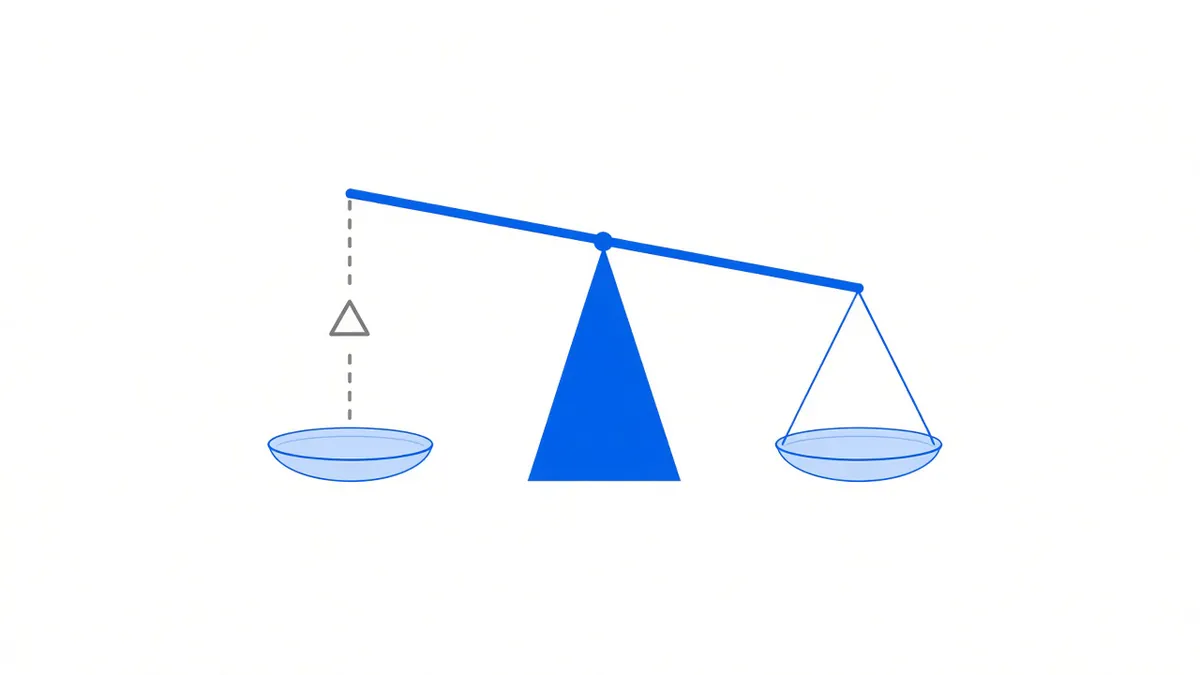
Binance announced on 2026-09-15 that from 2026-09-18 06:00 UTC it will remove five cross-margin trading pairs — ENJ/USDC, GENIUS/USDC, CVX/USDC, GUN/USDC and VANA/USDC — with GENIUS/USDC also leaving isolated margin.
For most people this is a notice to skip. For a structure that needs both legs present at the same time, it contains a very specific window.
The timetable
| Time (UTC) | What happens |
|---|---|
| Immediately | Affected assets can no longer be transferred into isolated margin accounts (including auto-transfer); users with outstanding liabilities may transfer up to the liability amount |
| 2026-09-16 06:00 | Isolated margin borrowing suspended on GENIUS/USDC |
| 2026-09-18 06:00 | The five pairs close: positions auto-closed, settled, and all pending orders cancelled |
| 2026-09-24 03:00 | All USDP spot trading pairs cease trading and are delisted |
Two clarifications:
First, the underlying tokens are not delisted. ENJ, GENIUS, CVX, GUN and VANA remain tradable through other available pairs. This is an adjustment to the margin market, not an asset wind-down.
Second, the closure process takes about three hours, during which users cannot update positions. Binance advises closing positions or moving assets from margin accounts back to spot before 06:00 UTC on 18 September.
That line — “about three hours during which positions cannot be adjusted” — is the point.
Why a one-sided position does not care and a two-leg one does
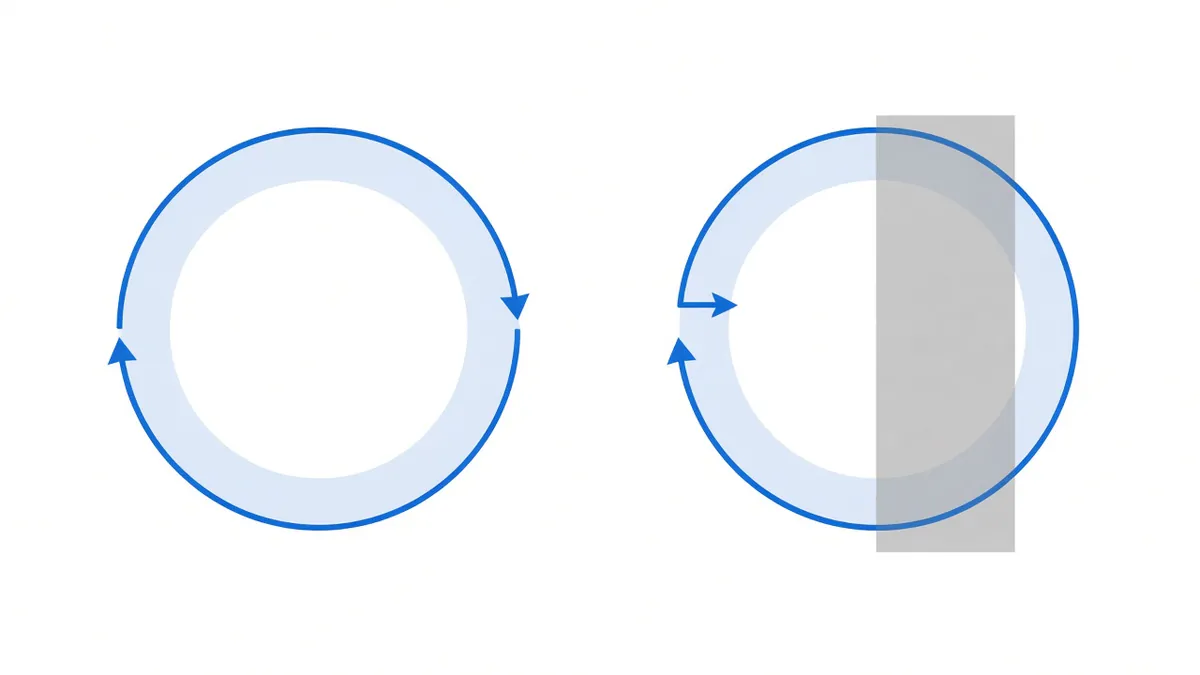
Someone holding a one-sided position reads this notice and takes away “switch pairs and carry on”. The position gets auto-settled, and the risk is fixed at that moment.
A two-leg structure is different. Its insensitivity to price is not a property of anything; it is the state of both legs existing simultaneously and being notionally balanced. The moment the spot leg is touched while the contract leg is not:
- What remains is a naked directional short on the contract side;
- If the coin rallies, that leg’s unrealised loss eats straight into margin, while the spot gain that was supposed to offset it is gone;
- And for those three hours you cannot place an order.
This kind of risk is not in the market. It is on the calendar — a specific date, a specific time, announced three days ahead. The only way to be caught by it is not to read announcements.
We listed two items of the same kind in six hidden costs: a contract approaching delisting, and borrowable inventory running empty. This is the live version of the same problem.
Another angle: this is a selection question, not an operations question
Worth noting what these five pairs have in common: none of them is a major.
What exchanges cut in batches is always the long tail. And “small coins with impressive-looking funding rates” and “small coins whose margin pairs could be cut at any time” are, to a large extent, the same set. The incentive to chase high funding and this category of execution risk tend to land on the same row.
For contrast, here are our own backend readings on four majors (as of 2026-08-25 13:42 UTC, periods summed):
| Symbol | Latest period | Year to date (711 periods) |
|---|---|---|
| BTCUSDT | 0.01% | 1.589788% |
| ETHUSDT | 0.006736% | 0.960325% |
| SOLUSDT | 0.01% | −1.125987% |
| BNBUSDT | 0.007358% | 1.812037% |
Look at the SOL row: its latest print is 0.01%, exactly the same as BTC, and yet summed across 711 periods this year it is negative. A high per-period rate does not mean the year collects anything — and the further out the long tail you go, the wider that divergence gets and the worse the pair’s survival odds.
We run a BTC strategy, and half the reason is this. For which instruments make it through screening, and why “will this pair still exist in three years” is a hard condition, which coins suit funding rate arbitrage goes into more detail.
What it means for a position
This change does not touch BTC / ETH major pairs, and it does not touch USDⓈ-margined perpetual contracts themselves. For a balanced two-leg position held only on majors, this announcement has no direct effect.
Its value is as a reminder of something structural: the spot leg is not a permanent object. It depends on one specific trading pair staying listed and on that asset’s borrowable inventory not being empty, and both are decided unilaterally by the exchange and adjusted in batches.
What to watch next
- Margin announcements for the pairs you actually use. Not whether the token gets delisted — whether that specific pair gets removed. Those are different things.
- Borrowable inventory and collateral ratios. Being unable to borrow, or a collateral ratio dropping to zero, can break the spot leg while the pair is still listed.
- Auto-close windows. Any announcement containing “automatic settlement” and “positions cannot be updated during the process” is a single-leg window for a two-leg structure.
No forecasts. Just one thing already fixed: those three hours on 18 September are an execution risk window with a precise time, written in an announcement.
Sources: the pair list, effective times, borrowing suspension time, the roughly three-hour closure process and the USDP spot delisting time all come from Binance’s official announcement published 2026-09-15, cross-checked against independent coverage (FX News Group, PANews, Crypto Economy). Our own funding figures come from the backend period-by-period snapshot, as of 2026-08-25 13:42 UTC. Past data does not indicate future returns.