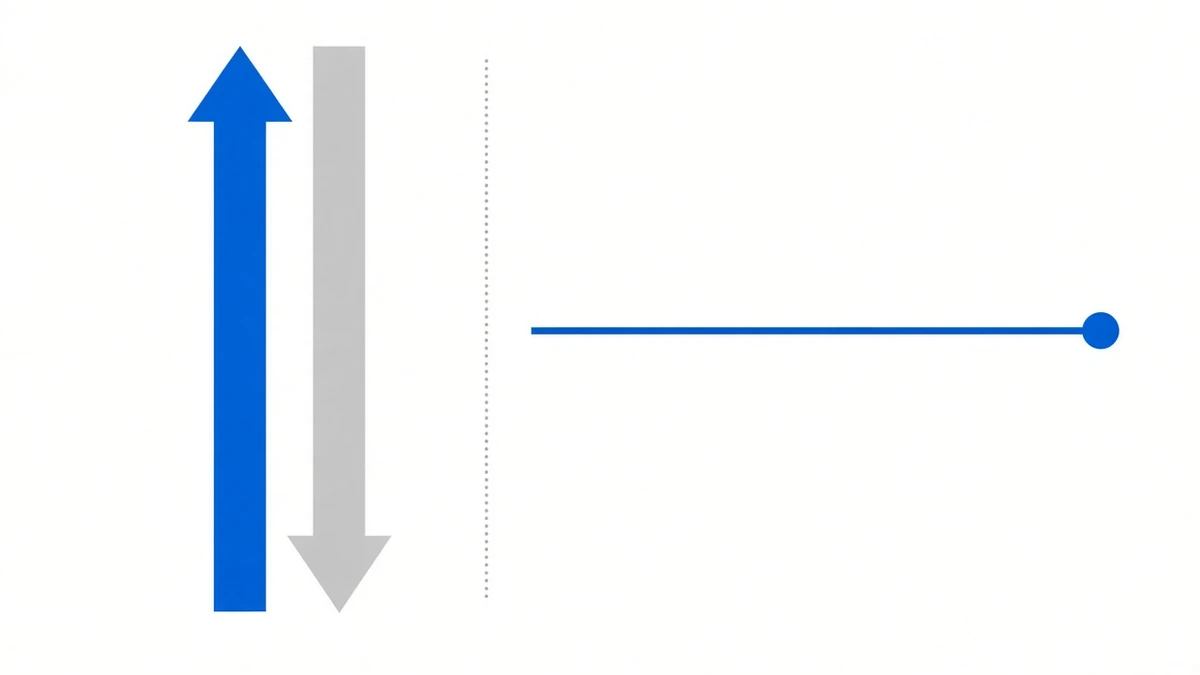
Delta is a sensitivity: move the underlying by one unit and this is how much the position’s value moves with it. Delta neutral means the deltas of everything in the book sum to zero — price goes wherever it goes and the book barely moves.
That is the whole mathematical definition. But at least two different products wear the name, and their risks and income sources have nothing in common: in one the neutrality has to be maintained by hand, in the other it is structural.
Options delta neutral: the neutrality is maintained
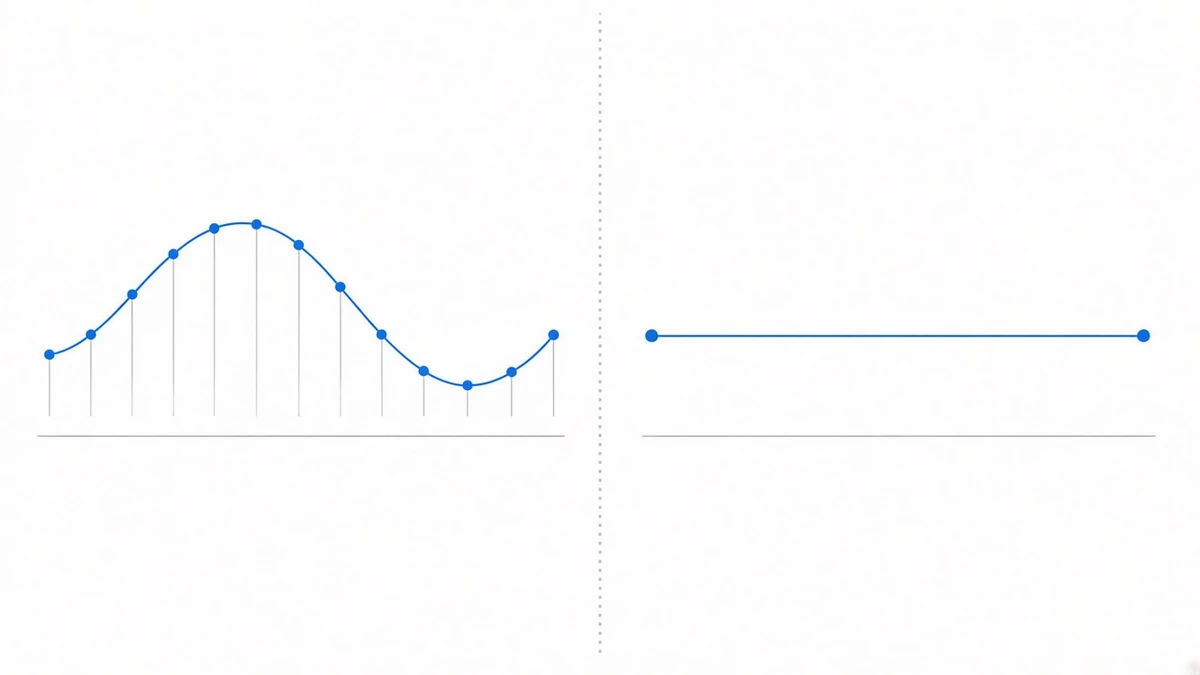
An option’s delta changes as the underlying moves, and the rate of that change is gamma. A book balanced today stops being neutral after two price steps and has to be adjusted again.
Two things follow:
- The frequency and cost of re-hedging are yours. Adjust often and fees and spread eat more; adjust rarely and exposure accumulates.
- The income does not come from the neutrality itself but from volatility and time value — fundamentally a bet on the gap between implied and realised volatility.
For this family, delta = 0 is a continuous activity, not a state.
Perpetual plus spot: the neutrality is structural
One coin of spot has a delta of +1. One coin short on the perpetual has a delta of −1. Match the notionals and the sum is zero — and that zero does not drift with price, because both legs are linear and there is no gamma.
So this family does not need continuous re-hedging. It rebalances only when the two notionals drift past a threshold. The cost shows up as a different set of engineering problems instead — both legs have to land together, a single-leg fill has to be rolled back at once, and the two accounts’ margin has to be read separately — all of which is what makes delta neutral hard in practice.
The income source changes too. A perpetual has no delivery date, and the mechanism that pulls its price back to spot is the funding rate: when funding is positive longs pay shorts, and this book is holding the side that collects. It settles every eight hours (UTC 00:00 / 08:00 / 16:00 is the common tier; from 18 September 2025 Binance moved a batch of contracts to 4-hour and even 1-hour intervals and added an 8 / N normalisation factor to the formula).
Side by side:
| Options delta neutral | Perpetual + spot delta neutral | |
|---|---|---|
| How delta reaches zero | continuous re-hedging | matched notionals, structural |
| Gamma | yes — every price move needs an adjustment | none, both legs are linear |
| Income source | volatility and time value | funding, settled every 8 hours |
| Rebalancing frequency | high | only past a drift threshold |
A third thing also gets called delta neutral: in DeFi, a perpetual short hedging a spot or LP position, where the income is mostly farming incentives rather than funding. All three share the same mathematical definition, but the money you are actually earning is different, so the risk is different too.
Neutrality cancels price direction and nothing else
Delta neutral is not risk-free. It cancels exactly one thing: price direction. The rest is still there, and who carries each one is a separate question that deserves a line-by-line answer.
The legs never match perfectly. Spot and perpetual have their own lot sizes and tick sizes, and the quantities get truncated in different directions — you think you hedged 100% and the real number is 99.7%, with 0.3% naked. That gap is the opening residual, and a few hundred fills later it is a real directional position.
The two accounts do not share money. In a sharp rally the perpetual short runs an unrealised loss and the futures account’s margin ratio falls, while the spot side is making money at the same time — but liquidation only looks at the futures account’s own margin ratio, and the spot gain cannot rescue it. A unified account softens this; it does not remove it.
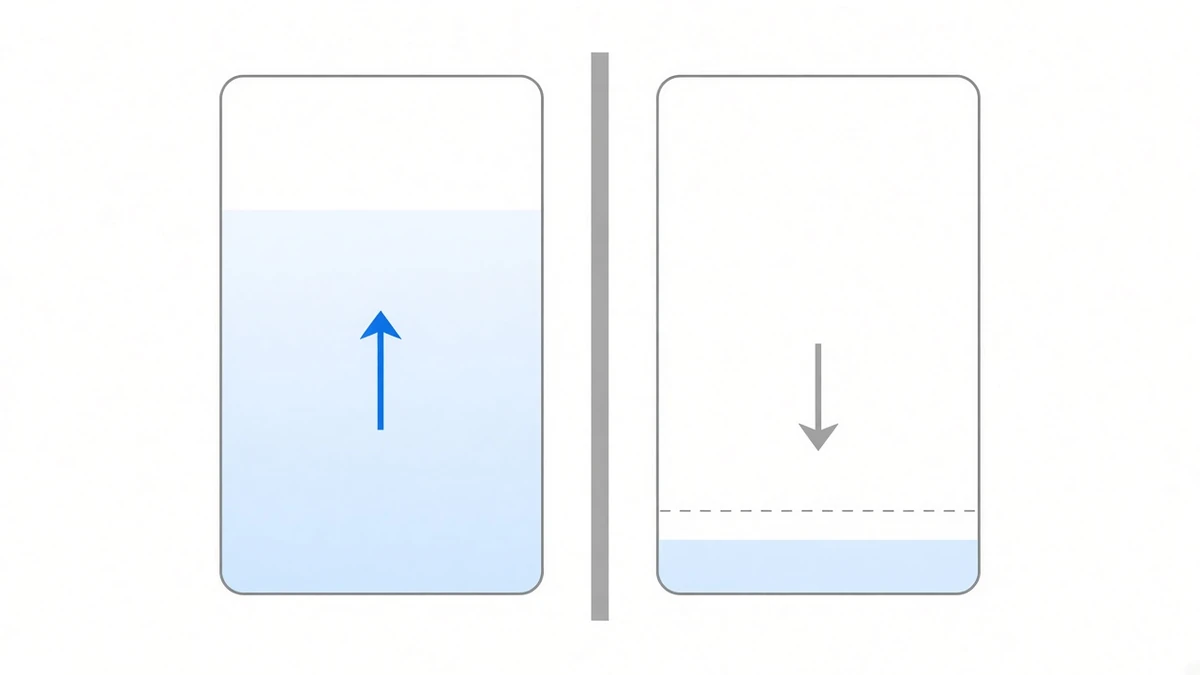
Funding thins out, and it goes negative. In the same snapshot (as of 2026-08-25), SOLUSDT was at −1.126% across 711 settlements year to date — holding that leg for the year meant paying out.
Nobody backstops the exchange or extreme markets. Downtime, rule changes and liquidity drying up in a wick are outside what any strategy can cancel.
How big is this income
From our own year-by-year track record (summed, not compounded): across 2021–2025, the five complete years where every settlement can be checked, the ten BTCUSDT and ETHUSDT cells average 12.43% raw and 124.296% with capital scaled 10x.
The two ends of the same table: the best cell is ETHUSDT in 2021 at 37.562% (375.621% scaled) and the worst is ETHUSDT in 2022 at 0.787% (7.873% scaled). Nearly 48 times apart, same instrument, one year later.
That is also a shortcut for judging whether a “delta neutral yield” product is being straight with you: is the worst year on the same table as the average?
Four questions to ask when you see the phrase
- What makes delta zero: the structure, or continuous re-hedging?
- Where does the income come from: funding, volatility, or farming incentives?
- Who pays for re-hedging and rebalancing: is it inside the net figure, or only counted against the gross?
- The risks that were not cancelled — are they on the same page as the return?
None of the four asks how much it pays. Once they are answered the return figure starts to mean something — and the third is the hardest to work out yourself, which is why the five steps from gross to take-home are broken down in what a calculator leaves out.