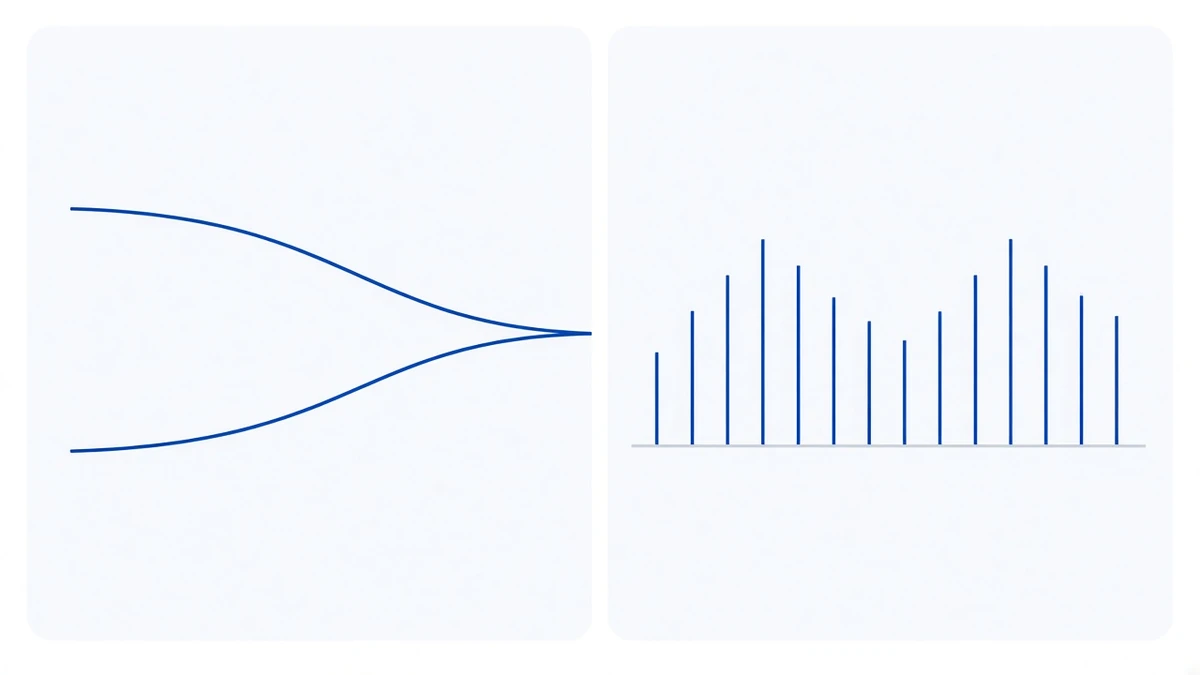
Start with the thing that gets conflated: the positions are identical — buy spot, short the contract, match the notionals. What differs is where the money comes from.
- Cash and carry collects the basis: the slice by which a delivery contract trades above spot, which must converge to zero at expiry.
- Funding rate arbitrage collects the funding payment: the transfer between longs and shorts that a perpetual settles every eight hours.
One is a single amount you can compute the moment you open. The other is a stream you cannot total in advance. Below, both cash flows taken apart.
Cash and carry: earning a gap that closes itself
A delivery contract has an expiry. It settles against the spot index on that date, so the difference between contract and spot — the basis — is necessarily zero by then.
The trade follows directly: when the basis is positive, buy spot, short the contract, hold to expiry, and the gap is yours. The point is that it is fixed at entry. If you see an 8% annualised basis, it is 8%; it does not become 3% because the market changed its mind halfway.
Three costs come with that:
- It ends at expiry. Continuing means rolling into the next contract, paying two spreads and two sets of fees.
- The next contract’s basis is only knowable at the moment you roll. So “certain” holds within a cycle and stops holding across cycles.
- In quiet markets the basis thins to nothing. And when it does, you are not “earning less” — you should not be opening the position at all.
Funding rate arbitrage: earning a payment that arrives three times a day
Perpetuals have no expiry, so there is no forced convergence point. They substitute the funding rate: above spot, longs pay shorts; below spot, the reverse. For how the two instruments differ mechanically, see perpetual vs delivery futures.
Holding spot long against a short contract, price direction does not touch you; at each settlement, if funding is positive, the short leg receives. No rolling, and you can hold as long as you like.
The cost is equally clear: you do not know what the next period pays, or even its sign.
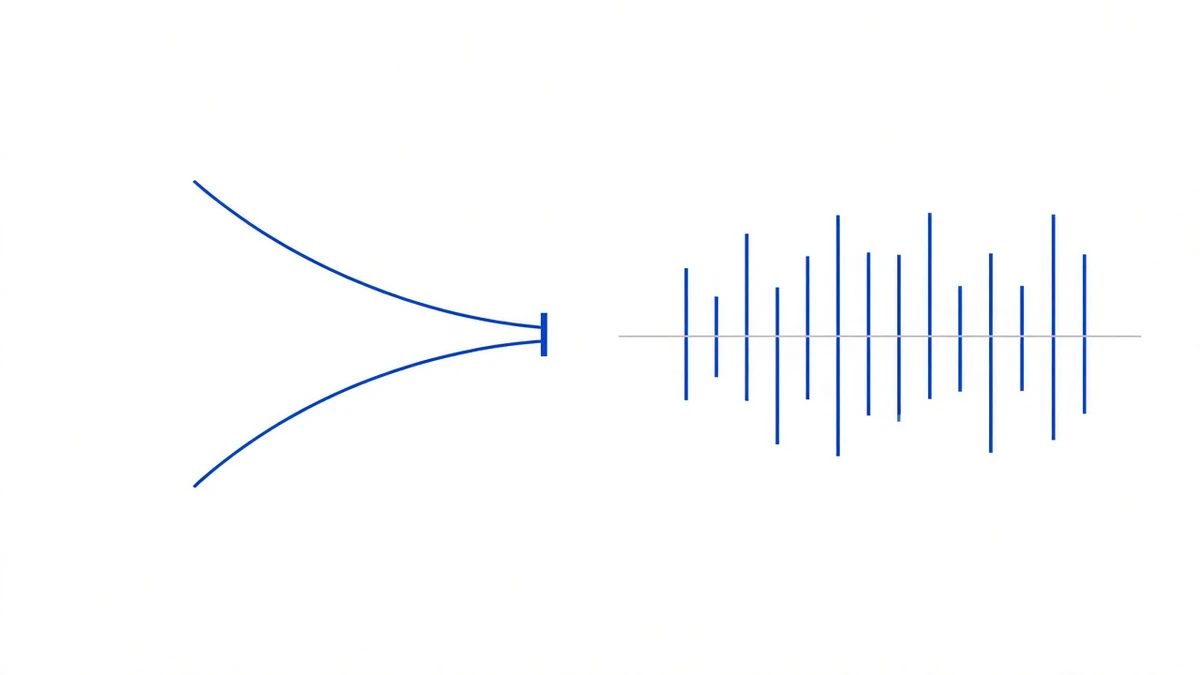
Side by side
| Cash and carry | Funding rate arbitrage | |
|---|---|---|
| Position | Spot long + delivery short | Spot long + perpetual short |
| Return source | Basis convergence | Per-period funding |
| Amount known? | At entry | Repriced every period |
| Cash flow rhythm | Once, at expiry | Every 8 hours |
| Rolling required | Yes | No |
| Can the return go negative? | No (worst case: no trade) | Yes |
| Exit timing | Set by expiry | Set by you |
That bold Yes is the real dividing line. The worst case for cash and carry is “no opportunity”. The worst case for funding arbitrage is “you are now paying to hold this”.
Paying to hold is not hypothetical — it happened this year
Below is Binance USDT perpetual funding for 2026 so far, from Binance’s public futures API (read at 2026-09-18 07:13 UTC, latest settlement 2026-09-18 00:00 UTC). Four symbols, 781 periods each, 260 days.
| Symbol | Year to date | Annualised | Negative periods |
|---|---|---|---|
| BTCUSDT | 2.030026% | 2.85% | 209 |
| ETHUSDT | 1.208608% | 1.70% | 247 |
| BNBUSDT | 2.001652% | 2.81% | 7 |
| SOLUSDT | −1.030962% | −1.45% | 390 |
The SOLUSDT row is what paying to hold looks like. Anyone running this structure on SOL this year is a net payer on funding: 390 of 781 periods sending money out. With cash and carry, as long as the basis was positive at entry, that outcome cannot occur.
The reverse is also true: in the same year BTC and BNB both cleared two points, without a single roll. This is not a question of which is better. It is a question of where you would rather place the uncertainty.
Then why not just do cash and carry?
Fair question. Three real reasons:
One: crypto delivery contracts are far thinner than perpetuals. The overwhelming majority of volume on major venues sits in perpetuals. A thin order book means the basis you see may not contain the size you need, and you only find out by sending the order.
Two: rolling erodes a lot of that certainty. Four rolls a year, both legs moving each time. None of that appears in a basis table; we collect it under six hidden costs.
Three: they are not alternatives to each other. Basis and funding are two pricing conventions for the same underlying thing — the contract’s premium over spot. When the premium is fat, both are fat; when it thins, both thin together. Planning to “switch to cash and carry when funding is poor” usually means discovering both are poor at once.
The risks they share, in full
This section matters more than everything above it. Whichever you pick, these do not change:
- Both legs have to land together. For the seconds when only one leg exists, you are holding a naked position. Why “together” is the hardest word here: what makes delta-neutral hard to run.
- The short leg still posts margin and can still be liquidated. Balancing the legs cancels price direction, not margin risk. Sizing is worked out in sizing a delta-neutral position.
- The exchange can delist the contract. Your position is closed on the venue’s terms while your spot leg stays exactly where it was. Four venues using four different conventions is something we covered separately.
Who carries which of these is itemised in who carries which risk; the platform-side boundary is on our security page.
How to choose
Three sentences:
- You want a number locked at entry — cash and carry, provided you can absorb the roll costs and the target contract has the depth to take your size.
- You want no expiry to manage and a continuing cash flow — funding rate arbitrage, provided you accept that it shrinks and can go negative.
- Neither feels settled — then look at the data first. Period-level rates, mark prices and yearly totals are on our funding rate data and track record pages, including ETHUSDT’s 0.787% in 2022. Read the worst years before deciding.
A final note: neither approach is risk-free arbitrage. They swap one category of risk — price direction — for others: execution, margin, exchange rules, and a return that can end up thinner than a deposit account.
Sources: Binance public futures API (per-period funding history; read at 2026-09-18 07:13 UTC, latest settlement 2026-09-18 00:00 UTC); yearly totals on our track record page, on-site snapshot timestamp 2026-08-25 13:42 UTC.