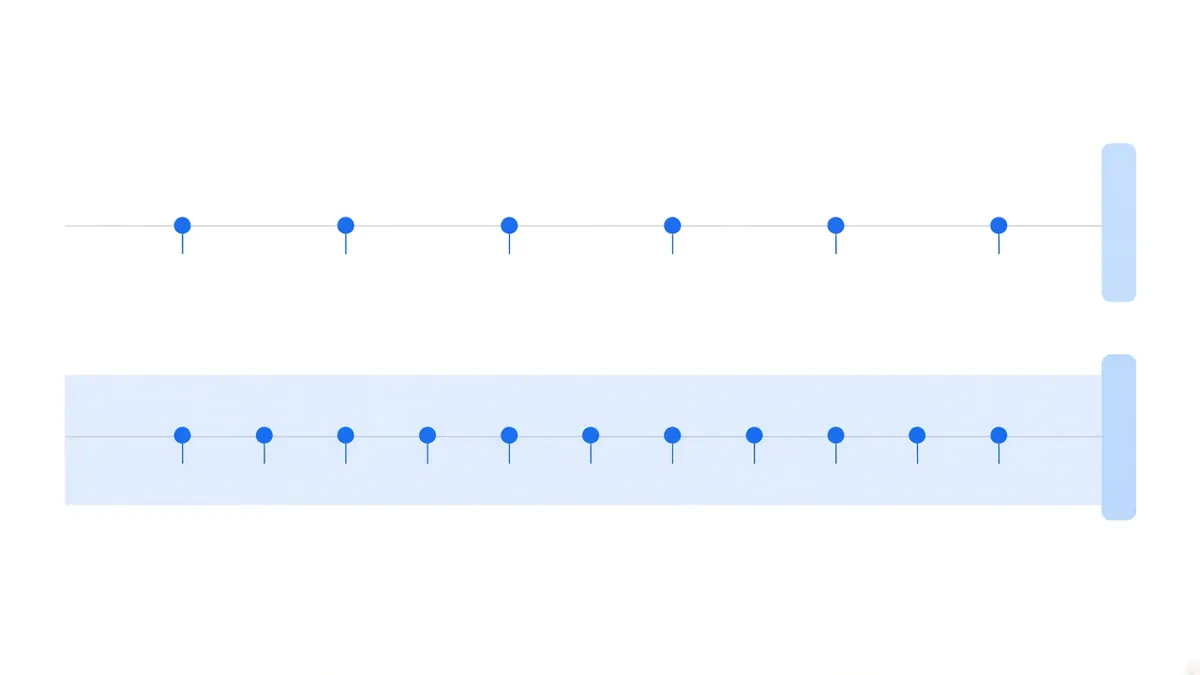
Binance Futures issued two announcements of the same kind within two weeks, moving a set of USDⓈ-margined TradFi perpetual contracts from eight-hour to four-hour funding settlement, with the funding cap and floor adjusted to ±1.00%.
The news is unremarkable in itself. What it changes is a parameter that will put an annualised figure out by a factor of two.
Two announcements, 18 contracts
The first batch took effect at 2026-09-04 08:15 UTC, covering KODEX200USDT, NAVERUSDT, LGELECTRONICSUSDT, HANMIUSDT, SAMSUNGEMUSDT, CXMTUSDT, ZHONGJIUSDT, CSOPSAMSUNG2LUSDT and CSOPSKHYNIX2LUSDT.
The second batch was published on 2026-09-08 and took effect at 2026-09-10 08:15 UTC, covering MEITUANUSDT, KUAISHOUUSDT, GIGADEVUSDT, POPMARTUSDT, TENCENTUSDT, HK1810USDT, HK0700USDT, ZHIPUUSDT and MINIMAXUSDT.
Both follow the same pattern: settlement interval from 8 hours to 4, cap and floor at ±1.00%; the first settlement point on the switchover day still runs at ±2.00%, with every period after that at ±1.00%.
One line in the announcements is easy to skip past: these contracts are exempt from the 8.1 funding interval adjustment rule — normally, when a contract’s previous funding settlement hits the cap or floor, the interval tightens further from four hours to one. These batches are not subject to that. Both notices state they are issued under Binance Exchange Rule 17.
Why this parameter can double an annualised figure
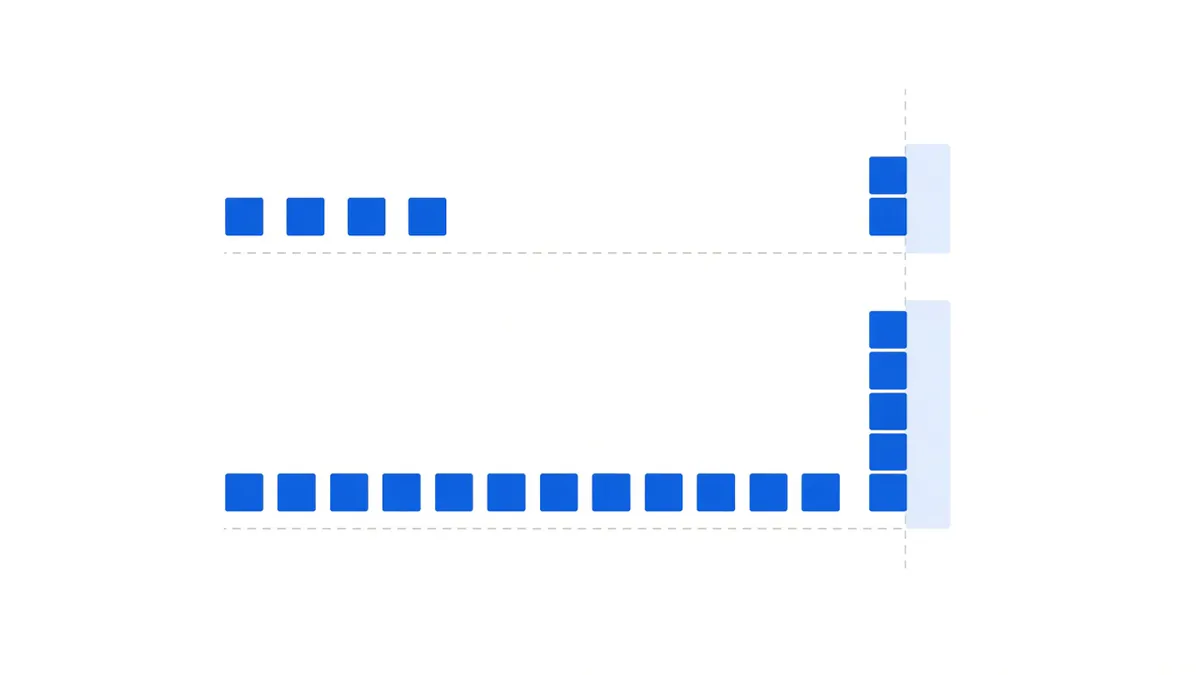
A funding leaderboard shows the per-period rate, which carries no interval information. Take the same 0.01%:
- Eight-hour settlement: 3 periods a day. 0.01% × 3 × 365 = 10.95% a year.
- Four-hour settlement: 6 periods a day. 0.01% × 6 × 365 = 21.9% a year.
Same percentage, double the annualised figure. On screen the two look identical.
The reverse holds too: with the cap and floor moved to ±1.00%, the per-period extreme got smaller while the number of periods doubled — the maximum total a single day can settle did not shrink proportionally. Looking at only one of those two numbers gives you the opposite conclusion.
Our own readings
Our backend period-by-period settlement data all comes from 8-hour BTC / ETH USDⓈ-margined perpetuals, neither of which is in scope for this change. As of 2026-08-25 13:42 UTC, periods summed:
| Symbol | Latest period | Year to date | Periods |
|---|---|---|---|
| BTCUSDT | 0.01% | 1.589788% | 711 |
| ETHUSDT | 0.006736% | 0.960325% | 711 |
That 711 is a period count, not a day count. At eight hours per period, 711 ÷ 3 ≈ 237 days. If someone converts the same period count using the four-hour tier they get 118 days, and the annualised figure that falls out is double what it should be.
This is why we keep a separate period-count column in the performance table instead of publishing cumulative percentages alone. Once the period count is gone the cumulative figure cannot be recomputed — and it looks entirely normal.
What it means for a position
For a notionally balanced two-leg structure, a change of settlement interval does not change directional exposure, and it does not change the level of funding itself. It changes two specific things:
- The frequency of the cash flow. Collected six times a day instead of three, which tightens both reconciliation and the effect on margin.
- The coefficient in every annualisation. Everywhere a per-period rate is converted to an annual figure has to change with it, including any third-party leaderboard you look at.
The real point is this: the settlement tier is a parameter the exchange can change unilaterally, and the entire annualisation basis hangs off it. This time it was equity-style TradFi perpetuals. Which batch is next is unknown. When writing strategy or reconciliation code, each contract’s settlement interval should be read from the API, not hard-coded as 8.
What to watch next
- That 8.1 auto-tightening rule. These two batches are exempt; ordinary contracts are not — after funding hits the cap, four hours becomes one, and that is a change triggered exactly when the market is at its most violent.
- Tier switchover points inside a symbol’s history. A contract that changed interval midway has a period-count series stitched from two segments, and averaging it directly is wrong.
- The line about adjusting contract specifications from time to time. It covers the funding fee, tick size, maximum leverage and margin requirements.
No forecasts. Just one thing that has already happened: the same 0.01% now corresponds to two different annualised figures inside Binance.
Sources: settlement interval and cap/floor changes come from Binance Futures official announcements (second batch published 2026-09-08, effective 2026-09-10 08:15 UTC; first batch effective 2026-09-04 08:15 UTC), both issued under Binance Exchange Rule 17. Our own funding figures come from the backend period-by-period snapshot, as of 2026-08-25 13:42 UTC. Past data does not indicate future returns.