Per BitMEX’s 1 September notice, the XBTUSD, XBTUSDT, ETHUSD and ETHUSDT perpetual swaps, along with the XBTU26, XBTZ26, XBTH27 and ETHUSDU26 futures, will be delisted and settled early at 12:00 UTC on 16 September 2026. That is one step in the wind-down announced on 23 July: the board of HDR Global Trading Limited decided, after a strategic review, to close the BitMEX exchange. The closure itself lands at 04:00 UTC on 23 September, and since 04:00 UTC on 26 August the platform has been reduce-only.
This is not a rumour. The Financial Services Authority of Seychelles has published a notice on the winding up of HDR Global Trading Limited, confirming that the company voluntarily ceased operations and withdrew its licence application, and that its wind-down plan — approved by the regulator — has to complete before 23 September. BitMEX’s own FAQ states the decision did not come from financial distress, a hack, or regulatory pressure.
Every 8 hours is its rule
Whether BitMEX keeps the lights on is somebody else’s problem if you trade funding. One thing is not: the three settlement points we watch every day are the ones it set in 2016.
- 12 May 2016 — BitMEX announced the XBTUSD perpetual swap, live 13 May at 12:00 UTC. The first version of the funding mechanism charged interest daily, using the Bitfinex USD and bitcoin lending markets as the rate.
- 12 June 2016 — with XBTUSD trading at a large premium to spot and lending rates no longer reflecting real demand, BitMEX changed the rule: funding would be charged every 8 hours, and would incorporate the time-weighted premium or discount to spot over the preceding 8 hours. The notice states that the rate published at 12:00 UTC on 12 June was the first under the new rule, with a predicted value of 0.43%, charged at 20:00 UTC.
Two things came out of that change — the 8-hour cadence, and the “funding = interest component + premium index” skeleton — and both are still the default shape of a perpetual contract on Binance, OKX and everywhere else.
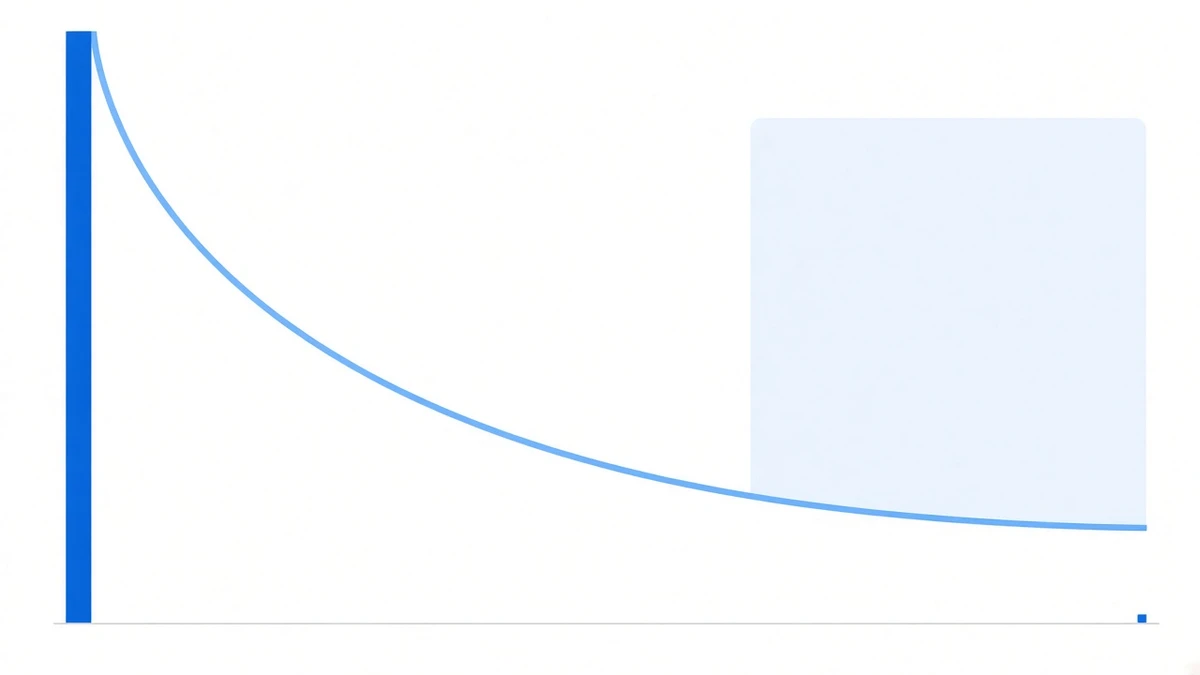
Ten years on, the same slot holds an order of magnitude less
Our table holds 450 instruments and 878,142 period-by-period settlements (the figure published with the collector rebuild in July), going back to 2020 — and every row of it sits on UTC 00:00 / 08:00 / 16:00, the cadence left behind by that June 2016 change.
Put the two ends side by side:
| Timestamp | Rate for the period | |
|---|---|---|
| First period under the new rule | Published 2016-06-12 12:00 UTC, charged 20:00 UTC | 0.43% (predicted value in the notice) |
| Most recent period | 2026-09-15 16:00 UTC | 0.009812% |
Same mechanism, same 8-hour slot, roughly 44 times smaller. One caveat, stated up front: these two numbers come from different venues and different instruments, so they are not a continuous series and can only be read as orders of magnitude. But they measure the same thing — what a long is willing to pay, every 8 hours, to stay levered long.
The share of positive periods is sliding too. Across the full history, 85.95% of BTCUSDT’s 7,344 periods were positive; this year only 565 of 774 are, or 73.0%.
Effect on our positions: none
To be clear, so this does not read as riding a headline: the BitMEX delisting has no effect whatsoever on our positions. We run Binance USDT-margined perpetuals. BitMEX is not in the execution path and never was.
Two things here are worth writing down:
- There are fewer venues running the same mechanism. Funding-rate arbitrage earns the difference in leverage demand between venues; one fewer venue is one fewer point of comparison. It will not show up in returns today, but it is a direction.
- The settlement cadence is no longer a constant. Since 14 April 2026, OKX escalates its funding frequency one level at a time when the rate hits its cap or floor, rather than jumping straight to hourly; reverting to the default requires every period in the preceding 12 hours to sit within ±0.20%. A collector with “three times a day” hardcoded will silently miss settlements on the next contract it touches — and will not raise an error. That is exactly what our collector rebuild fixed.
What to watch
- 16 September, 12:00 UTC: XBTUSD and seven other contracts delisted and settled.
- 23 September, 04:00 UTC: the exchange closes; any positions still open are force-closed by the system.
- Your own collection path: do not trust “three times a day”. Read the settlement interval per instrument from
fapi/v1/fundingInfo, or each venue’s equivalent.
A mechanism outliving the firm that built it is not, in itself, worth being sentimental about. What is worth recording: what sits in that 8-hour slot today is not the size it was ten years ago.
Sources: BitMEX’s closure announcement (2026-07-23) and delisting notice (2026-09-01), the XBTUSD launch announcement (2016-05-12), the funding rate rule change (2016-06-12) and the closure FAQ; wind-up details from the Seychelles FSA public notice; settlement frequency rules from the OKX announcement (effective 2026-04-14); the most recent funding rate from Binance’s public futures endpoints, settled 2026-09-15 16:00 UTC; in-house figures per the funding rate history page.