
Here is a reading from our own data that does not flatter us, put up front.
As of 23 September 2026 00:00 UTC, Binance BTCUSDT has settled 797 times this year, and 209 of those periods were negative — 26.22%. That is the highest share since 2020, above even the 22.10% of the 2022 bear market.
ETH is higher still: 247 of 797 periods negative, 30.99%.
Year by year
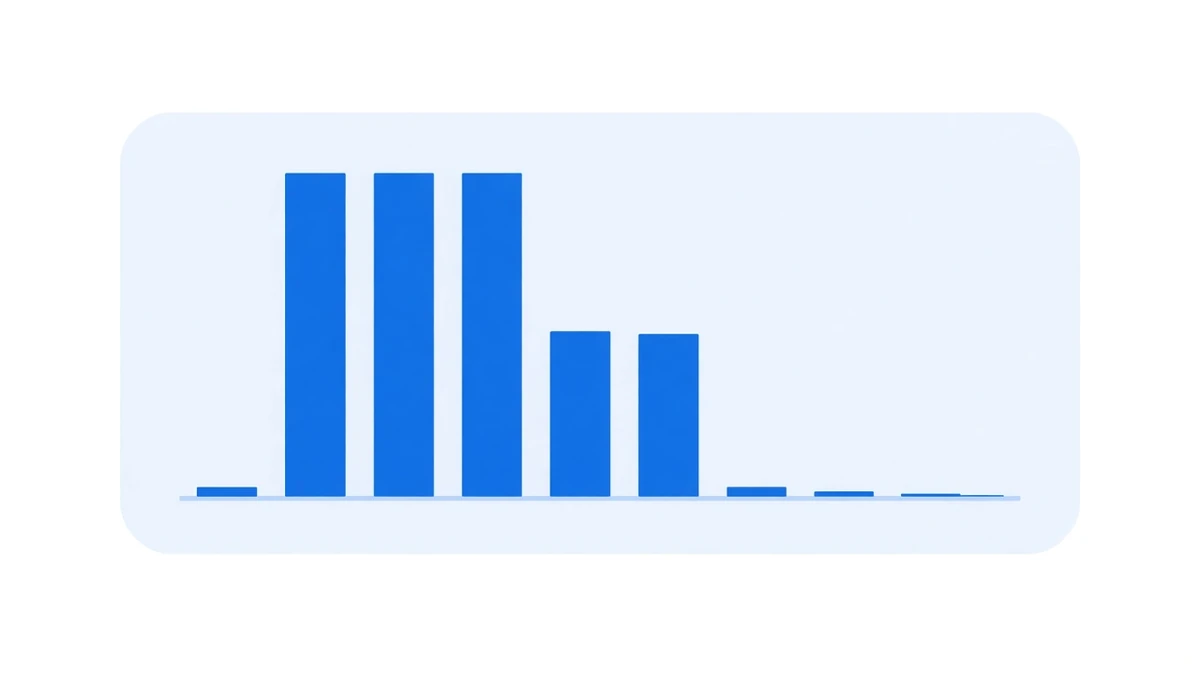
| Year | BTC negative share |
|---|---|
| 2020 | 14.30% |
| 2021 | 7.31% |
| 2022 | 22.10% |
| 2023 | 10.14% |
| 2024 | 8.38% |
| 2025 | 12.88% |
| 2026* | 26.22% |
* 2026 to 23 September, 797 settlements, not a full year.
But the share of negative periods is not the year’s result. In the same dataset, BTC funding still accumulates to +2.1439% this year: the positive periods sum to +2.9231%, the negative ones to −0.7793%. There are many negative periods, and each one is small.
They are not spread evenly
Break 2026 down by month and almost all of that 26.22% sits in one stretch:
| Month | Settlements | Negative share | Monthly total |
|---|---|---|---|
| Jan | 93 | 4.30% | +0.4576% |
| Feb | 84 | 53.57% | −0.0634% |
| Mar | 93 | 55.91% | −0.0925% |
| Apr | 90 | 64.44% | −0.1772% |
| May | 93 | 29.03% | +0.2313% |
| Jun | 90 | 23.33% | +0.2031% |
| Jul | 93 | 1.08% | +0.5656% |
| Aug | 93 | 0.00% | +0.6183% |
| Sep* | 67 | 1.49% | +0.3973% |
* September to the first settlement of the 23rd.
February, March and April are the only three months this year with a negative monthly total, and the only three where more than half the periods were negative. Across the 253 settlements from July to September, exactly 2 were negative.
Put another way: “2026 has the most negative funding of any year” and “there has been almost no negative funding for three months” are both true. Using an annual share to describe the present gives you the wrong impression.
What happened in those three months
February to April is also the stretch where price fell hardest this year. On our own candles, BTC fell 22.25% in 2026 Q1 and another 14.18% in Q2. In a sustained downtrend, long leverage leaves, shorts crowd into the perpetual, the perpetual trades below spot, and funding turns negative.
That matches the conclusion in does funding disappear when price crashes: in a falling market funding mainly gets thin, occasionally flips negative, but does not become a sustained hole — this year’s negative periods cost −0.7793% in total.
What it means for a two-leg book
The number of negative periods is the number of periods this book pays out on. 209 sounds like a lot, but together they come to −0.7793% while the positive periods collected +2.9231%.
This is why we keep saying that negative funding is about duration, not frequency: BTC’s longest unbroken negative run in six years is eight days, whereas April’s 64.44% is made of a dozen or so short runs rather than one long one.
What to watch
Whether the negative share rises again in the fourth quarter. Last year’s 12.88% was a full-year figure, and this year still has over three months to run. We are not going to say which way it goes; we will post the complete year at the end of it.
Data and conventions
All figures from the per-settlement records in our FundingRateTicks table as of 2026-09-23 00:00 UTC; BTCUSDT and ETHUSDT each have 7,372 settlements since 2020-01-01. “Negative” means strictly below zero; periods landing exactly on zero are not counted. Price moves come from BTCUSDT hourly candles in the same database’s Klines table. Year-by-year performance is whatever /performance/ says.