
Friday is the quarterly BTC options expiry, and it is abnormally large.
On cryptoticker’s reading — pulled contract by contract from the Deribit API and aggregated by them — BTC options open interest across all eleven expiry dates totals 438,795 BTC, or $34.72bn of notional. Of that, 25 September alone accounts for 181,896 BTC and $14.39bn, which is 41.5% of the whole year. The second largest, 25 December, holds 113,079 BTC; 30 October holds just 42,063.
Max pain for that date: roughly $72,000 on Deribit, $76,000 on Binance, $75,000 on OKX — all three below spot at the time the figures were taken.
Fix the timestamps first
Those numbers are not from today. The cryptoticker snapshot was taken with the index at $79,117; the news.bitcoin.com snapshot had BTC around $81,273. The BTCUSDT mark price in our own database at 23 September 00:00 UTC is 86,161.48.
That matters. At the current level, the $72,000 max pain sits roughly sixteen points below spot rather than the nine points in the original write-ups. Quote options positioning without its timestamp and the conclusion expires within two days.
One figure also fails to reconcile, so here it is plainly: open interest in the 25 September $90,000 call is reported as 9,544.1 BTC by news.bitcoin.com and 9,323 BTC by cryptoticker. The snapshots were taken at different moments; there is no reason to average them.
Where the positioning sits
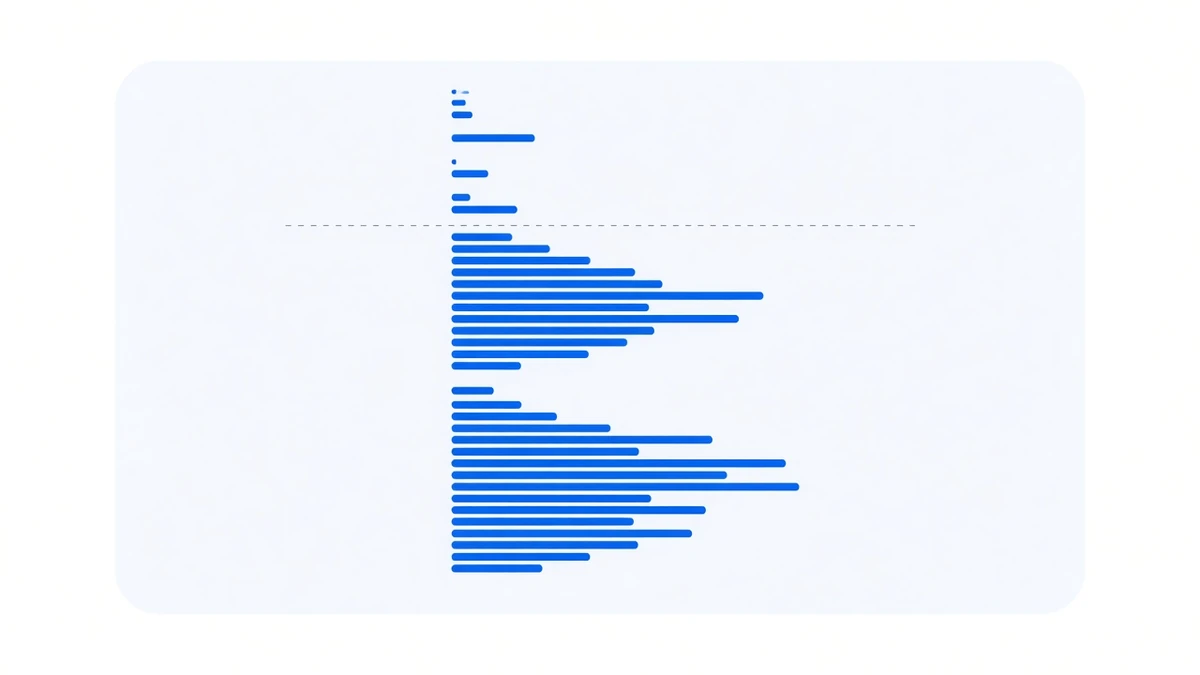
Within the 25 September expiry, the largest strike is $70,000 with 19,788 BTC (10,960 calls and 8,828 puts), followed by $85,000 at 9,654, $90,000 at 9,323 and $80,000 at 8,355. Strikes at $100,000 and above hold 29,133 BTC between them, 24.2% of all calls at that expiry.
Across the whole market, calls are 60.74% of BTC options open interest (311,306.86 BTC). But strike-level open interest counts buyers and sellers alike — it shows where risk is stacked, not which way the market is betting.
What happens on our side that day
Three settlements. The same as last Friday, and the same as next Friday.
That is the hardest line between options and perpetuals. An option has a terminal date; at expiry every position clears at once, which is why a concept like “max pain” exists at all. A perpetual has no terminal date — it uses a funding payment every eight hours to pull its price back toward spot, and in exchange it never delivers. The difference between the two contract types comes down to exactly this.
Binance BTCUSDT has settled 66 times between 1 and 22 September, and not one of those periods was special because of an options expiry. Over the past week (16 to 23 September UTC, 22 settlements) the total is 0.151008%, mean 0.006864% per period, with no negative period at all.
What it means for a two-leg book
A spot-long plus perpetual-short book holds no options, so the expiry date is not a date for it. The only transmission channel is indirect: if hedging flow around the expiry widens the gap between spot and the perpetual, funding will move with it. That is something to observe, not something to conclude in advance.
What to watch
The funding prints in the settlements either side of 25 September, and whether the perpetual-to-spot spread does anything unusual. Both are readings you can check afterwards, not forecasts.
Sources
Options open interest and max pain: cryptoticker.io (pulled contract by contract from the Deribit API and aggregated, index at $79,117), news.bitcoin.com and thecurrencyanalytics.com (BTC around $81,273). Mark prices and funding rates from the per-settlement records in our FundingRateTicks table, as of 2026-09-23 00:00 UTC.