Bybit launched Perp Options on 17 September 2026 at 20:00 UTC, describing it as the industry’s first options contracts built on TradFi perpetuals. Two underlyings at launch: SpaceX and Nvidia.
The headline is not a figure of speech. These options are not written on SpaceX and Nvidia shares. They are written on Bybit’s own USDT-settled perpetuals, SPCXUSDT and NVDAUSDT. The exchange neither holds nor delivers the actual equity.
For anyone watching funding, that one layer changes something concrete: the option’s cost of carry now contains a funding rate.
Contract specification
| Item | Value |
|---|---|
| Launch | 2026-09-17 20:00 UTC |
| First underlyings | SPCXUSDT (SpaceX) and NVDAUSDT (Nvidia) perpetuals |
| Option style | European, exercisable only at expiry |
| Settlement | Cash-settled in USDT |
| Contract multiplier | 1 (not the 100-share US equity option lot) |
| Account | Unified Trading Account, portfolio margin supported |
| Trading hours | 24/7 |
| Next underlyings | TSLA, QQQ, SOXL, MU and others |
A multiplier of 1 is a genuine convenience: a US equity option covers 100 shares, so one Nvidia option is a large notional for a small account. A multiplier of 1 makes the granularity an order of magnitude finer.
Bybit’s TradFi perpetuals started in April 2026 and now cover more than 250 tickers; it also listed FX perpetuals on 8 September — the same road Binance is on with the USDBRL contract it announced three days later.
Swapping the underlying for a perpetual changes the carry term
Option pricing contains a cost-of-carry term. Its composition depends entirely on the underlying:
| Underlying | What carry is made of | How often it reprices |
|---|---|---|
| Actual shares | Risk-free rate − dividend | Rate moves with the market, dividends by announcement |
| Delivery futures | Embedded in the basis, decays to zero | Once, on a fixed expiry |
| Perpetual | The funding rate | Every 8 hours |
The difference is not size, it is nature:
- Rates and dividends have public sources and are relatively predictable.
- A delivery contract’s basis has a definite date on which it goes to zero.
- A funding rate has no such date. It is repriced every eight hours by whatever the order book is doing, and the exchange can change its caps and settlement interval.
Put differently, the cost of holding a Perp Option contains a variable you cannot read out of the option’s own parameters — you have to go look at the underlying perpetual. The mechanism itself is in what is a funding rate.
Three synthetic layers, each with its own rulebook
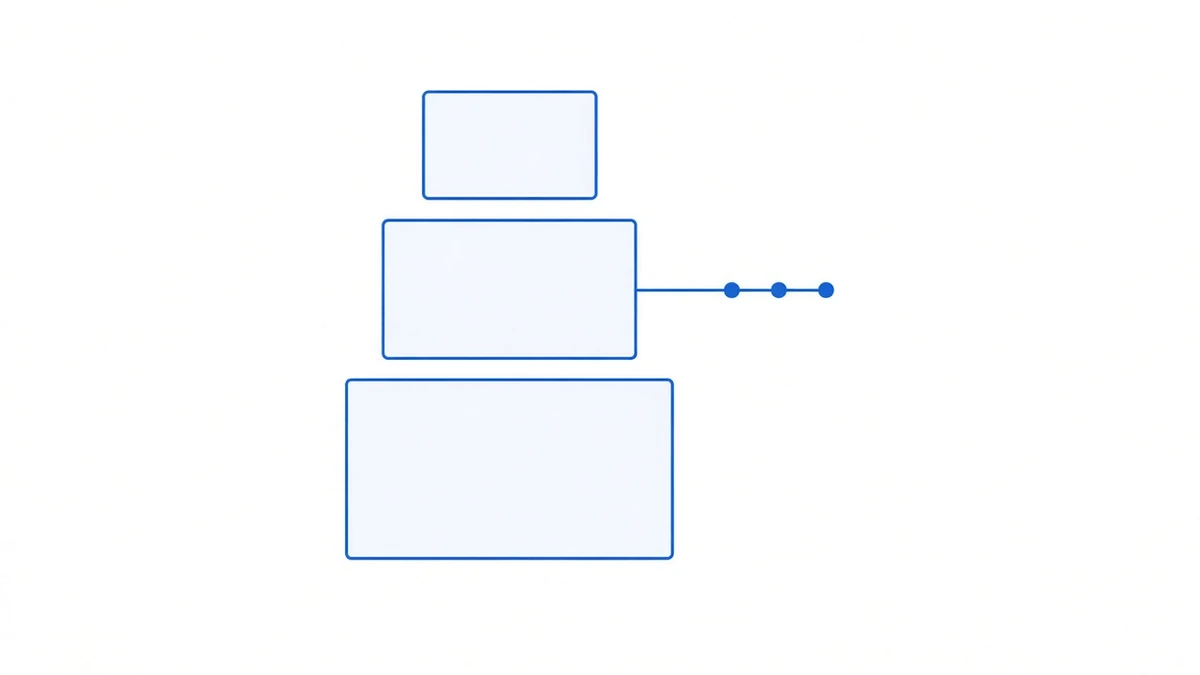
Unfold the structure:
option → perpetual contract → third-party quote index → the stockEvery arrow carries a set of rules the exchange can change: exercise and settlement at the option layer, funding rate, caps and settlement interval at the perpetual layer, sampling method and data sources at the index layer.
One item at the index layer is worth recording. Bybit’s own funding rate page states that for a Pre-Market perpetual, the index price is calculated from the contract’s own bid and ask prices, and the premium index is set to zero to stabilise the funding rate; the same applies when the exchange cannot obtain a reasonable index component.
A premium index of zero means funding collapses to just the interest rate term — an almost fixed number. That is good for pricing (carry becomes predictable), but it also means that funding rate no longer carries market information. You can no longer read it as a gauge of how crowded either side is.
Whether that clause applies to SPCXUSDT depends on how Bybit classifies it. The announcement does not say, and we have not verified it, so the rule is listed here without a conclusion attached.
We could not get the period-by-period funding on those two perpetuals
The right thing to do would be to pull the settlements for SPCXUSDT and NVDAUSDT, since that is the real cost of carry in these options. Bybit’s public market data endpoint is region-blocked from our side, so we did not get them.
Not getting them means not getting them; we are not substituting numbers from elsewhere. What follows is a scale reference only, and explicitly not a reading from those two contracts:
Per our backend period-by-period snapshot (as of 2026-08-25 13:42 UTC, periods summed), Binance’s BTCUSDT is at 1.589788% year to date across 711 periods — roughly 237 days, or about 2.45% annualised. ETHUSDT over the same span is 0.960325%.
Put that magnitude back into the option context: a carry of two to three percent a year, repriced every eight hours, matters little for short-dated options and cannot be ignored for long-dated ones. Whether equity-linked perpetuals run an order of magnitude above BTC, we do not know — which is exactly where the data should be pulled.
Clearing up a word while we are here
As these products multiply, “delta neutral” picks up another layer of ambiguity.
Delta neutrality in options relies on continuous re-hedging and swaps directional risk for volatility risk. The neutrality of spot long plus perpetual short is structural, and what it collects is funding. Now there is a third: an option whose underlying is itself a perpetual, whose delta refers to that contract, while that contract independently generates a cash flow every eight hours.
The mathematical definition is the same in all three cases; the money is completely different. Delta neutral explained separates the first two, and why option-selling yield products do not belong in the neutral category is in dual investment and funding rate arbitrage.
What to watch next
No forecasts. Three observables:
- What the period-by-period funding on SPCXUSDT and NVDAUSDT actually looks like. That is the entirety of these options’ carry, and it lives on the perpetual layer, not in the option parameters.
- Funding over weekends and US market holidays. In stretches when the underlying does not trade, how the index is sampled and the premium computed decides those readings outright.
- Whether the caps stay uniform as more underlyings arrive. A leveraged semiconductor ETF and a broad-market ETF have very different volatility; one shared set of funding parameters is an interesting choice.
To be clear: this piece is not suggesting anyone trade these options, and we do not trade options. It is here because it pushes one thing into view: the funding rate is becoming a base-layer parameter in more and more products, and a lot of people are paying it without knowing.
Sources: launch timing, underlyings and contract specification from Bybit’s official release (PR Newswire, 2026-09-18, attributed SOURCE Bybit) and the Bybit announcement of 2026-08-28, cross-checked against Crypto Times and FinanceFeeds (the European style, the multiplier of 1, and the underlying being the platform’s own perpetuals rather than shares come from those two); the Pre-Market premium-index-zero rule from Bybit’s funding rate page; our own funding figures from the backend period-by-period snapshot, as of 2026-08-25 13:42 UTC, used as a scale reference only and not a reading from SPCXUSDT or NVDAUSDT. Past performance does not indicate future results.