Binance announced on 18 September 2026 that it is adding foreign exchange perpetual futures under its TradFi Perpetual category. The first contract is USDBRLUSDT (US dollar / Brazilian real), going live 21 September 2026 at 14:00 UTC.
For most readers this is a product announcement. For anyone who watches funding, there is one number worth pulling out: the funding rate is capped at ±0.375%.
Contract specification (from the official release)
| Item | Value |
|---|---|
| Contract type | USDT-priced, USDⓈ-M perpetual |
| Underlying | 1 US dollar to Brazilian real |
| Launch | 2026-09-21 14:00 UTC |
| Settlement asset | USDT |
| Tick size | 0.0001 |
| Min trade amount | 0.01 USDBRL |
| Min notional | 5 USDT |
| Capped funding rate | +0.375% / −0.375% |
| Funding settlement | Every 8 hours |
| Max leverage | 100x |
| Trading hours | 24/7 |
That ±0.375% is a small number
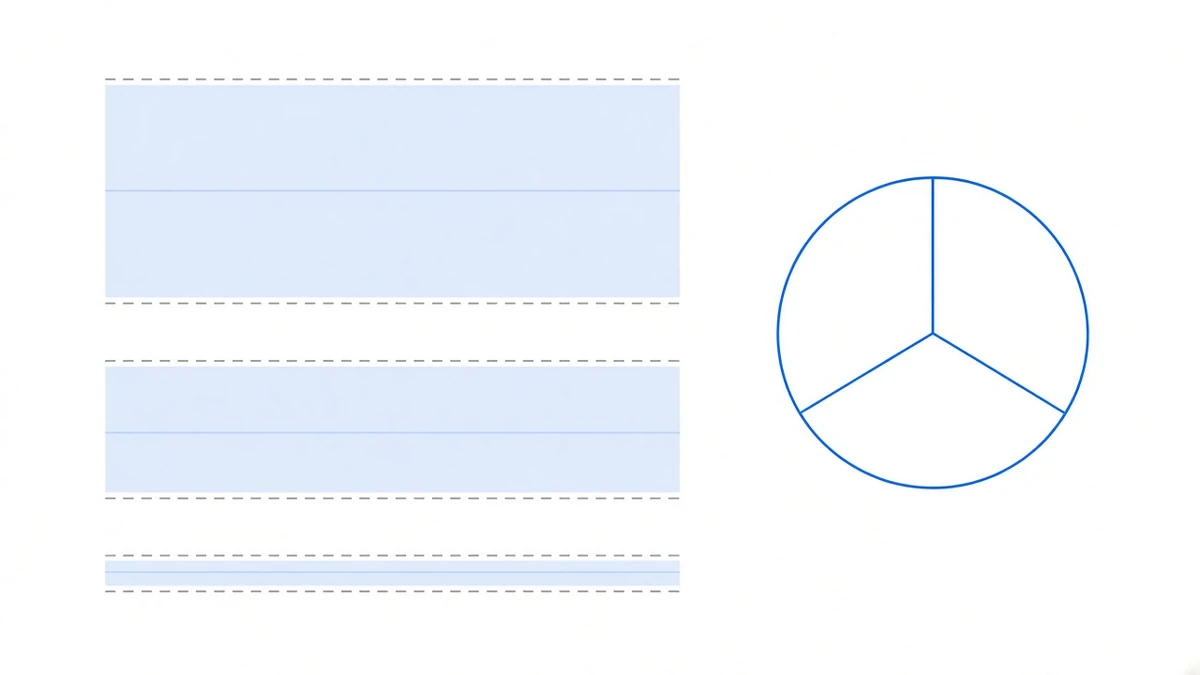
Compare it against Binance’s own tiers. The two batches of TradFi perpetuals we wrote up earlier kept ±2.00% for the first settlement on switchover day and then ran at ±1.00%.
Three numbers together:
- Equity-linked TradFi perpetuals (after adjustment): ±1.00% per period
- The switchover period itself: ±2.00% per period
- FX perpetuals: ±0.375% per period
A cap is not a forecast. It is the exchange’s institutional answer to how far this contract’s funding is expected to travel. Setting it at roughly a third of the equity tier says this contract is expected to be a great deal quieter.
Why funding on an FX perpetual is not the same animal
This section is our reading, not the announcement’s. Saying so up front.
The original job of the funding mechanism is narrow: a perpetual has no delivery date, so something has to pull the contract price back to spot, and that something is a fee the two sides pay each other on a schedule. See what is a funding rate.
In crypto, that gap is driven mostly by positioning and sentiment. How much longs are willing to pay for a long position that never has to be rolled determines how high funding goes.
FX is different. Two currencies already have an interest rate differential between them, and the traditional FX market puts that differential in the forward points — the forward price differs from spot, and the difference is the carry.
The catch: a perpetual has no forward points to put it in. There is no expiry, nowhere for that piece to sit. It can only come out through the one available channel, and that channel is the funding rate.
So funding on an FX perpetual mixes two things: partly sentiment (as in crypto), partly the interest rate differential (which has no counterpart in crypto). Carry the crypto intuition over and it is easy to read a structural rate differential as “crowded longs.”
The reverse holds too: a structural, persistently one-directional rate and a rate that swings quickly with sentiment are not the same thing from an arbitrage point of view.
Weekends use a different pricing mode
Another detail from the announcement worth recording: this contract uses dual-mode pricing.
- Regular FX hours (Sunday 17:00 ET to Friday 17:00 ET): the index updates every second as a weighted average of third-party data vendor prices (Standard mode).
- Weekends and public holidays (Friday 17:00 ET to Sunday 17:00 ET): it switches to Orderbook EWMA mode, using an exponentially weighted moving average of the contract’s own order book prices.
That implies something concrete: over the weekend, the premium is measured against the contract itself. The index comes from the book and the mark comes from the book, so the gap between them is structurally hard to open, and funding may well flatten into a line across those six periods. When Monday’s open switches back to Standard mode, the index catches up to the real FX market in one step — and that period’s reading is not the same kind of thing as the weekend’s.
Averaging periods from the two modes together produces a number that represents nothing.
Binance is not alone in this
Several venues are moving the same way:
- Bybit listed EUR/USD, GBP/USD and USD/JPY perpetuals on 8 September 2026, also USDT-settled and up to 100x.
- Kraken was earlier still, launching FX perpetuals on the euro, pound, Australian dollar, yen and Swiss franc in April 2025, up to 50x.
More notable is a parallel line: both exchanges have pulled TradFi perpetuals out of the “funding interval escalates automatically” rules.
- Binance’s two batches of 4-hour TradFi perpetuals state in the announcement that they are exempt from the rule that shortens the interval to 1 hour once a settlement hits the cap.
- OKX’s automatic frequency mechanism, effective 14 April 2026 (8 hours → 4 → 2 → 1, escalating one level at a time, reverting once 12 consecutive hours stay within ±0.20%), says outright that it applies only to crypto perpetuals, with equities, ETFs and commodities excluded; their settlement frequency always stays at the contract default.
Two venues arriving at the same place from different directions: TradFi perpetuals are growing a funding rulebook of their own — tighter caps, fixed intervals, no automatic escalation.
What it means on our side
Direct impact: none. Our period-by-period settlement data all comes from 8-hour BTC and ETH USDT-margined perpetuals; we do not touch the TradFi row. As of 2026-08-25 13:42 UTC (periods summed), BTCUSDT is at 1.589788% year to date and ETHUSDT at 0.960325%, both over 711 periods.
That 711 is a count of periods, not days (about 237 days at three per day). Which is exactly why the rules above matter: once contracts settle on different intervals, period counts cannot be compared directly and cumulative figures cannot simply be added. Binance now runs at least two intervals (8 and 4 hours) and three cap tiers (±2%, ±1% and ±0.375%) internally.
When writing strategy or reconciliation code, each contract’s settlement interval and caps should be read from the API, not hard-coded.
What to watch next
No forecasts. Three observables:
- How far the first few readings sit from ±0.375%. Running against the cap means the cap is too tight; running at zero means nobody is trading the contract.
- The gap between the six weekend periods and Monday’s first period. Whether dual-mode pricing manufactures a regular Monday jump.
- Whether a second and third FX perpetual appear, and whether the cap stays ±0.375%. Interest rate differentials vary enormously across currency pairs, so a single shared cap is an interesting choice.
To be clear: this piece is not suggesting anyone trade the new contract. FX perpetuals are a new instrument with no history of period-by-period settlements, and without that history there is no way to judge whether the funding is stable. A 100x cap also indicates the contract’s main users are not there to collect funding.
Sources: contract specification and dual-mode pricing from Binance’s official release (PR Newswire, 2026-09-18, attributed SOURCE Binance), cross-checked against Cointelegraph; the Bybit and Kraken FX timeline is also from Cointelegraph; OKX’s automatic frequency mechanism and TradFi exclusion from the OKX announcement; Binance’s ±1.00% / ±2.00% TradFi tiers are in the official announcements cited in our earlier note; our own funding figures from the backend period-by-period snapshot, as of 2026-08-25 13:42 UTC. The section “Why funding on an FX perpetual is not the same animal” is our analysis, not announcement content. Past performance does not indicate future results.