
Liquidations across the market totalled $401 million over the past 24 hours: $241 million of shorts against $160 million of longs. Six out of every ten dollars wiped out belonged to a short.
Split across the two main instruments, the difference matters more than the total:
| Instrument | Longs liquidated | Shorts liquidated | Short / long |
|---|---|---|---|
| BTC | $35.00m | $42.08m | 1.2× |
| ETH | $39.65m | $80.05m | 2.0× |
Ethereum shorts were liquidated at exactly twice the rate of longs, while BTC was close to even. This round squeezed ether shorts, not bitcoin shorts.
Price agrees: Binance BTCUSDT rose 1.92% over 24 hours, touching 82,100 at the high and 80,165 at the low, last at 81,952.
But funding did not follow
Squeeze the shorts and intuition says the perpetual should go to a premium and longs should pay more. The readings say the opposite.
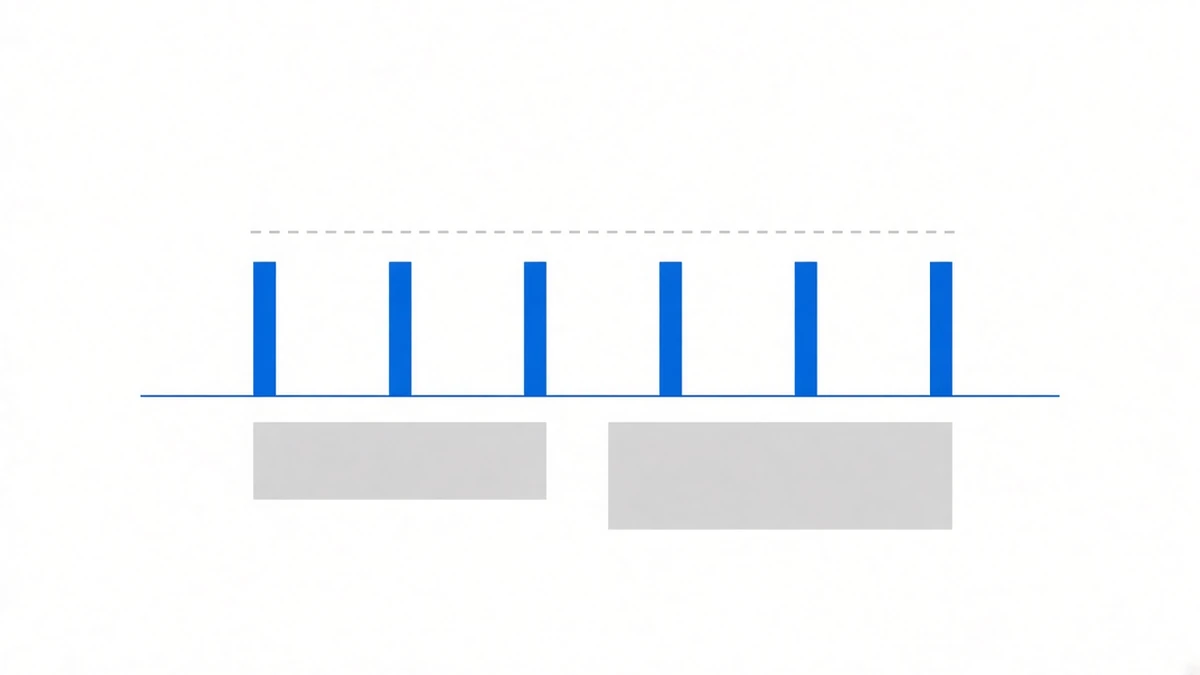
At 08:07 UTC today, Binance ETHUSDT’s current funding reading was 0.009345% — below the 0.01% baseline. Its last six settlements:
0.005416% 0.010000% 0.004128% 0.003468% 0.008166% 0.008660%Five of those six are under the baseline, the lowest at 0.003468%, a third of it. A short liquidation event running at twice the size of longs left no trace on funding at all.
BTC over the same stretch printed a capped 0.010000%, which is just the baseline value — it sits inside the dead zone and expresses nothing either.
Why: liquidations and funding measure different things
The two numbers get put in the same sentence often, but they come from different places:
- Liquidation volume records positions that have already been forcibly closed. It is past tense — the result of leverage breaking.
- Funding tracks the perpetual’s premium to spot right now. It is current pricing, and it reflects only what the people still on the book are willing to pay.
Once shorts are liquidated, those positions are no longer on the book. They pushed price up in the instant they were closed, and they will never pay funding again in any subsequent period. So “short squeeze” and “funding rises” are not causally linked; between them sits the question of who is left afterwards.
Today’s answer looks like: whoever is left long is in no hurry.
What it means for a position
A balanced two-legged book cares about one thing: has funding turned negative. It has not — ETH sits below the baseline but still positive, leaving you on the receiving side.
The shape of those six ETH periods is worth noting, though: hovering around the baseline and skewed below it. At 0.009345% the annualised figure is 10.23%, under Bybit’s 10.95% at the same instant and well under Hyperliquid’s 19.19% — the same ETH, nearly a factor of two apart across three venues. How to read those gaps is in the smallest reading annualises highest.
One more thing worth stating: a liquidation cascade is not directional risk for a balanced book, but it is execution risk. The few minutes when the market is moving fastest are exactly when order books are thinnest and APIs most likely to throttle — and that is when you may need to move margin. That layer is in rebalancing is not about delta.
What to watch next
- Whether ETH funding breaks the dead zone’s lower edge. Several consecutive sub-baseline periods have already printed; turning genuinely negative needs the premium under −0.04%, which has not happened.
- Whether open interest refills. Aggregate BTC open interest is up 0.71% over 24 hours at roughly $43.9 billion, and Binance alone holds 109,961 BTC on BTCUSDT, about $9.01 billion. If the liquidated size is replaced quickly, leverage merely changed hands rather than actually coming down.
- Do not infer funding from liquidation data. Today is the counterexample.
Funding drifting toward zero or turning negative in a range or a pullback is something this approach genuinely runs into — the 2022 row on our track record, where ETHUSDT returned 0.787256% for the whole year, came from exactly that. It did not turn negative this time; that says nothing about next time.
Sources: the $401 million 24-hour liquidation total, the $160m long / $241m short split and the BTC and ETH breakdowns come from CoinGlass data via ChainCatcher, as carried by Gate News at 2026-09-21 01:33 UTC (the window is the 24 hours preceding that timestamp); aggregate BTC open interest of $43.9 billion and the 24-hour +0.71% come from CoinFuty’s BTC open interest page; Binance spot 24-hour change and high/low come from api/v3/ticker/24hr, Binance BTCUSDT open interest from fapi/v1/openInterest, and ETH’s current reading and last six settlements from fapi/v1/premiumIndex and fapi/v1/fundingRate, all read at 2026-09-21 08:07 UTC; the cross-venue comparison comes from Hyperliquid info/predictedFundings. Annualised figures assume the current reading holds unchanged and are comparison values, not expected returns. Past performance does not indicate future results.