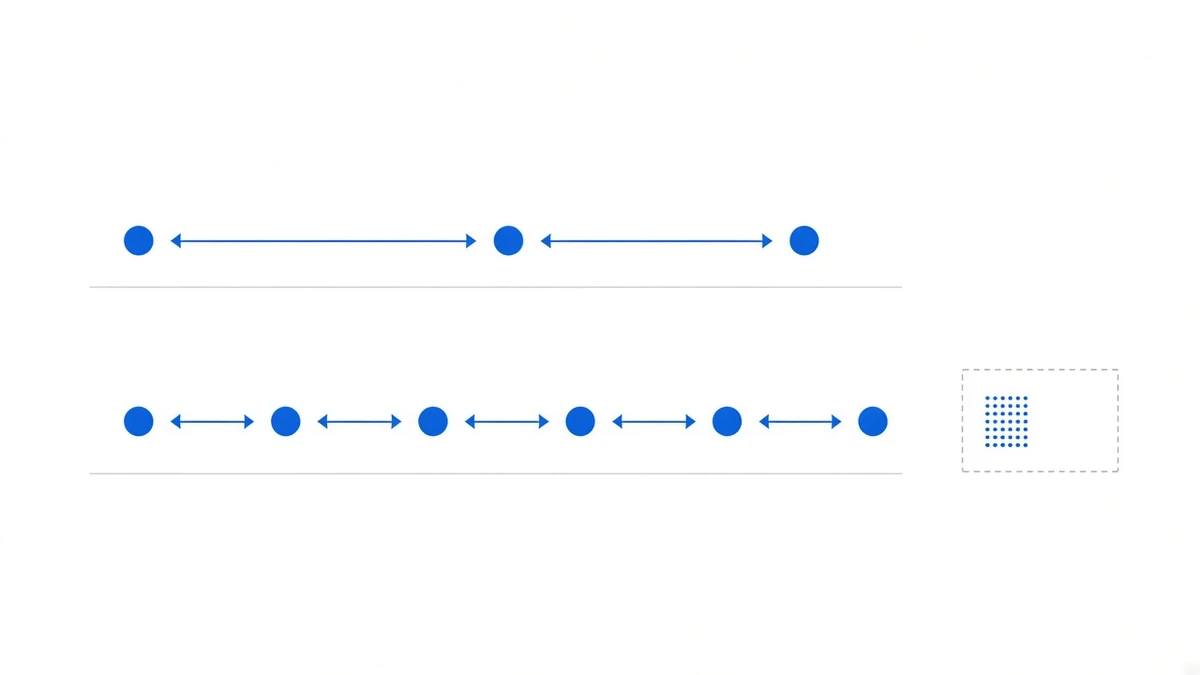
Binance issued two notices in September moving 18 USDⓈ-M TradFi perpetual contracts from 8-hour to 4-hour funding settlement, cutting the per-period cap and floor from ±2.00% to ±1.00% at the same time.
- Effective 2026-09-04 08:15 UTC: KODEX200USDT, NAVERUSDT, LGELECTRONICSUSDT, HANMIUSDT, SAMSUNGEMUSDT, CXMTUSDT, ZHONGJIUSDT, CSOPSAMSUNG2LUSDT, CSOPSKHYNIX2LUSDT
- Effective 2026-09-10 08:15 UTC: MEITUANUSDT, KUAISHOUUSDT, GIGADEVUSDT, POPMARTUSDT, TENCENTUSDT, HK1810USDT, HK0700USDT, ZHIPUUSDT, MINIMAXUSDT
Both batches used the same transition: the 08:00 UTC settlement on the effective day still cleared at ±2.00%, with ±1.00% applying from the 12:00 UTC period onward.
That much has been reposted widely. The sentence worth reading is a different one.
The rule they were exempted from
Both notices state that these contracts are exempt from “Rule 8.1” — the provision that shortens the settlement interval from every four hours to every one hour when the previous funding settlement reaches the cap or floor. Binance added that it would issue a separate announcement if it later decides to change the interval for this batch.
In other words, most coverage stopped at the “eight hours to four hours” layer. What actually determines behaviour in the extreme case is whether there is a second rung on the ladder.
What that rule looks like when it does fire
This is where our own data connects.
Counting the gap between consecutive settlements across every period in our collection database so far in 2026: 95 contracts actually entered hourly funding this year, producing 16,443 hourly settlements, averaging 173 periods each (about a week).
Those stretches looked like this:
| Hourly cadence | Same contracts, 4-hour | |
|---|---|---|
| Periods | 16,443 | 133,613 |
| Mean per period | −0.11473% | −0.01145% |
| Share negative | 89.25% | 25.94% |
Same contracts. On the hourly schedule the mean period is ten times larger, pointed the wrong way. Aggregated per contract, 91 of the 95 finished their stretch in the red, averaging −19.858%; the extreme case, LABUSDT, accumulated −165.677% over 518 periods between 1 June and 9 July.
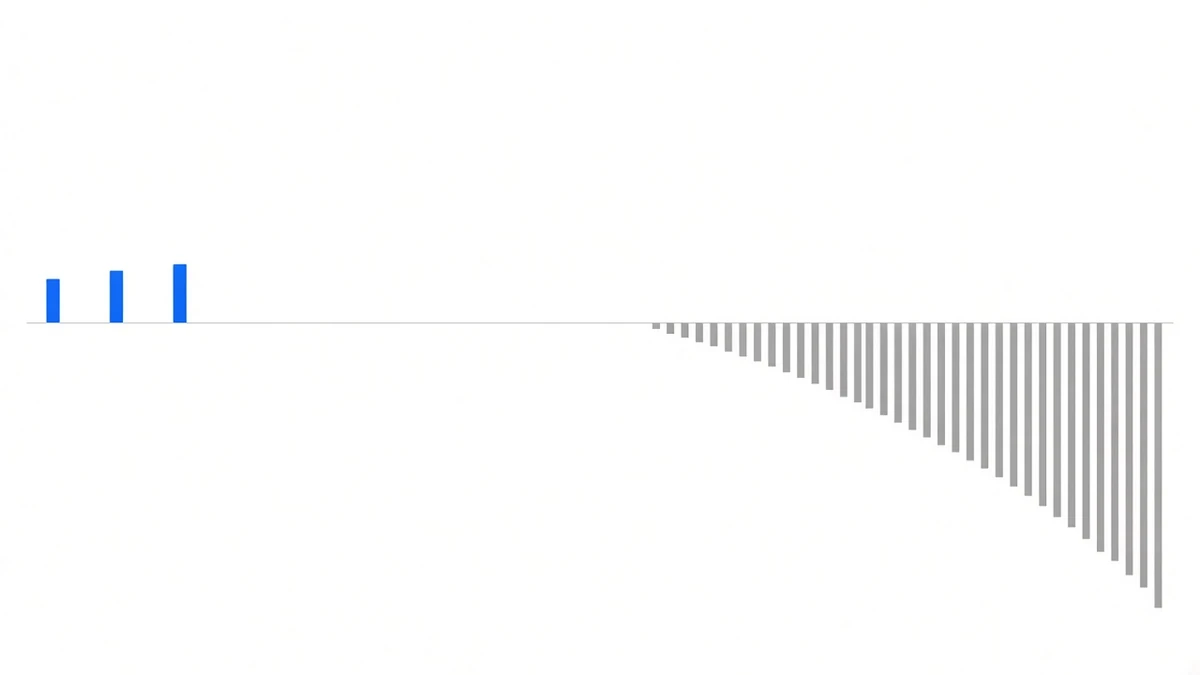
Why that direction? Because the trigger condition is itself one-sided. Shortening the interval exists to pull the perpetual back toward spot faster, and the cases that actually hit the limit this year run almost entirely one way: in our database, so far in 2026 the −2% floor has been hit 145 times across 82 contracts, while the +2% cap has not been touched once. Nearly everything capable of triggering the escalation is a deep discount with deeply negative funding.
So a switch to hourly is not a neutral parameter change. It is a status signal.
What it means for a balanced two-leg book
Three concrete things.
One, tail risk on this batch genuinely did shrink. With the interval capped at four hours and no escalation to one, the worst case is six settlements a day instead of 24. Combined with the ±1% limit, the theoretical single-day extreme falls from 24×2% to 6×1%.
Two, the ordinary-case cost did not fall. The cap halved and the frequency doubled; they cancel. Which is why “shorter interval” cannot be read directly as bullish or bearish — whether the annualised figure should double is a question two exchanges answer differently, unpacked in eight hours to four.
Three, the contracts that were not exempted are the ones to watch. Rule 8.1 still applies to the large majority of USD-M contracts. If what you are holding is not on that list of 18, the escalation path is still live — and the numbers above are what it looks like once it fires.
What to watch next
Do not rely on the static line on the contract detail page. Pull the last dozen settlement times and subtract: four hours apart means four hours, and one hour apart means go look at the signs on those dozen periods immediately. We got this wrong ourselves: the settlement-interval field in our collection database disagrees with the actual timestamp gap on 59.16% of rows, so everything now reads the timestamps instead — details in Binance funding settlement times.
One last thing, plainly: funding turning negative, even paying out for a whole stretch, is something this strategy genuinely runs into. The 0.787256% that ETH returned across all of 2022 on the performance table came from exactly that, and we have not hidden it. What was exempted here is those 18 contracts; it does not mean the rest will not be switched.
Sources: the rule change and the exemption clause come from Binance’s official announcement (the batch effective 2026-09-10: https://www.binance.com/en/support/announcement/detail/aff73212559d4951945600e973240c52), cross-checked against Coinlive (news flashes of 2026-09-02 and 2026-09-08) and Gate News (2026-09-02); the two batches took effect at 2026-09-04 08:15 UTC and 2026-09-10 08:15 UTC. Per-settlement funding rates come from our own collection database (sourced from Binance’s public USD-M endpoints), window 2026-01-01 to 2026-09-22 03:00 UTC, 450 symbols and 603,966 periods, with cadence determined by the mode of gaps between consecutive timestamps. Yearly cumulative figures are in performance, site snapshot 2026-08-25 13:42 UTC. Contract tickers appear as data, not as recommendations. Past performance does not indicate future results.