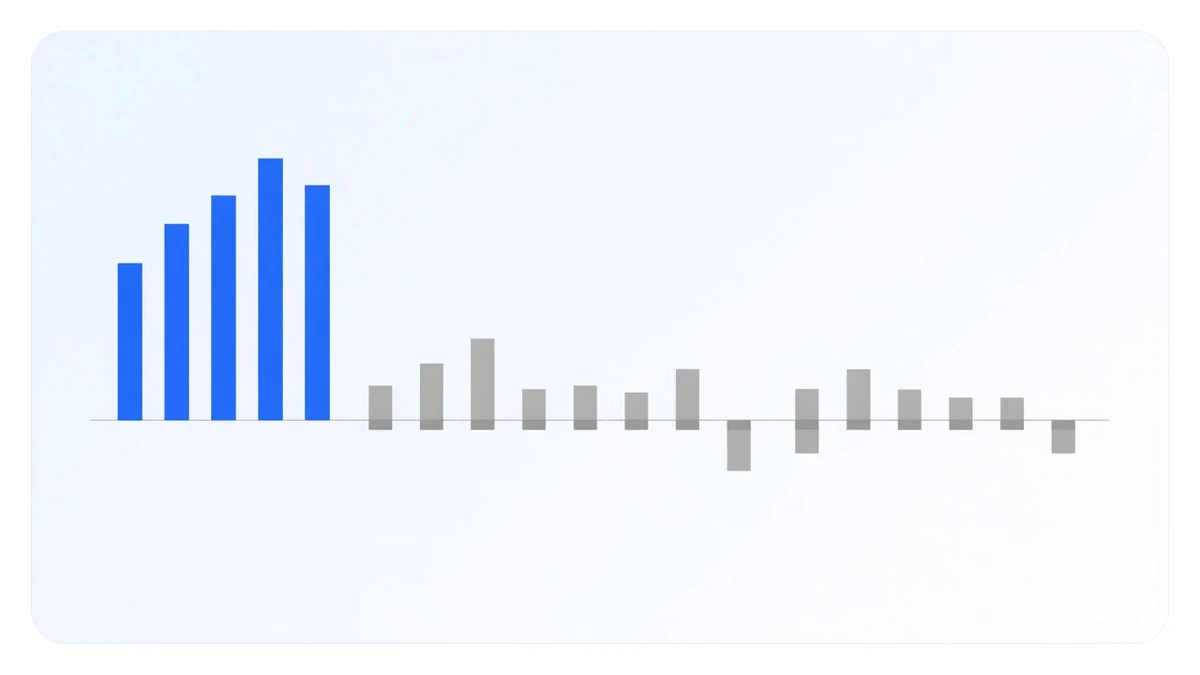
Open any funding rate leaderboard and the top entry has often collected ten or twenty times what BTC has. The obvious question is whether those rates can be captured.
On Binance, the answer for this year’s top 20 is no, at least not on the same exchange: none of the 20 perpetuals with the highest cumulative funding in 2026 has a spot pair on Binance. Funding rate arbitrage means buying spot and shorting an equal amount of the perpetual, so price moves cancel and only the funding remains. Without spot, all that is left is the short perpetual. That is not arbitrage; it is a naked short.
450 contracts, split by whether spot exists
We checked each of the 450 Binance USD-M perpetuals in our database against Binance’s spot market: does the same base asset have a pair currently trading? (Status as of 27 September; contracts with a quantity prefix such as 1000PEPE or 1000000BOB are matched after stripping the prefix.) The result: 393 have spot, 57 do not.
Restricting to contracts that traded all year (data from 1 January and at least 500 settlements) and summing every 2026 settlement:
| Group | Contracts | Median full-year total | Contracts with a positive total |
|---|---|---|---|
| With spot | 374 | −1.26% | 160 (42.8%) |
| Without spot | 44 | +11.98% | 31 (70.5%) |
One median is +12%, the other −1.3%. The last 30 days tell the same story: a median of 2.64% for contracts without spot against 0.67% for those with it (all 450 contracts).
The top 20 has no spot market at all
| Rank | Contract | 2026 to date | Binance spot |
|---|---|---|---|
| 1 | 1000000BOBUSDT | 56.51% | None |
| 2 | ESPORTSUSDT | 39.18% | None |
| 3 | PTBUSDT | 28.73% | None |
| 4 | BULLAUSDT | 27.45% | None |
| 5 | FOLKSUSDT | 27.30% | None |
All of the top 20 lack a Binance spot pair; widen it to the top 50 and 26 still do. At the other end, 9 of the 10 lowest totals this year belong to contracts that do have spot. HOMEUSDT, for example, is at −172.64% for the year: shorts have been paying longs almost the whole time.
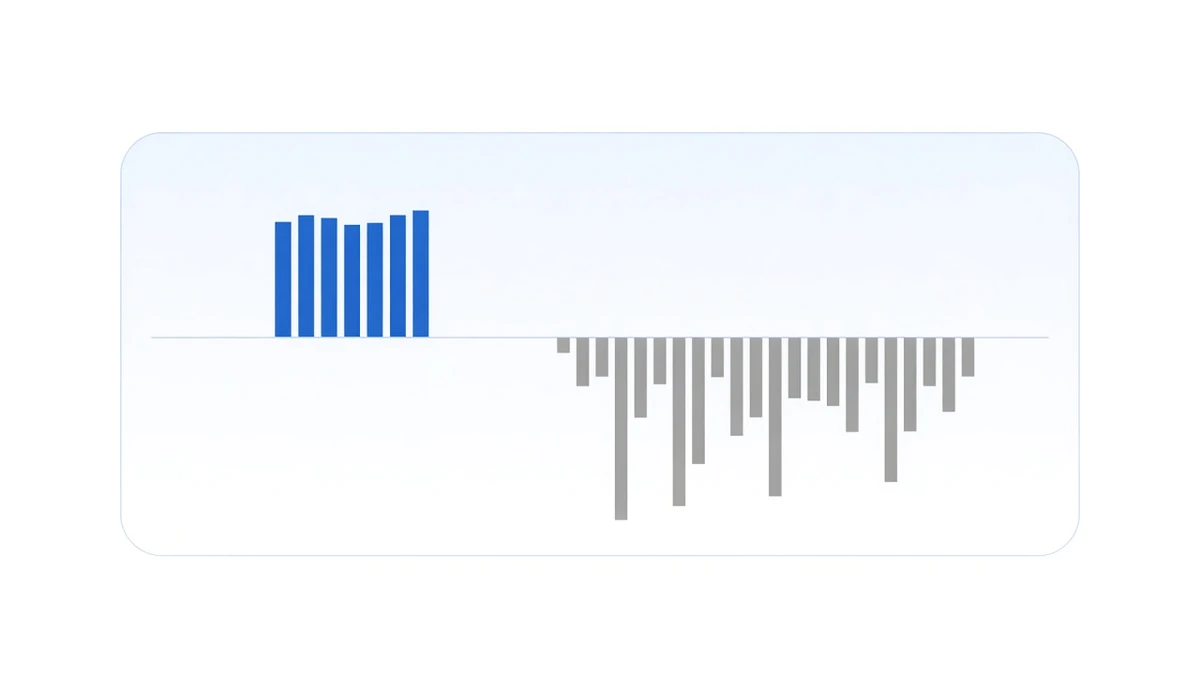
Why contracts without spot pay more
Funding is the pull that drags a perpetual back towards the spot index: when the perpetual trades rich, longs pay shorts until the gap closes. What actually closes it, most of the time, is arbitrage capital, buying spot and shorting the perpetual. The more of that capital there is, the thinner the premium and the closer funding sits to the baseline; why that baseline is usually positive is covered in why funding is usually positive.
If a coin has no spot market on Binance, that force does not exist on the same exchange. Anyone who wants the trade has to buy spot elsewhere or skip it. With fewer shorts available, longs have to pay more to keep their positions.
So the 56% at the top of the table is not a gift from the market. It is the price of a contract missing its hedge leg. The leaderboard’s number one is at 56% this year takes the same table apart by settlement count and cadence; this piece adds the other half, which is why that premium has never been arbitraged away.
A live example: HYPE
The HYPEUSDT perpetual traded on Binance for a full year, settling from 24 September 2025, before Binance listed HYPE spot at 11:00 UTC on 24 September 2026. In the year without spot, the perpetual collected +6.22% over 2,189 settlements, with 19% of periods negative.
In the 16 settlements from the listing to 00:00 UTC on 27 September, 8 were negative, for a cumulative −0.0154%; in the 30 days before the listing, only 20 of 180 were negative. Two and a half days prove nothing on their own, but the direction matches the argument above: once a spot leg is available, shorts have somewhere to come from and funding falls first. The details are in Binance lists HYPE spot. (Going by 27 September status, HYPE counts as “with spot” in the grouping above.)
Hedging without spot, and what each option costs
- Buy spot on another exchange. The legs sit with two counterparties and two margin systems, transfers take time, and if one venue has a problem the other leg is exposed. The costs are laid out in cross-exchange funding rates and the counterparty arbitrage cannot avoid.
- Hedge with a coin that moves similarly. That is a bet on correlation, not a balanced position; if the two coins diverge, the loss comes out of principal.
- Do not hedge, just collect. That is a naked short. The funding is real and so is the price risk: contracts without spot are mostly new or small coins, where moves of tens of per cent in a day are not unusual.
Three checks before trusting a leaderboard
A funding scanner ranks by rate, not by whether the rate can be captured. What sits at the top may well be exactly the contracts arbitrage capital cannot reach. Before treating a high rate as an opportunity, check:
- whether the coin has a spot pair on the same exchange;
- whether that spot book is deep enough that the spread will not eat several periods of funding (six hidden costs);
- whether the rate has been high for months or just for days; the first weeks after a listing follow their own pattern, covered in funding on newly listed contracts.
Our yearly performance figures use BTCUSDT and ETHUSDT only, the two coins with the deepest spot and perpetual books on the same exchange; the figures, including the worst year, 2022, are on the performance page.
Data and method: per-period funding rates come from Binance’s public USD-M endpoint fapi/v1/fundingRate, via our collection database, from 2026-01-01 00:00 UTC to 2026-09-27 01:00 UTC. “Has spot” means the same base asset has a spot pair with status TRADING in Binance’s exchangeInfo listing, read on 2026-09-27, with quantity prefixes such as 1000 and 1000000 stripped before matching. “Traded all year” means data before 2 January 2026 and at least 500 settlements. Cumulative figures are sums of periods, not compounded; contracts on different settlement intervals are summed over their actual settlements. The HYPE spot listing time is the first one-minute candle from Binance’s public spot endpoint api/v3/klines (2026-09-24 11:00 UTC). Tickers are shown to document the data, not as recommendations. Past data does not indicate future returns.